UK Live Casino Lightning Roulette: How It Works
 Available in GB
A studio feed shows the dealer and physical table, while separate on-screen controls record bets and indicate when betting is available.
Table of Contents
- How Live Roulette Works Before the Lightning Feature
- Wheel Variants Change the Roulette Baseline
- What a UK Live Casino Listing Needs to Establish
- First-Person Play Still Runs on a Live Feed
- Bonus Terms Rarely Fit Live Tables Neatly
- Roulette Bets, Outcomes and the House Edge
- A Demo Is for Familiarity, Not Real Payouts
- The Dealer and the Physical Wheel
- Playing Online Means Allowing for the Live Pace
- Zero Is the Detail That Changes Even-Money Bets
How Live Roulette Works Before the Lightning Feature
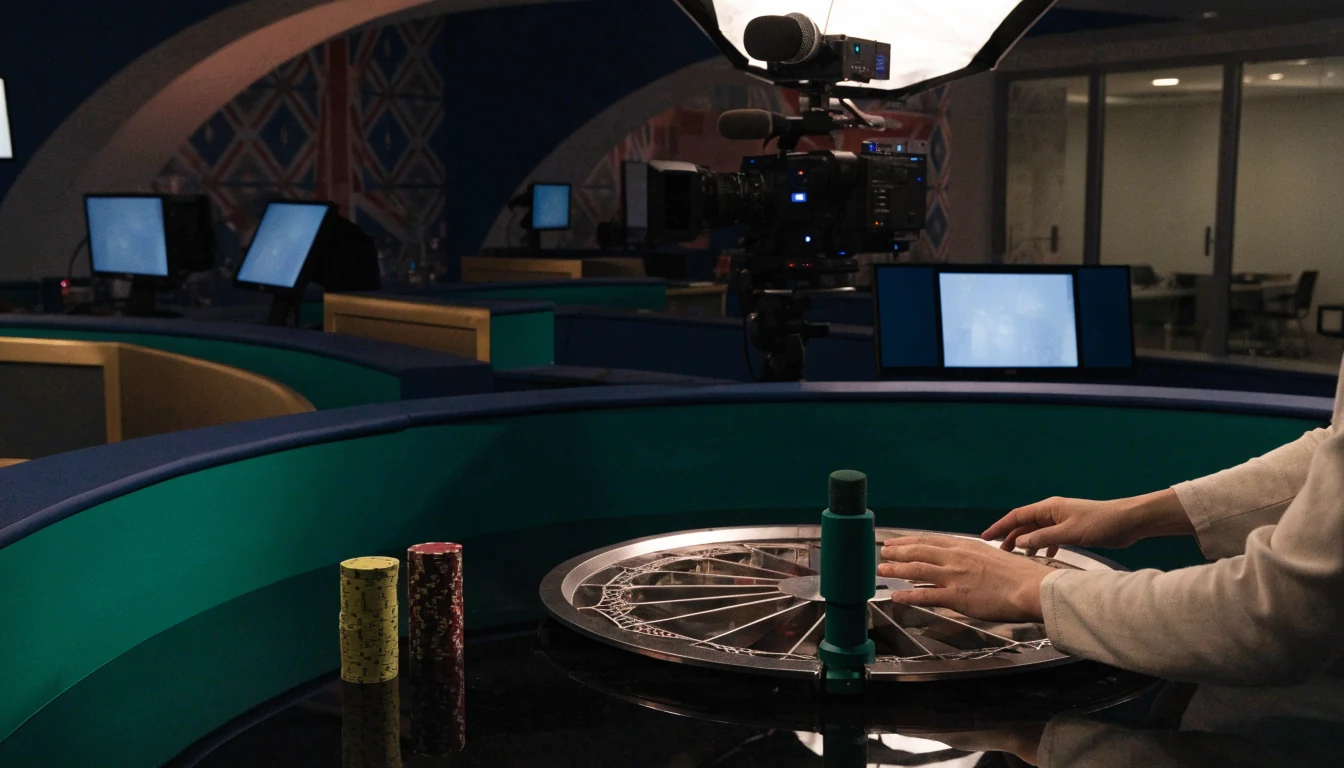
The live part of live dealer roulette is a production format, not a different way of placing a bet. A studio feed shows a human dealer running a physical table, while a separate on-screen interface lets players make their selections. The stream and the betting controls work together, but they serve different purposes: one shows the game in progress; the other records the player’s choices.
That distinction matters when a game is presented as Lightning Roulette. The feature name may draw attention, but the underlying live experience still depends on a streamed table and an interface for entering bets. The screen is not simply a video of a game to watch. It is the point where a player’s decisions are submitted while the studio feed supplies the live setting.
From the operator’s side, those two elements have to remain in step. The stream needs to show the game clearly enough to follow, and the interface needs to communicate when betting is available and when the round has moved on. If either part is difficult to read, the live format becomes harder to use. A polished studio does not fix a delayed or unstable connection; nor does a responsive interface make the streamed action easier to follow if the feed keeps breaking up.
Choosing a site for live casino Lightning Roulette is easier when you can check a practical detail alongside the game itself. This list highlights the stated payout speed for each operator.
Payout speed: 1-3 business days Jetsetspins lists a payout speed of 1–3 business days. This is the stated withdrawal timing to consider when exploring its live casino offering.
Payout speed: 1-3 business days Revery Play lists a payout speed of 1–3 business days. It provides a clear withdrawal-time detail for players considering live casino games.
Payout speed: 1-3 business days BeOnBet lists a payout speed of 1–3 business days. That stated timing is the available practical detail for assessing its live casino option.
Payout speed: 1-3 business days Zombillion lists a payout speed of 1–3 business days. The listed timing gives players a specific detail to bear in mind when considering live casino play.
Payout speed: 1-3 business days Britsino lists a payout speed of 1–3 business days. This is the available information about its withdrawal timing.
Payout speed: 1-3 business days Amunbet lists a payout speed of 1–3 business days. Players considering its live casino offering can use this as a guide to the stated payout timing.
Payout speed: 1-3 business days SpinFormula lists a payout speed of 1–3 business days. This gives a clear withdrawal-time detail for readers reviewing live casino options.
Payout speed: 1-3 business days WinBeast lists a payout speed of 1–3 business days. The stated timing is the available factual detail to consider for withdrawals.
Payout speed: 1-3 business days NightWin lists a payout speed of 1–3 business days. This provides a practical point of reference when considering its live casino offering.
Payout speed: 1-3 business days NightLuck lists a payout speed of 1–3 business days. This is the stated withdrawal-time detail available for players considering live casino games.
There is a different rhythm from digital roulette. A computerised game can move directly from one result to the next, while a live table follows the sequence shown in the studio. The dealer conducts the round, and the interface has to accommodate that shared pace. That can make live play feel more deliberate, but it also means there is less of the continuous, rapid-fire flow associated with digital versions. Waiting is part of the format.
That slower rhythm is not a technical flaw by itself. It comes from watching a real-time table rather than asking a computer to generate a result and immediately display it. In practice, the stream is central to the experience: it gives the round its visible context, while the controls make participation possible. The trade-off is clear. More of the game is shown; less can be compressed into a short stretch of time.
The betting interface is also where the live format becomes practical. It presents the areas used to submit choices and gives the player a way to interact without controlling the studio equipment. The dealer does not take instructions through the video feed. The table runs on its own, while the software passes a player’s selections into the game. It is a division of labour, not a shared physical table.
This is worth keeping in mind when comparing an online casino with Lightning Roulette to a purely digital game. The word “live” describes the streamed, dealer-led setting; it does not mean the player is physically present or that the stream itself is the betting method. The interface remains essential. A player can watch the table, but a bet has to be entered through the controls provided for the game.
The format has practical costs as well as visual appeal. Live games move more slowly than digital versions and have higher minimum bets. A stable internet connection is also necessary, because the stream is part of the game rather than a decorative extra. A connection that repeatedly drops can interrupt the view at the very point when the live sequence is unfolding. That is a poor fit for a format built around following events in real time.
From years of looking at how online games are presented, I have found that the word “immersive” often hides this straightforward exchange: the studio adds a human presence and a visible setting, but it cannot remove the wait, the connection requirement or the table’s minimum. The production can make the experience feel closer to a casino floor. It does not make the online format identical to being there.
The same point applies to the Lightning label. It sits on top of a live game; it does not change the basic relationship between studio, dealer, stream and betting interface. That foundation is useful to understand before considering what a particular roulette feature adds. Otherwise, the branding can make the whole product sound like a separate kind of live table when the format itself remains recognisable.
Budgeting
A budget should be set before play and kept in view; live presentation can hold attention without changing the underlying risk.
For anyone considering real-money play, the slower pace can make it easier to pause between rounds, but it is not a substitute for deciding in advance how much to spend. A budget should be set before play and kept in view; live presentation can hold attention without changing the underlying risk. This is entertainment, not gambling advice. The interface may make participation feel immediate. The table still runs at its own pace.
Wheel Variants Change the Roulette Baseline
The first comparison worth making in a live roulette listing is not about the dealer, the stream or the name attached to a feature. It is the wheel variant. European Roulette has a single green pocket, marked 0. American Roulette has two: 0 and 00. That extra pocket changes the number of possible outcomes and therefore the baseline odds.
For European Roulette, the stated chance of a particular number winning is 1 in 37. For American Roulette, it is 1 in 38. The difference is easy to overlook on a busy game page, where a variant name can sit beside a larger feature label. But the wheel determines the underlying set of numbered outcomes. The extra green pocket on the American wheel is not a cosmetic change.

I have seen how small labels can do a lot of work in casino presentation. A game may be promoted around a distinctive feature, while the familiar roulette name makes the underlying format feel interchangeable. It is not. Before comparing a live casino Lightning Roulette option with another listing, the variant should be clear: European or American. That is the starting point, not a minor detail.
One green pocket or two
On a European wheel, 0 is the green pocket. On an American wheel, both 0 and 00 are green. The same distinction appears in the table layout: the American version includes the double-zero number as well as zero. A player looking at a streamed table or its on-screen layout can use those markings to identify which version is being shown.
The presence of 00 matters because it adds an outcome to the American set. The reported odds reflect that difference: 1 in 38 for American Roulette, compared with 1 in 37 for European Roulette. Those figures describe the chance of a number being selected from the outcomes in each variant. They are not a promise about what will happen in a particular round.
This is the baseline to keep in view when a game is described as live casino Lightning Roulette. The feature name does not, by itself, tell the whole story about the wheel variant. A listing’s title may foreground “Lightning”, but the European or American format remains a separate part of the game description. The two labels answer different questions: one identifies a feature, while the other identifies which wheel’s number set is in use.
Features a single green pocket (0), providing a 1 in 37 chance for a particular number to win.
Includes two green pockets (0 and 00), resulting in a 1 in 38 chance for a particular number to win.
Why the difference survives the branding
The term “same roulette” can sound reasonable because both versions use the familiar numbered-wheel format. In practice, the green pockets make them different versions, with different counts of possible outcomes. When I check a game description, I treat the variant name as part of the basic specification, rather than assuming that a familiar title guarantees the European wheel.
That distinction is useful when comparing lightning roulette casinos or reviewing an individual table in a UK live casino. Two listings may use similar wording and still present different roulette variants. The relevant clue is not the size of the promotional badge or the prominence of the feature name. It is whether the game is identified as European or American, and whether the layout shows 0 alone or both 0 and 00.
The odds are not interchangeable either. The European figure is 1 in 37; the American figure is 1 in 38. The extra American pocket means the relative chance of a particular number is lower. That is the core comparison. It does not require a complicated theory of play, and it should not be buried beneath marketing language.
Read the wheel before the feature
For anyone comparing live casino Lightning Roulette options, the sensible order is to identify the wheel variant first, then consider what the named feature adds. This keeps two separate parts of the description from being blended together. The wheel establishes the number set; the feature label describes another aspect of the game. Treating them as synonyms risks missing the basic difference between European and American Roulette.

A visible double zero is a clear sign of the American format. A single zero indicates the European format. In either case, the stated number odds follow the variant: 1 in 38 for American Roulette and 1 in 37 for European Roulette. Those are the useful reference points when a lightning roulette live casino listing gives a variant name that might otherwise be passed over.
The practical point is plain. The wheel is the baseline. Two green pockets instead of one change the number of outcomes, and the relative odds change with them. Feature branding can wait. First, identify the version.
What a UK Live Casino Listing Needs to Establish
When I assess a live-casino listing, I start with the operator’s legal status, not the sales language around a game. In the UK, a live dealer casino is legal only when the operator holds a licence from the UK Gambling Commission (UKGC). That is the threshold check. A polished page, familiar game imagery or a claim that a table is “live” does not establish it.
The practical question is which company is offering the gambling service. A site name can differ from the legal name of the operator, so the names need to be connected rather than treated as interchangeable. I would look for the operator’s identity in the site’s terms and licensing information, then compare it with the UKGC’s licensing record. If the entity on the record does not match the company responsible for the casino, the listing has not made the point clear enough.
Licensing Check
- Identify the company offering the gambling service
- Locate the operator’s legal name in terms and licensing info
- Verify the operator holds a licence from the UK Gambling Commission
- Confirm the licensed entity matches the company responsible for the casino
That distinction matters because a licence is not a general seal attached to every page that mentions gambling. It applies to an operator’s regulated activity. A listing should therefore identify the licensed operator behind the service, rather than relying on a logo or a broad assurance that the site is “trusted”. Those words are marketing. The operator’s identity and licence status are the substance.
A search for the best Lightning Roulette casino in the UK can easily turn into a comparison of presentation: prominent buttons, confident wording and a game name repeated across a page. None of that answers the first question. Nor does a listing prove, by itself, that a particular operator currently offers a specific table. The licensing check establishes whether the operator may legally serve the market; game availability is a separate claim that would need to be confirmed on the operator’s own site.
I have seen how a neat label can do more work than it deserves. “Licensed” may sound like a complete endorsement, but it is a regulatory status, not a promise about every feature, term or user experience. The useful check is narrower: identify the company, confirm that it holds the relevant UKGC operating licence, and make sure the listing is discussing that same company. If the wording leaves the operator unclear, the reader is being asked to trust presentation instead of a verifiable identity.
This also explains why a ranked list is not a substitute for due diligence. Rankings can summarise editorial preferences, but they do not change the legal requirement. A casino’s position on a list cannot make an unlicensed operator lawful, and a high position does not establish that a named game is available. The licence question comes before preference.
For a listing focused on live dealer games, the standard remains straightforward: the operator serving UK players must be licensed by the UK Gambling Commission. The relevant information should be specific enough to connect the brand being discussed to the licensed company behind it. If that connection cannot be established, the listing has not supplied the most important piece of context.
This is an explanation of licensing checks, not gambling advice. Any editorial or referral links should be clearly identified as such; a commercial relationship should not be disguised as an independent licence assessment. No ranking can replace the underlying check.
First-Person Play Still Runs on a Live Feed
“First-person” sounds like a change to the game. In practice, the label describes how the live table is presented on screen, not a separate roulette ruleset. The game remains a live dealer format: a human dealer and studio gameplay are streamed in real time, while bets are entered through an on-screen interface. The viewpoint may feel more immediate, but the screen is still the connection between the table and the player.
That distinction matters when looking for first-person Lightning Roulette in a UK casino. The wording can suggest a special version with different rules or a different kind of wheel. It does not establish either. The first-person description is about viewing and interaction; the roulette format and the table’s stated rules are separate matters. I would read the label as a presentation cue, not as evidence of a new game.
The interface does two jobs at once. It presents the live table and provides the controls for entering bets. That means the experience is neither simply a video nor a conventional digital simulation. The moving image comes from a live studio, while the betting action takes place through the screen’s controls. The two parts meet in the same view, but they should not be confused.
This is also why “first-person” should not be taken literally as a promise that the player sees through the dealer’s eyes or controls the physical equipment. The stream shows live gameplay; the interface provides a way to participate. The label may describe the visual framing or the way the table is arranged on screen, but it does not turn the player into the dealer. The real-world action remains on the studio side.

When I assess the phrase “first-person Lightning Roulette casino game”, I separate the claim into two questions: what is being shown, and what rules govern the game? The first-person wording belongs to the presentation question. The rules must be established from the table information itself. A title or thumbnail cannot answer that on its own.
The same separation helps with comparisons. A live first-person view may look more involving than a view built around a standard table layout, but that is a difference in presentation. It does not, by itself, change the underlying roulette format or the way a bet is settled. Visual proximity is not a rules advantage. It is a way of staging the feed.
There is a practical reason operators use this kind of wording: it makes a streamed game sound more immediate. “Immersive” is the advertising word; what sits behind it is a live studio image paired with betting controls. That can make the table easier to follow on screen, but the label alone says little about the exact interface or the rules available at a particular table. Read the details, not just the label.
For someone choosing to play first-person Lightning Roulette, the useful expectation is modest: a live feed presented in a particular visual style, with bets placed through an on-screen interface. Nothing in the phrase guarantees a separate set of rules, a different outcome process or a special advantage. The format is the wrapper. The table information is what defines the game being offered.
Bonus Terms Rarely Fit Live Tables Neatly
A welcome offer can look like extra balance for casino play, but its headline value does not say which games count towards its conditions. I learned to separate the promotional amount from the usable balance: the terms decide how much play qualifies, and on which games. A live table can be available for cash play while contributing little towards the wagering requirement attached to an offer.
Attention Live tables may carry a low weighting toward wagering requirements; for example, a 10% contribution means only a small part of stakes counts toward the offer conditions.
Live games may carry a low weighting. If the terms assign live play a 10% contribution, only a small part of qualifying stakes counts towards the requirement. That is not a payout rate, nor does it mean a player receives back that share of a stake. It is a calculation used to measure progress against the offer’s conditions. The distinction is easy to miss when the promotion is presented in large type and the weighting sits further down the terms.
For a lightning roulette promotion, the game name alone does not establish that the offer applies. A table can be listed in the casino and still be excluded from a particular promotion, or count at a different rate from other games. The relevant wording is the game contribution section, not the banner describing the bonus. I would also check whether the offer must be activated and whether any maximum-bet condition applies before opting in; the detail can change what counts.
There is another mismatch between the way welcome offers are promoted and the games available at a live table. A specialist review describes most UK welcome offers as slot free spins, which cannot be used at live tables. That is a reported market picture, not a guarantee about every operator or every promotion. A free-spin offer may therefore have no direct use on live dealer roulette, even where the casino offers that game separately.
This is why a bonus should be assessed by its usable terms, rather than by its advertised total. If the offer is restricted to slots, or live games carry a low weighting, the apparent value may have little bearing on a session at the table. An offer is a separate set of conditions, not an automatic discount on every game.
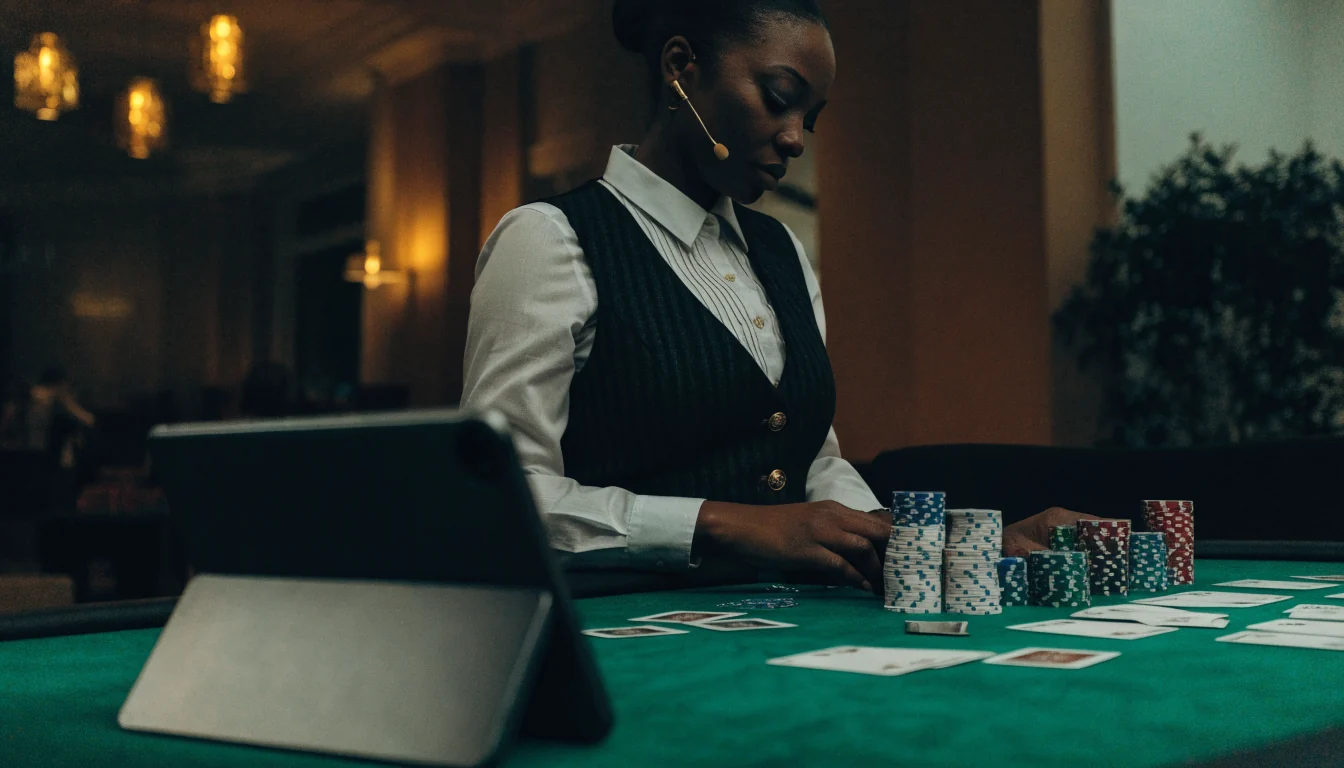
I have seen the same wording create different expectations: “casino bonus” sounds broad, while the game list can be narrow. The operator’s terms determine the actual scope. Read the eligible-games list, the weighting and any maximum-bet rules together; checking only one clause can leave out the condition that matters. Set a budget before playing and do not extend it to meet a wagering target. Chasing the requirement can turn a promotion into a reason to keep staking after the planned limit.
This material is for entertainment purposes only, not gambling advice. A bonus can be ignored; its presence does not make a live game more favourable. The terms are the terms.
Roulette Bets, Outcomes and the House Edge
A roulette spin has a simple result: the ball comes to rest on a number. A bet wins when it covers that number; otherwise, the stake is lost. The betting choices differ in how many possible results they cover and how much they pay if successful. A straight-up bet names one number, while other bets cover a wider set of outcomes.
That distinction matters when considering the house edge. Straight-up bets carry a 2.9% house edge, compared with 2.7% for other bets. The edge is the casino’s mathematical advantage built into the game’s payouts. It is not a prediction of what will happen on an individual spin, nor does it mean that a particular bet is certain to lose. It describes the expected effect across repeated play.
House Edge
Straight-up bets carry a 2.9% house edge, while other bets carry a 2.7% house edge.
I used to see players focus on the size of a possible payout and treat it as the main measure of a bet. That misses the other half of the calculation: how often the covered result needs to land, and how the payout compares with that chance. A straight-up bet is narrow by design. A broader bet can win across more outcomes, but the difference in house edge is a separate consideration from the size or frequency of wins.
The same basic distinction applies when considering a Lightning Roulette casino game. The name points to a variation, but the underlying roulette outcome remains a ball landing on a number. Any additional feature should be understood from the game’s stated rules and paytable rather than assumed to change the ordinary meaning of a winning selection. The house-edge figures alone do not explain every special feature or establish what a particular table pays.
For someone deciding whether to play Lightning Roulette at a UK casino, it helps to separate three things: the number or group of numbers selected, the payout attached to that selection, and the game’s overall house edge. Those are related, but they are not interchangeable. A bet can produce a larger return when it wins without being a better-value choice over time.
I have found that the clearest way to read a roulette bet is to start with its coverage, then check its payout and the table rules. The result of a spin is still singular: one number. The bet determines whether that result is covered, while the house edge describes the longer-run cost built into the game. No system changes that arithmetic.
A Demo Is for Familiarity, Not Real Payouts
A demo of Lightning Roulette, where one is available, is a way to get used to the game’s presentation without treating the session as a source of income. It can show how the roulette screen is arranged and how selections are made through the interface. That makes it useful for learning where controls sit and how the game communicates what has been selected.
The distinction is straightforward: a demo does not pay real winnings. Any balance or result shown in a non-cash version is part of that practice environment, not money that can be withdrawn. A successful result there does not create a claim against the operator, and it does not predict what will happen in a real-money session.
I have seen “risk-free” used to make a demo sound more valuable than it is. In practical terms, it removes the financial stake from that particular session; it does not make the game profitable or demonstrate that a player can reliably win. Familiarity is the limit. No cash outcome.
A demo can still help with small points of orientation. It gives time to notice how the betting area is presented and how selections appear before a round proceeds. That may reduce confusion when moving to a real-money table, but it cannot reproduce the consequences of staking money. The difference is not cosmetic. Real-money play involves financial risk, while a demo’s displayed outcomes do not produce a payout.
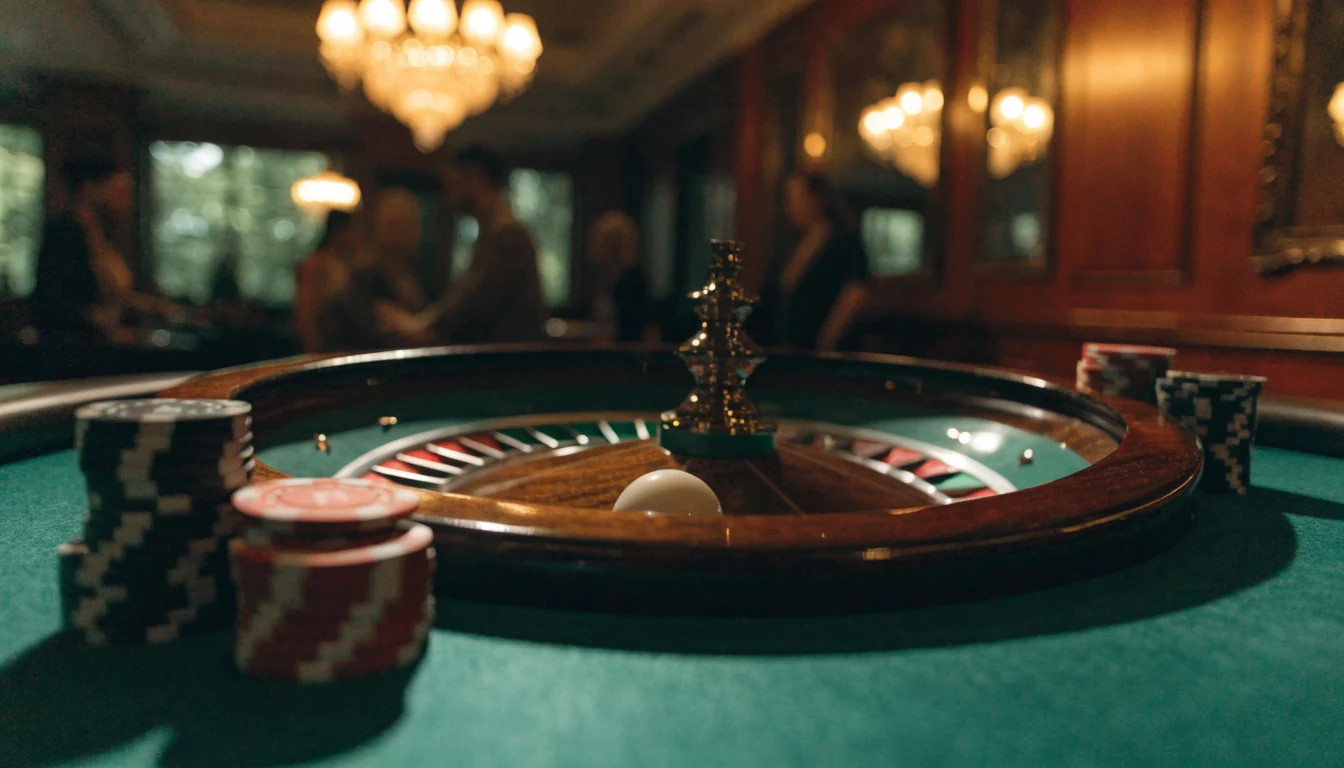
This matters particularly when searching for a Lightning Roulette demo in the UK. The label alone should not be read as a promise that a particular operator offers a practice version, or that every feature available in a cash game appears in it. Availability and presentation can vary. The reliable distinction is between a practice mode, if provided, and a real-money game: only the latter involves a stake and the possibility of a cash payout.
For anyone using a practice mode, the sensible purpose is to understand the interface, not to test a betting system or build expectations from a run of results. A demo cannot establish how a future session will go. It is also not gambling advice; this explanation is for entertainment purposes only. When money is involved, the decision is a different one and should be treated as such.
The Dealer and the Physical Wheel
The defining feature of live dealer roulette is not the camera angle or the graphics around the table. It is the physical wheel: a dealer spins it, and the result comes from the ball’s movement across that wheel. Computerised roulette works differently. Its outcome is produced by a Random Number Generator (RNG), rather than by a ball landing in a pocket on camera.
I find that distinction useful when a UK casino listing labels a table “live”. The word is doing a specific job: it describes a dealer-led game shown through a live feed, not simply a roulette screen designed to look realistic. A polished animation can make a digital game appear atmospheric, but presentation alone does not turn an RNG game into live dealer roulette.

For a Lightning Roulette listing, the same distinction matters. The live-dealer label refers to the roulette process being shown with a physical wheel and dealer. It should not be read as evidence that the wheel itself has become a different kind of machine. The lightning element is part of the named game experience; the relevant point here is that a live dealer table is built around a real wheel, while computerised roulette uses an RNG.
From the operator’s side, those are separate production formats, even when both appear within the same online lobby. One puts a streamed physical game in front of the player; the other presents a computer-generated result. The interface may make them look like neighbouring options, but the source of the result is different.
That difference is easy to lose beneath labels such as “authentic” or “immersive”. Those are promotional descriptions, not explanations of how the outcome is generated. The practical distinction is simpler: a dealer spins a physical wheel in live roulette; an RNG determines the result in computerised roulette. No mystique required.
The format does not make a result predictable. A physical wheel is still a game of chance, and a live feed is not a signal about where the ball will land. I treat the stream as a way to watch the process, not as an advantage. Any play should remain within a set budget; this is entertainment, not gambling advice.
Live Format Realities
- Outcomes are produced by a physical wheel spun by a dealer, not an RNG
- Live feeds are subject to internet connection stability
- Rounds follow a real-time pace that cannot be compressed
- Minimum bets are typically higher than those in digital versions
Playing Online Means Allowing for the Live Pace
Playing Lightning Roulette online is not the same as using a fast digital version. A live table moves at the pace of its rounds, so there is time between placing a bet and seeing the next outcome. That difference affects the feel of play: decisions are made within a continuing session rather than through near-instant digital spins.
I have found that this slower rhythm can be mistaken for a technical problem. It is not necessarily one. A live game has a real-time feed, and the round cannot be compressed to match the speed of a computer-generated game. Waiting is part of the format. For anyone comparing ways to play Lightning Roulette online in the UK, that practical distinction matters more than a promise of constant action.
The connection matters too. Live games need a stable internet connection; interruptions can disrupt the feed and make it harder to follow a round or place a bet in time. A connection that works for ordinary browsing may not remain reliable under changing network conditions. The sensible check is whether the stream stays clear and continuous before treating the session as a suitable way to play.
There is also a cost distinction. Live tables have higher minimum bets than digital versions. That can make the slower pace more consequential: money remains in play across a longer sequence of rounds, while each table sets a threshold for participation. I would not treat a minimum as a suggested budget. It is simply the entry condition for that table, and a budget should be set before play begins.
The advertising word “immersive” often obscures these ordinary constraints. A live feed can feel closer to a casino setting, but it still depends on a functioning connection, a table’s minimum and a pace that cannot be hurried. No magic shortcut.

This is entertainment, not gambling advice. If the connection drops or the pace no longer suits the planned budget, continuing is not a technical necessity. The live format does not make a session more predictable; it only changes how the game is delivered and how long its rounds take.
Zero Is the Detail That Changes Even-Money Bets
French Roulette has a rule that softens the effect of zero on even-money bets. If the ball lands on zero, the stake is not lost in full: only half is taken, while the other half remains with the player. The rule is known as la partage.
That distinction applies to even-money selections, such as red or black, odd or even, and high or low. These bets normally divide the numbered outcomes into two broad groups. Zero belongs to neither side, so without a special rule it would make an otherwise winning-looking selection lose. In French Roulette, la partage changes the settlement: the zero outcome costs half the stake rather than all of it.
The practical point is in the table rules, not the label alone. An online Lightning Roulette casino game may present a familiar roulette interface, but a feature name does not establish which rules govern every bet. The game’s displayed rules should make clear whether French Roulette’s half-stake treatment applies. Lightning effects and roulette settlement are separate matters.
I have seen players focus on the colour or the visual feature and overlook the line that determines what happens on zero. That is where a small rules difference becomes a real change in the result of an even-money bet. Check the paytable and table rules before placing a stake; the same bet name does not guarantee the same settlement across roulette formats.
A narrow rule. A meaningful difference.
This material is for entertainment only and is not gambling advice.
What are the different types of roulette you can play with a live dealer?
European Roulette has one green pocket, 0, while American Roulette has two, 0 and 00. The extra pocket gives American Roulette 38 possible outcomes compared with 37 on the European wheel.
Why does the dealer always win in blackjack?
The dealer does not always win. Blackjack has a house edge, but players can beat the dealer by finishing closer to 21 without going over.
How do you play live roulette?
Place your bets through the on-screen interface while a human dealer spins a physical wheel. You win when the ball lands on a number you selected.
How can you win live dealer roulette?
You win a roulette bet when the ball lands on a number you selected. The live dealer format does not change that basic rule.
Written by the editors at Skyhills Casino.