Online Casinos That Accept SMS Deposits: How It Works
 Available in GB
Pay-by-SMS uses mobile billing to fund a casino account: the phone carries the charge, while the casino holds the gambling balance.

Table of Contents
- How Pay-by-Mobile Deposits Work in UK Casinos
- Why Fewer Casinos Accept Boku Than Before
- The Deposit Flow: Cashier, Phone Number and SMS Code
- What a Pay-by-SMS Casino Offer Actually Tells You
- Phone-Bill Charges, PAYG Credit and Deposit Limits
- Using a Mobile Phone to Deposit: Network and Account Checks
- When a ‘Best’ SMS Casino Claim Meets Bonus Terms
- Comparing Mobile-Payment Options Without a Top-Sites List
- The Payment Workaround—and Its Withdrawal Catch
- SMS Deposits and Online Slots: Payment Is Not a Game Feature
How Pay-by-Mobile Deposits Work in UK Casinos
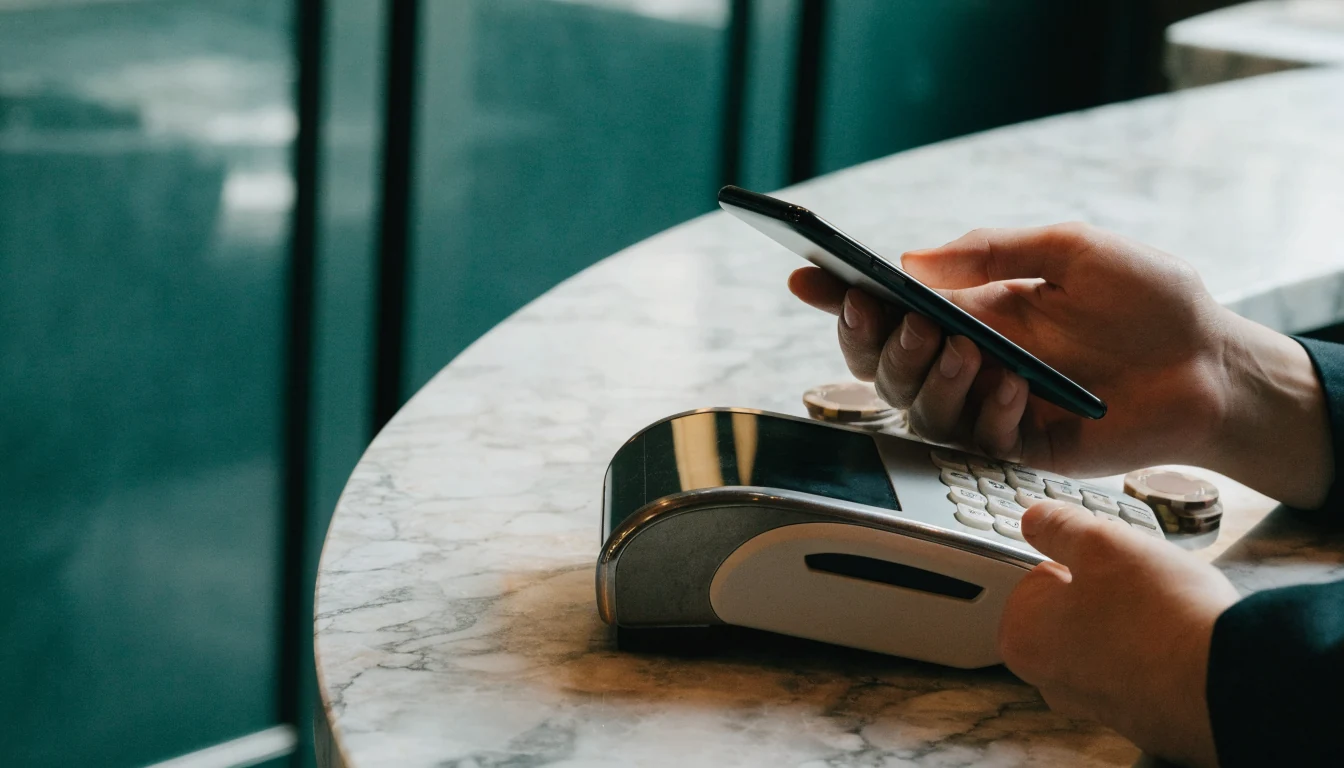
A pay-by-SMS deposit moves money into a casino account through a mobile payment service rather than a bank card. Boku is one such service. The charge is placed on the player’s mobile phone bill, while the casino credits the gambling account. The phone is therefore the route for paying, not the place where casino funds are held.
The wording can make the arrangement sound like a text message is the payment itself. In practice, the text is part of the payment process; the important distinction is where the money ends up. A completed deposit becomes a balance on the casino account, subject to that operator’s account rules. The mobile network handles the charge, and the casino handles the gambling balance. Two separate systems. That matters when something goes wrong: a casino balance query and a phone-bill query do not necessarily go to the same company.
I have seen payment labels do a lot of work in a cashier. “Pay by SMS” sounds like a single, universal option, but the phrase is often used loosely for deposits routed through mobile billing. Boku is a named payment service, not a synonym for every phone-based payment. The cashier’s wording alone does not establish which provider processes a transaction. Nor does it mean that every casino using mobile payments accepts Boku specifically.

For a UK pay-by-SMS casino, the appeal is straightforward: the deposit can be made without entering card details at the point of payment. With Boku, the charge is billed through the mobile operator. That may suit someone who prefers to keep a casino deposit separate from a bank-card transaction, but it does not make the casino account itself a phone account. Once credited, the funds sit in the casino balance and are governed by the casino’s terms.
The larger misunderstanding is about cashing out. Boku is a deposit-only method. It can move money towards a casino account, but it cannot carry winnings back from that account. A player who deposits through Boku therefore needs a different withdrawal route registered with the casino, such as an eligible bank transfer, debit card or e-wallet. The payment method used to fund an account does not automatically become the method for receiving a payout.

That distinction is easy to miss in promotional wording. “Deposit by phone” describes the incoming leg of the transaction, not the full movement of money in both directions. The casino may show a successful deposit in its cashier, yet the mobile bill remains the place where the Boku charge appears. Later, any withdrawal is handled separately under the operator’s payment and verification rules. One route in. Another route out.
The label “instant” can also blur separate stages. A payment service, mobile operator and casino account all have roles, and the time taken for a charge to be confirmed is not the same question as when a withdrawal is processed. The core point is simpler than the marketing language: a Boku deposit is a mobile-billed payment credited to a casino balance, while winnings are not returned through Boku.
This is why the phrase “casinos with pay by SMS” needs a little care. It may refer to a casino offering a mobile-billing option, but the precise provider and the payment’s permitted use still matter. A site that accepts one phone-payment service is not necessarily a site that accepts another. And acceptance for deposits says nothing, by itself, about withdrawal support.
I treat a deposit method as one part of the account’s payment arrangement, not as a complete banking solution. With Boku, that distinction is especially clear: the phone bill funds the casino account, but it is not a channel for collecting casino winnings. Before any deposit, a player should verify the casino’s current UK Gambling Commission licence and have an alternative withdrawal method registered. The cashier is only half the picture.
Why Fewer Casinos Accept Boku Than Before
The decline in direct Boku deposits is an operator decision, not the result of a UK Gambling Commission rule that names and bans the service. A small number of UKGC-licensed casinos still accept Boku, but its availability has been shrinking since 2023. That distinction matters: a payment option can disappear from a casino’s cashier even while the method itself remains available elsewhere.
A payment option may disappear from a casino’s cashier even if the method itself remains available at other licensed operators.
From the operator’s side, keeping a payment method is not simply a matter of leaving a button in place. The casino has to be comfortable with the compliance arrangements around that route and with how it fits into its wider controls. If the perceived compliance risk outweighs the value of offering it, removing it is a straightforward commercial choice. The Commission’s role is to regulate gambling businesses; it did not issue a Boku-specific prohibition. Operators have made their own decisions about whether to continue supporting it.
That helps explain why availability is uneven. One casino may retain direct Boku deposits while another removes them, even though both operate in the same regulated market. A cashier is a commercial menu, not a guarantee that every provider will remain available across every licensed site. The payment option can also change without the casino’s wider gambling service changing. A missing Boku logo, by itself, does not show that Boku has been banned.
A specialist review of payment options describes operators moving away from Boku since 2023, with some switching to Fonix or Siru Mobile and others removing pay-by-mobile altogether. This is a pattern reported in that type of review, not a rule applying to every casino. The practical point is that “Pay by Phone” is not necessarily one fixed provider. A casino can change the company handling mobile payments while keeping a similar broad category in its cashier; it can also decide to stop offering that category.

For someone looking for online casinos that accept SMS deposits, that distinction makes old lists less dependable. A page may name a casino because Boku appeared in its cashier when the page was checked, but payment menus can change. The label “pay by SMS” can also be used loosely, even though the underlying provider may be Boku, Fonix, Siru Mobile or another service. A reference to mobile payment therefore does not, on its own, confirm that direct Boku deposits are currently available.
This is where the wording of a payment claim can do more work than it seems. “Pay by Phone” describes a route that uses a mobile service; it does not necessarily identify the provider or promise that Boku is supported. When a casino replaces one provider with another, a general mobile-payment description may remain while the specific Boku option disappears. The reverse can also happen: a listing may keep saying “Boku” after the cashier has changed. The cashier itself is the relevant check.
The commercial calculation is not mysterious. An operator weighs the value of offering a particular payment route against the work and risk involved in maintaining it. If the option serves a limited part of its customer base, or its compliance position is no longer attractive to the business, taking it out can make more sense than keeping it for continuity. That is an explanation of the incentive, not a claim that every operator made the same assessment or for the same reason.
I would treat the shrinking list as a sign of a changing payment market, rather than evidence that one specific service has vanished everywhere. Some licensed casinos retain Boku; others have moved to a different mobile-payment provider; some have removed mobile payments entirely. These are separate outcomes, and a broad claim that a casino accepts pay by SMS UK may conceal which one applies. Specificity matters.
Boku is a deposit-only method; it cannot be used to withdraw winnings from a casino account.
The consequence is less choice for customers who want to fund a casino account directly through Boku. It also means that availability should not be inferred from an old comparison, a general statement about mobile deposits, or the presence of another mobile-payment brand at the same operator. The UK market still has direct Boku availability, but it is a smaller and less stable part of the payment landscape than it was. Check the exact provider shown by the casino.
The Deposit Flow: Cashier, Phone Number and SMS Code
A Boku deposit begins in the casino’s cashier, not in the phone’s messaging app. The cashier is where the payment route is selected and the amount is entered. The phone then becomes part of the confirmation process: the number supplied for the transaction receives a text containing a verification code, which is entered to approve the payment.
That sequence matters because “SMS deposit” can sound as though sending a text is the whole transaction. It is not. The casino first needs a deposit request with an amount and a mobile number; the text message provides a confirmation step. In my experience, payment descriptions often compress those separate actions into one phrase. The cashier flow is more useful to understand than the label.
The broad sequence is straightforward:
- Open the casino cashier and choose Boku from the available payment methods.
- Enter the deposit amount and the mobile number to be used.
- Wait for the verification message and enter its code in the payment flow to confirm.
The exact screen layout can differ between casinos, but those are the core actions. A payment method may appear alongside card or e-wallet options, yet its selection does not mean that a casino account has already been funded. The amount and number still need to be submitted, and the SMS confirmation still needs to be completed.
The number is not a decorative detail. It connects the cashier request to the phone that receives the confirmation message. A mistyped number can interrupt the process before it is approved, while entering the code in the casino’s payment flow is what completes the confirmation step. The code should be treated as part of the transaction, not as a message to reply to casually. No confirmation, no completed request.
Amount selection is less uniform than a short description of Boku can suggest. A specialist review describes Boku deposits as being offered in amounts divisible by ten, with £10, £20 and £30 among the examples. That is a report of a particular payment setup, not a guarantee that every casino’s cashier presents the same choices. The live amount menu is the relevant one for a specific transaction. If a preferred amount is not displayed, it cannot be assumed that typing it manually will make it available.
This is one reason the cashier matters more than a general payment-method label. A site may say that it accepts Boku, but the amount options shown at the point of deposit determine what can actually be requested there. The selection is part of the operator’s payment configuration; it is not a promise of an unrestricted amount field. Small distinction. Real consequence.
The confirmation stage also separates an intended deposit from an authorised one. Selecting Boku and entering details creates the request; receiving and entering the code confirms it. If the message does not arrive or the code is not accepted, the payment has not been confirmed through the described flow. Re-entering details repeatedly without checking the displayed instructions can create confusion over which request is active, so the on-screen status is the practical reference point.
Boku Deposit Process
Open the casino cashier and choose Boku from the available payment methods.
Enter the deposit amount and the mobile number to be used.
Wait for the verification message and enter its code in the payment flow to confirm.
Once confirmed, the casino processes the deposit request through Boku. The message is not itself a receipt from the casino, and a code should not be confused with proof that funds have appeared in the gambling balance. The cashier’s status and the account balance are the places where the result of the transaction is reflected. It is sensible to distinguish confirmation from the final account display, even when both occur as part of one short payment journey.
The flow is therefore a chain: payment selection, amount entry, phone-number entry, SMS verification and confirmation in the cashier. Each step has a separate job. The cashier defines the request, the number routes the verification message, and the code authorises the transaction. Calling the whole process an “SMS deposit” is convenient shorthand, but it can hide the point at which the user must act.
Boku’s appeal in this process is that the request can be made without entering card or bank-account details in the casino cashier. The trade-off is that the payment depends on a working mobile number and an SMS confirmation step. For the operator, that confirmation is a deliberate checkpoint; for the player, it means the phone needs to be available while the deposit is being made.
A clear cashier should show the selected method, the amount and the number being used before the confirmation is completed. The details are worth reviewing at that moment: once the code is entered, the transaction is no longer merely a draft. The process is brief, but it is not one action. It is a sequence with a decision at every stage.

What a Pay-by-SMS Casino Offer Actually Tells You
A casino saying it accepts Pay by Phone is making a narrow claim about its cashier. It tells me that a particular mobile-payment route may be available; it does not establish that the gambling business is authorised to serve customers in Great Britain. Payment branding and gambling regulation are separate checks.
The UK Gambling Commission regulates commercial gambling in Great Britain and is the sole regulator for that activity. Its remit over remote gambling offered to people in Great Britain does not depend on where the operator’s key equipment is located. In practical terms, a business cannot avoid the licensing requirement by running its platform or servers from elsewhere.
That distinction matters when an offer presents a payment method as a badge of trust. “UK-friendly” describes an impression, not a licence. The Commission issues operating licences to businesses and personal licences to individuals working in regulated roles; a payment provider’s name on a cashier does not replace the operator’s authorisation.
I treat the licence as a separate piece of evidence. Before depositing, the operator’s current licence should be checked against the UK Gambling Commission’s public register, including that the registered business matches the casino being used. A logo or a statement in promotional copy is not the same as confirming the record. Small detail. Important one.
Age controls are another part of the offer that rarely appears in the headline. Online gambling in the UK is legal for people aged 18 and over when the operator holds a UK Gambling Commission licence. The operator must verify a customer’s age before allowing a deposit into a gambling account. A Pay by Phone option does not make that check optional, nor does having a mobile account prove that its user is old enough to gamble.
License Check
Before depositing, verify the operator’s current licence against the UK Gambling Commission’s public register to ensure the business is authorised.
From inside the process, a payment route is only one gate in a wider account relationship. The casino is responsible for operating under its licence; the payment service handles the payment instruction. Those roles should not be blurred just because the transaction begins on a phone. A successful payment is not proof that every regulatory condition has been met.
The same caution applies to claims such as “instant”, “simple” or “secure”. Those words describe a selling angle, not the operator’s regulatory status. The useful question is narrower: which licensed business is offering the gambling, and does its current UKGC record correspond to that business? Only after that is clear does the payment-method claim have practical meaning.
A Pay-by-SMS casino offer, then, gives a starting point rather than a verdict. It may indicate that a phone-based deposit is supported, but it says nothing by itself about the licence, the age checks or the identity of the company behind the site. I would separate those questions rather than letting a familiar payment name answer all of them.
Phone-Bill Charges, PAYG Credit and Deposit Limits
With Boku, the deposit is collected through the mobile account rather than taken directly from a bank card. On a monthly contract, the charge is added to the phone bill; on a PAYG plan, it comes out of the available prepaid balance. The casino receives the payment through the service, while the mobile operator is where the charge ultimately lands.
That distinction matters when a payment is declined. A PAYG user cannot put more through Boku than the credit remaining on the phone. A deposit can therefore fail even when the casino cashier accepts the amount in principle: the balance may not cover it. On a contract, the relevant constraint may instead be the operator’s own payment controls or the limit applied to Boku transactions.

Deposit limits are not described consistently across UK sources. Some specialist reviews report a per-transaction ceiling of £10 and a network-level daily limit of £30. Other accounts give a £30 daily limit but do not specify any per-transaction cap. Those descriptions cannot be combined into one definitive rule. They may reflect different operators, networks or information gathered at different times.
There is also a separate set of figures in some specialist reviews: a £30 standard maximum per transaction, with certain casinos or network operators said to allow £40 or £50. That does not resolve the disagreement. It shows why a figure found in a general guide should not be treated as a limit guaranteed for every Boku payment.
The practical distinction is between the casino’s cashier limit and the mobile operator’s controls. A casino may set the amounts it will accept, but reports on Boku daily limits attribute enforcement to the network operator rather than the casino. A transaction can sit within the cashier’s stated range and still be refused when the mobile account has reached a provider-set threshold. The boundary is not always visible at the casino end.
I have seen payment pages make a limit look like a simple product feature. In practice, the amount that can be charged depends on more than the casino’s displayed options: the Boku terms in force, the operator’s rules and, for PAYG, the credit left on the handset all matter. The published figures are not a universal tariff.
Boku Deposit Limits
Some specialist reviews report a per-transaction ceiling of £10 and a daily limit of £30, while others mention a standard maximum of £30 per transaction with some cases allowing £40 or £50.
For anyone comparing SMS billing casinos, the useful check is the live payment information for the specific casino and mobile account, not a limit repeated as if it applied across the UK. A monthly bill and PAYG credit follow different billing routes, but both can be subject to rejection before the casino receives the deposit. Small print matters.
Using a Mobile Phone to Deposit: Network and Account Checks
A mobile casino deposit depends on more than having a phone to hand. The payment service must work with the network carrying the number, and the casino account must have a separate route for paying winnings out. Those checks are easy to overlook when the deposit itself is presented as a quick phone-based action.
For UK customers, Pay by Phone and Fonix are available across the four main networks: EE, O2, Vodafone and Three. That gives a useful starting point, but it does not guarantee that every casino offers either service or that a particular payment option will appear in every cashier. The operator decides which methods it supports; the network connection is only one part of the arrangement.
I have seen payment labels create false confidence. A page may describe an SMS deposit mobile casino option without making clear that availability depends on the casino’s own cashier and the payment provider it uses. The practical check is whether the named method is actually offered for the account and phone number in use, rather than whether the network itself is widely supported.

The account side needs equal attention. Boku can put a deposit through the mobile payment route, but it cannot receive a casino withdrawal. Winnings therefore need another destination, such as a debit card, e-wallet or bank transfer, registered with the casino. Without that alternative, the deposit route may be open while the cash-out route is not ready.
That distinction matters because “mobile” describes how money goes in, not how the whole account is funded and paid out. A phone-bill casino deposit does not turn the mobile number into a general-purpose banking account. The casino’s withdrawal rules and the details on the alternative payment method still govern the way funds can leave.
There is also an account-readiness check before any deposit. UK operators must verify a customer’s age before allowing funds to be deposited, and a casino serving Great Britain must hold the relevant UK Gambling Commission licence. A payment option being visible is not a substitute for confirming the operator’s licence on the Commission’s public register.
In practice, the useful distinction is simple: network compatibility answers whether a mobile payment route may work; account setup answers whether the casino can accept the deposit and later send funds out. They are separate checks. Plan the exit first.
When a ‘Best’ SMS Casino Claim Meets Bonus Terms
If you’re looking for an online casino that accepts SMS deposits, this list offers a starting point for reviewing the available options. Check the payment methods and terms directly with each casino before depositing.
Payout speed: 1-3 business days Jetsetspins has a stated payout speed of 1–3 business days.
Payout speed: 1-3 business days Revery Play has a stated payout speed of 1–3 business days.
Payout speed: 1-3 business days BeOnBet has a stated payout speed of 1–3 business days.
Payout speed: 1-3 business days Zombillion has a stated payout speed of 1–3 business days.
Payout speed: 1-3 business days Britsino has a stated payout speed of 1–3 business days.
Payout speed: 1-3 business days Amunbet has a stated payout speed of 1–3 business days.
Payout speed: 1-3 business days SpinFormula has a stated payout speed of 1–3 business days.
Payout speed: 1-3 business days WinBeast has a stated payout speed of 1–3 business days.
Payout speed: 1-3 business days NightWin has a stated payout speed of 1–3 business days.
Payout speed: 1-3 business days NightLuck has a stated payout speed of 1–3 business days.
“Best” is a marketing label, not a useful test of whether a Pay by Phone deposit suits a particular bonus. In my experience, the cashier and promotion are often treated as separate features: a payment option can work while the welcome offer excludes deposits made that way. Eligibility is set by each operator, so a general claim about SMS deposits does not establish that a specific promotion will apply.
Some specialist casino reviews identify MrQ, Duelz, Mr Vegas and Videoslots as operators where Pay by Phone deposits have been accepted for bonus eligibility. That is a report about particular offers, not a standing rule for every promotion at those casinos. Terms can differ between offers and may change, so the wording attached to the promotion matters more than the payment method’s presence in the cashier.
The headline number is only part of the deal. Specialist reviews have described welcome offers built around a deposit match of up to £100, with a 35-times wagering condition. That figure is not a promise of withdrawable cash: wagering requirements specify how much play must take place before bonus-related winnings can be withdrawn, and the applicable rules determine what counts. A large match can therefore be less useful than a smaller offer with terms that fit the way the account is funded.
- Check if the specific promotion accepts Pay by Phone
- Review wagering requirements and expiry dates
- Assume “Best SMS Casino” labels guarantee bonus eligibility
- Rely on the banner without reading the fine print
Time limits also change the calculation. Some specialist review material reports bonus funds expiring within 30 days and bonus spins within 72 hours. Those are reported offer conditions, not universal deadlines. If a Pay by Phone deposit qualifies, the promotion may still have separate rules for wagering, eligible games and expiry. Fine print. Not the banner.
I would treat “best SMS casino” as shorthand for a more practical question: does this operator’s current offer accept this payment route, and can its conditions realistically be met before expiry? The terms should say whether Pay by Phone deposits count, when the bonus becomes active, and what must happen before winnings can be withdrawn. A payment-method claim alone answers none of that.
Comparing Mobile-Payment Options Without a Top-Sites List
“Pay by phone” can describe several different payment routes, not one shared service. Boku, Fonix and Siru Mobile are distinct providers. A casino cashier may offer one, another, or no mobile-payment option at all. The label alone does not tell the whole story.
With direct Boku, the payment goes from the casino cashier through Boku to the mobile network account. Fonix and Siru Mobile are alternatives, but their presence does not mean a casino accepts Boku. I have seen that distinction blur in promotional copy: “SMS deposits” can sound like a universal method when the cashier actually connects to a particular provider.

A specialist review’s snapshot associates MrQ and Duelz with Fonix, and Mr Vegas and Videoslots with Siru Mobile. Those examples illustrate that casinos can choose different services; they are not a permanent directory or a ranking. Payment menus can change, so the cashier’s displayed method is the useful evidence at the point of deposit.
Network compatibility is another part of the comparison. Pay by Phone and Fonix are supported by EE, O2, Vodafone and Three, but that does not make every casino’s provider available to every customer. An O2 customer looking for an SMS casino still needs to distinguish the mobile network from the payment service: O2 is the carrier, while Boku, Fonix or Siru Mobile may be the payment route offered by the operator.
The practical comparison is therefore provider-to-provider, not “top” casino against “top” casino. Check the exact name shown in the cashier and the terms attached to that route. A site advertising phone payments may support a service other than Boku, and a casino accepting one provider does not thereby accept the others.
There is no single SMS payment standard. The names matter.
Direct mobile-payment route where charges are billed to the mobile operator.
An alternative mobile-payment provider supported by main UK networks.
Another distinct mobile-payment service used by various online casinos.
The Payment Workaround—and Its Withdrawal Catch
A possible workaround for a casino that does not take Boku directly is to use Boku to add funds to Neteller, then deposit from Neteller at a casino that accepts it. A specialist review has described this route, but it should not be treated as a standing arrangement: payment providers and casino cashiers can change, and the route depends on Neteller accepting the Boku-funded balance at the time.
The chain has separate steps and separate terms. Boku funds the wallet; Neteller then makes a distinct payment to the casino. A casino accepting Neteller does not, by itself, confirm that every Neteller balance or funding route will be accepted. The cashier’s current payment options and the wallet’s own rules determine whether the transfer can proceed.
The key limitation remains: Boku is for deposits only. Casino winnings cannot be sent back to a Boku account or added to a phone bill as a withdrawal. That is easy to miss when an advert describes a payment route as “complete”. It may describe how money gets in, not how it comes out.

I treat the withdrawal leg as a separate decision, not an automatic reverse of the deposit. A casino may require a different eligible method for cashing out, so the account needs an alternative withdrawal method registered. The Neteller route does not remove that requirement, and it should not be assumed that a casino will return winnings to the same wallet simply because Neteller was used to deposit.
There is also a practical point about tracing the funds. A payment made through Boku into a wallet and then on to a casino crosses more than one provider. If a payment is declined or delayed, the relevant records may sit with different services. Keeping the transaction details makes it easier to identify where the chain stopped.
This is an indirect route, not a way to make Boku withdrawable. The distinction matters: funding a wallet may create another deposit option, but it does not change Boku’s deposit-only status or guarantee a matching cash-out route.

SMS Deposits and Online Slots: Payment Is Not a Game Feature
“SMS slots” is shorthand that can blur two separate things. A slot is a game; SMS is part of a payment route used to put money into a casino account. The deposit method does not change the game’s rules, speed or features. A search for SMS casino sites in the UK is therefore about casinos’ payment options, not a special class of slot.
The distinction matters because marketing language often puts the payment method beside a game category as if they were one product. They are not. A casino may offer online slots and accept deposits confirmed by text, but the message only relates to the transaction. It does not start a spin, determine a result or create a different version of a slot.
I have seen this wording cause confusion around “SMS deposit slots”, especially when a deposit amount appears in the same headline. The amount describes a payment threshold or offer claim, where applicable; it says nothing by itself about which games are available or how they operate. Payment and play sit on separate parts of the system.

There is also a separate set of rules for online slots in Britain. Autoplay is banned, so a player cannot set a slot to run a succession of spins automatically. Each spin must last at least 2.5 seconds. Those controls apply to slot play, not to the method used to fund the casino balance.
That means a text-confirmed deposit does not make a slot faster or exempt it from the rules. Nor does a casino’s use of SMS in its payment description indicate that its games are played through text messages. The phone handles the payment confirmation; the casino account holds the funds; the game runs separately.
A “£10 deposit by SMS” phrase, where shown, should be read as a statement about funding, not as a game feature or a promise that every slot can be played at that amount. The precise payment options and game terms remain distinct. Different controls.
What are the deposit limits at pay-by-mobile casinos?
Boku’s standard UK limit is £30 per transaction, although some casinos or mobile networks may allow £40 or £50. Network-level limits are typically about £10 per transaction and £30 per day; PAYG deposits are also limited by your remaining phone credit.
How do I deposit with Boku at an online casino?
Choose Boku in the casino cashier, enter the deposit amount and your phone number, then confirm using the SMS verification code. Deposits must be in amounts divisible by ten, such as £10, £20 or £30.
How can I be sure Boku is available where I live?
Pay by mobile and Fonix are supported by EE, O2, Vodafone and Three. Check your casino’s cashier to confirm that it currently offers Boku, as availability varies between operators.
Can I deposit by phone bill without Boku?
Yes. Some casinos use other mobile-billing services, including Fonix or Siru Mobile, while others no longer offer pay-by-mobile deposits.
What is the standard Boku deposit limit in the UK?
The standard limit is £30 per transaction, though some casinos or mobile operators may allow up to £40 or £50. Network-level limits are typically about £10 per transaction and £30 per day.
Published by the Skyhills Casino team.