Anjouan Casino Licence and UK Gambling Rules
 Available in GB
An Anjouan authorisation does not itself permit gambling services in Great Britain; licensing, player safeguards and payments need separate scrutiny.

Table of Contents
- What an Anjouan Licence Means for UK-Facing Gambling
- How Anjouan Licensing Works—and What Its Register Can Prove
- Anjouan Online Casinos: The Safeguards That May Be Missing
- Bonuses: The Wagering Conditions Behind the Headline
- What an Anjouan Gaming Licence Does—and Does Not—Authorise
- Payments and Payouts at Anjouan Casino Sites
- New Anjouan Casinos: Why a New Launch Is Not Proof of Safety
- Crypto at Anjouan Casinos: Payment Routes and Their Limits
- How to Read Anjouan Casino Reviews with Caution
- Offshore Casinos and Anjouan’s Place Among Licensing Jurisdictions
What an Anjouan Licence Means for UK-Facing Gambling
An Anjouan casino licence and permission to serve customers in Great Britain are separate things. The first is an authorisation associated with a jurisdiction outside the UK. The second depends on the rules governing the British gambling market. A licence issued overseas does not, by itself, give an operator the right to offer gambling to people in Great Britain.
The distinction matters because a casino website can be available online without being authorised for every country in which its pages can be viewed. A site may describe itself as licensed in Anjouan, and that may be relevant to its status under the licensing system it names. It does not answer the separate question of whether the operator may legally supply gambling services into Great Britain.
Under the Gambling Act 2005, the central regulatory concern is the operator supplying gambling to the UK market, rather than the individual who places a bet. An operator serving customers in Great Britain needs a licence from the UK Gambling Commission, wherever the business is based. An overseas address or an Anjouan authorisation does not displace that requirement.
For a page about Anjouan casino licences in the UK, check the licensing information separately before choosing a casino. This list provides one stated point to consider: each operator’s payout speed.
Payout speed: 1-3 business days Jetsetspins lists a payout speed of 1–3 business days.
Payout speed: 1-3 business days Revery Play lists a payout speed of 1–3 business days.
Payout speed: 1-3 business days BeOnBet lists a payout speed of 1–3 business days.
Payout speed: 1-3 business days Zombillion lists a payout speed of 1–3 business days.
Payout speed: 1-3 business days Britsino lists a payout speed of 1–3 business days.
Payout speed: 1-3 business days Amunbet lists a payout speed of 1–3 business days.
Payout speed: 1-3 business days SpinFormula lists a payout speed of 1–3 business days.
Payout speed: 1-3 business days WinBeast lists a payout speed of 1–3 business days.
Payout speed: 1-3 business days NightWin lists a payout speed of 1–3 business days.
Payout speed: 1-3 business days NightLuck lists a payout speed of 1–3 business days.
That is the practical meaning of the phrase “licensed casino” in this context: it needs a clear boundary. Anjouan-licensed casinos may hold a licence in their own jurisdiction, but that wording should not be read as a statement that they hold a British operating licence. The regulator named on a site’s licence page is not necessarily the regulator responsible for permission to serve British customers.
I have seen how easily marketing language blurs those categories. “Internationally licensed” sounds broad, but it is not a substitute for identifying the market in which an operator is authorised. A logo or a reference to an overseas licence may tell something about the operator’s claimed status elsewhere; it cannot establish UK Gambling Commission approval. Different question. Different permission.
The same distinction applies to anjouan online casino licence searches and descriptions of online casinos licensed in Anjouan. Those phrases refer to the jurisdiction associated with the licence, not to a special UK status. For a business accepting customers in Great Britain, the relevant point is whether it has the required UK Gambling Commission licence. A licence from elsewhere does not become a British licence because the site is accessible from a British connection or accepts a British customer.
The legal position for players is not identical to the position for operators. The Act is directed at businesses supplying gambling services into the market; it does not make an individual player’s use of an unlicensed site a criminal offence. British law also does not expressly bar citizens from using gambling services licensed in another country. These points should not be mistaken for regulatory approval of the site, or for a guarantee that every activity involving it is lawful in every circumstance.
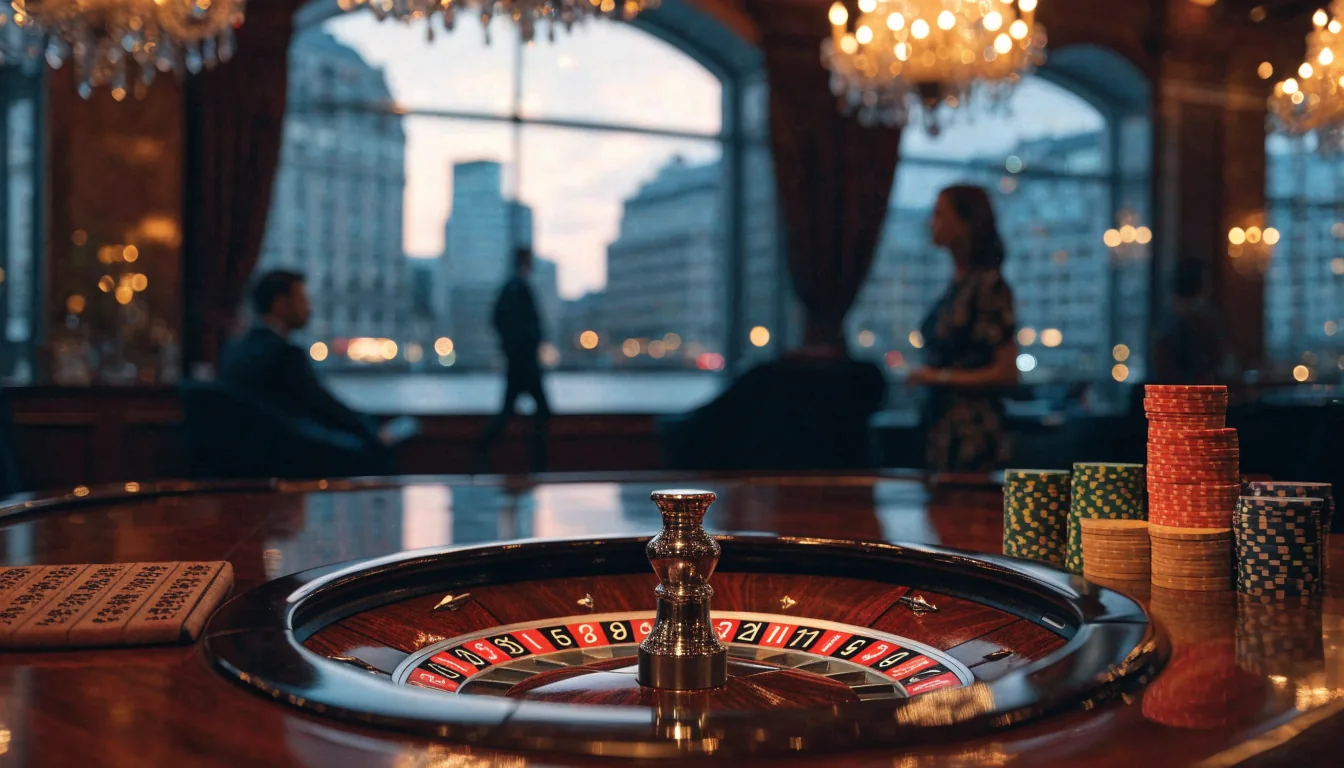
That distinction can sound counterintuitive: an operator may lack the permission required to serve Great Britain, while a player using the site does not thereby commit a criminal offence under UK law. The law places the licensing obligation on the supplier. It does not follow that the player receives the protections or status associated with a UK-licensed service.
For the same reason, “not criminal for the player” and “legal online gambling in the UK” are not interchangeable claims. Online gambling in the UK is legal through sites operating under the applicable British licence. A player’s lack of criminal liability does not convert a non-UK-regulated casino into a site authorised for the British market. The operator’s licensing position remains a separate issue.
The year in a phrase such as “Anjouan casino licence UK 2026” does not alter this basic distinction. A new year, a refreshed website, or a change in an operator’s presentation cannot turn an overseas licence into UK Gambling Commission permission. The legal question remains tied to the operator’s authority to serve customers in Great Britain, not to the date displayed in promotional material.
In practice, it helps to keep three statements apart: an operator may claim an Anjouan licence; the UK regulates operators supplying gambling to Great Britain through its own licensing system; and a player’s use of an unlicensed site is not, on that basis alone, a criminal offence. Collapsing these into a single idea of “legal” is where confusion starts.
An overseas licence does not grant an operator the right to supply gambling services into Great Britain, nor does it replace the requirement for a UK Gambling Commission licence.
Anjouan casinos should therefore be understood as a category of overseas-licensed services, not as UK-licensed casinos by another name. The licence and the market permission answer different questions. Anyone considering an offshore gambling service remains responsible for checking the laws that apply to them and understanding the implications of using it.
How Anjouan Licensing Works—and What Its Register Can Prove
A licence entry can answer a narrow question: whether a casino is presented as operating under Anjouan’s authority. It cannot, by itself, establish how thoroughly the operator is supervised or how a dispute will be resolved. I treat a register as a starting point for verification, not as a quality stamp.
That distinction matters because a licence can look reassuring while leaving important questions unanswered. The Anjouan framework does not require random number generator testing, audits or the segregation of player funds. A listing therefore cannot be read as proof that games have undergone independent testing, that an operator’s accounts have been audited, or that customer balances are kept apart from company money.
Those are separate claims. A logo on a website is weaker evidence than an entry that can be checked against the authority’s own records. But even an official record establishes only what its contents support. It does not fill in safeguards the framework does not mandate.

What a register can—and cannot—establish
When checking an Anjouan casino licence, the useful question is whether the operator’s licensing claim has a corresponding record in the relevant official register. A match can support the limited conclusion that the authority records a licence associated with that operator. It should not be stretched into a conclusion that every part of the casino’s operation has been independently examined.
I have seen how easily a licence badge does extra work in advertising. The word “licensed” can imply a broad package of checks, even when the underlying evidence proves a more limited fact. A register entry is not a report on game fairness, financial resilience or complaint outcomes. It is not a guarantee that a player will recover money if a dispute remains unresolved.
The distinction is between status and oversight. A register may help establish status; the framework determines what oversight is required. In Anjouan’s case, the absence of mandated RNG testing and audits means that a listed licence cannot be used as evidence that those checks took place. The same applies to player-fund segregation: the framework does not require it, so a licence record does not demonstrate that funds are separated.
No implied audit.
A careful check also avoids treating a familiar-looking name as enough. The entity named in a record and the brand shown to customers may not be identical, and a website’s own claim is not the same thing as confirmation from the authority. Where a record does not clearly settle the relationship, the claim remains uncertain; the uncertainty should not be replaced with an assumption.
An Anjouan licence record establishes the operator’s status but does not provide evidence of RNG testing, financial audits, or the segregation of player funds.
Complaints: a response deadline is not an appeal
The complaint process is another place where the limits of the licence matter. Under Anjouan’s framework, operators must respond to complaints within 30 calendar days. That is a requirement on the operator to reply. It does not mean the authority itself investigates the complaint, decides who is right, or orders a remedy.
The Anjouan authority does not handle, mediate or adjudicate player complaints. An operator’s response deadline should therefore not be mistaken for an independent decision deadline. A reply may address the issue, but the framework does not turn that reply into a ruling by a separate dispute body.
This is also why an Anjouan-licensed casino does not provide an independent dispute resolution route comparable to the services approved under the UK Gambling Commission system. The important difference is institutional: an internal complaint is handled by the operator, while independent resolution requires a separate body able to consider the disagreement. Under this framework, that comparable route is not provided.
In practice, the register and the complaint process answer different questions. The register concerns the licence claim. The complaint rules concern what the operator must do after a complaint is made. Neither establishes that the player will obtain a particular outcome.
Reading the evidence narrowly
The strongest reading of a licence record is a restrained one: it may corroborate that an operator is listed under Anjouan’s licensing framework. It does not certify every operational practice, demonstrate independent testing, or provide an outside appeal mechanism. Those limits are not technical footnotes. They define what the licence can reasonably be relied on to mean.

I would separate three claims that casino marketing often compresses into one: that a licence exists, that particular controls are in place, and that a player has an independent route if something goes wrong. The first may be checked against a register. The second needs evidence of the specific control, and the framework does not mandate RNG testing, audits or segregated funds. The third is constrained by the fact that the authority does not adjudicate complaints and no comparable independent dispute route is provided.
A verified listing can still be useful. It narrows one uncertainty: whether the operator’s licensing claim appears in the authority’s records. But it should not carry meanings the framework does not support. A licence is a record of status, not a substitute for evidence about testing, financial arrangements or independent complaint review.
Anjouan Online Casinos: The Safeguards That May Be Missing
The practical difference between an Anjouan-licensed casino and a UK-licensed one is not just the name of the regulator. It is the set of protections that can be relied on when gambling becomes difficult, personal information is involved, or a dispute arises. I have found it useful to look past the licence badge and ask a narrower question: what happens if the safeguards expected in Britain are not built into the service?
Anjouan-licensed sites are not required to connect to GAMSTOP, the UK Gambling Commission’s self-exclusion scheme. A person registered with GAMSTOP should not assume that the scheme will prevent access to a casino outside its system. Casinos not on GamStop sit beyond that particular control. This does not make self-exclusion irrelevant; it means the practical reach of a UK scheme depends on whether the gambling service participates in it.
Player Protection
Anjouan-licensed sites are not required to connect to GAMSTOP, meaning self-exclusion registered through the UK scheme will not automatically prevent access to these casinos.
That distinction matters because self-exclusion is designed to create friction at a moment when a player may not want to rely on willpower alone. At a UK-regulated operator, mandatory responsible-gambling measures form part of the operating framework. At a non-UK-regulated casino, comparable tools may not be required. Deposit limits, time-outs and account closure options can vary, and the presence of a button or setting does not by itself establish how firmly it is enforced.
I have seen responsible-gambling controls treated as interface features: visible in an account menu, but only as useful as their terms and implementation. A limit that can be changed immediately is different from one that takes effect after a meaningful pause. Anjouan-licensed casinos are not required to provide the UK framework’s mandatory tools, so the level of protection cannot be assumed to match that of a British-licensed site. The gap is structural. Not cosmetic.
The same caution applies to data protection. Non-UK-regulated casinos may operate under less stringent data-protection rules than UKGC-licensed operators. That does not establish that every such casino mishandles personal information, nor does a foreign licence alone prove a particular site is unsafe. It does mean the protections and oversight familiar from a UK-regulated service may not apply in the same way. Account registration and verification involve personal details; the practical question is how the operator explains its handling of that information and what avenue exists if something goes wrong.

In my experience, privacy wording deserves more attention than a generic statement that information is “secure”. That word is advertising until backed by clear terms: what information is collected, why it is needed, how it is used and who may receive it. A vague policy leaves uncertainty about the boundaries of the operator’s responsibilities. The licence should not be read as a blanket assurance about data handling.
The remedy side is just as important. Using a non-UK-regulated casino means losing access to the UK’s Financial Ombudsman Service and to the mandatory responsible-gambling protections attached to UK regulation. Anjouan-licensed casinos are not required to offer an independent dispute-resolution route equivalent to services approved for UK operators. So a complaint about an account, a limit or a decision by the operator does not automatically have a neutral UK body to review it.
This is where a familiar customer-service process can be mistaken for independent protection. An operator may accept complaints and reply to them, but a reply from the company is not the same as an external adjudicator examining the dispute. The difference becomes tangible when the player and operator disagree about what happened: without a comparable independent route, the player may have fewer practical ways to challenge the decision. A support ticket is not a ruling.
Reviews and testimonials can describe other people’s experiences, but they cannot supply the regulatory remedies that are absent. Nor can the word “licensed” settle questions about responsible-gambling controls or personal-data safeguards. Those are separate matters. A site may offer tools voluntarily, but voluntary provision is not the same as a requirement to provide them or a UK body checking compliance under the British system.
- Check if the operator explains how personal data is handled
- Verify the existence of a neutral, independent dispute-resolution route
- Look for mandatory responsible-gambling tools
- Assume a foreign licence guarantees UK-level data protection
- Rely on a support ticket as a binding independent ruling
- Mistake an interface feature for a firmly enforced limit
The phrase “player protection” can sound comprehensive. In practice, it covers different things: limits on gambling, a route to exclude oneself, privacy obligations and a way to contest a decision. Anjouan online casinos may differ from UKGC-licensed operators across these areas, and the gap is most relevant when a control needs to work or a complaint needs to go beyond the operator. The important point is not that every site behaves badly. It is that the same safeguards cannot be presumed.
For a British player, the distinction is therefore practical rather than theoretical. A casino may be accessible and may offer its own policies, but it does not thereby become part of GAMSTOP or provide UK-approved dispute resolution. The protections attached to British regulation do not travel with the player to an Anjouan-licensed service. That is the trade-off hidden behind a familiar-looking account page.
Bonuses: The Wagering Conditions Behind the Headline
A welcome offer is not the same thing as withdrawable cash. The headline usually describes what is credited to an account; the terms determine what must happen before any resulting balance can be withdrawn. I have found that the key distinction is often buried in the definition of “wagering”: the requirement may apply to the bonus, the deposit and bonus together, or a bonus combined with free-spin winnings.
That difference changes the workload considerably. A specialist review has reported offshore welcome offers with wagering requirements of 35x or more. Another specialist review describes 40x terms that can be calculated against the bonus and deposit together, the bonus alone, or the bonus and free spins combined, depending on the offer. These are reported examples, not terms that apply to every Anjouan casino bonus. The promotion’s own wording is what matters.

What the multiplier applies to
A multiplier without a clearly stated base is incomplete information. If it applies to the bonus alone, the amount to be wagered is calculated from that credit. If it applies to the deposit and bonus together, the qualifying balance is larger. An offer that presents the same multiplier in large type can therefore create very different obligations in practice.
The games may not contribute equally, either. Where the terms distinguish eligible games or contribution rates, a wager may count only partly towards clearing the offer. That can make the advertised requirement look closer than it is. I treat “easy to clear” as promotional language until the calculation base, qualifying games and any maximum bet condition are visible in the terms.
There is a second distinction: completing the wagering requirement does not necessarily mean every balance is withdrawable. A maximum conversion or cash-out cap can limit the amount retained from an offer. The cap is separate from the multiplier, so reading only the wagering line leaves out a material condition.
Free spins have their own clock
Free spins are often presented as a simple extra, but their winnings can carry separate conditions. A specialist review reports examples where free-spin winnings face wagering of 30–50 times the winnings, alongside withdrawal caps of £5–£50. Those figures describe offers reported by that type of source; they should not be read as universal terms or a promise that a particular promotion uses them.
Reported Free Spin Conditions
Some specialist reviews have noted free-spin winnings with wagering requirements of 30–50 times and withdrawal caps ranging from £5 to £50, often with short expiry windows of 24–72 hours.
A specialist review also reports free-spin packages with expiry windows of 24–72 hours. The short window matters because the spins may need to be used before they disappear, while any winnings can then start a separate wagering period. The two clocks are not necessarily the same. The offer terms need to say when each begins and what happens to unused spins or uncleared winnings.
Read the offer as a set of conditions
I compare the headline with the full promotion rules, not with a casino list or a “best” label. For an Anjouan casino bonus, the useful details are the calculation base, eligible games, contribution rules, expiry, maximum stake while wagering, and any cap on withdrawals. If a condition is unclear, the value of the headline cannot be assessed reliably.
Terms can also differ between promotions, so a description of one welcome offer should not be treated as a standing promise about later bonuses. The operator’s published rules at the time of acceptance are the relevant terms to examine. A generous-looking credit can still be restrictive once the wagering base, deadline and cap are read together.
The practical test is simple: identify what must be wagered, what counts towards it, how long the offer lasts, and what can be withdrawn after completion. If those points are scattered across separate clauses, the headline is doing more work than the bonus. The fine print decides.
What an Anjouan Gaming Licence Does—and Does Not—Authorise
An Anjouan gaming licence is a jurisdiction-specific permission, not a passport for a casino to operate wherever it can reach customers online. Its presence indicates a connection to Anjouan’s licensing framework; it does not, by itself, establish that the operator has permission to serve every country in which its website can be opened.

That distinction is easy to blur in casino marketing. A site may describe itself as “licensed” and place a licence badge beside its name. The badge can sound like a general assurance of lawful access. In practice, its meaning is narrower: the Anjouan licence does not authorise operation in the United Kingdom or in other markets designated as restricted. A website being technically accessible from a location does not change that.
I have found it useful to separate three ideas that promotions often fold into one: where an operator is licensed, where it is allowed to offer gambling, and where a particular customer is located. These are not interchangeable. A licence from one jurisdiction does not automatically override the rules that apply in another. Nor does a casino’s decision to accept registrations necessarily prove it has authority to operate in the customer’s country.
For a casino serving the British market, an Anjouan gaming licence is not a substitute for the relevant UK permission. The same principle applies elsewhere: the operator must account for the rules of each market it enters. The licence’s existence answers a question about its Anjouan status, not every question about the geographic reach of its business.
This matters because online gambling crosses borders more easily than regulation does. A site can use one domain, one account system and one set of promotional pages while customers view it from different countries. That unified presentation can make the service appear universal. Its legal position is not. Access from a country, a language option, or a payment route available there does not expand the territorial authority of the licence.
Technical accessibility from a location, language options, or available payment routes do not expand the territorial authority of an Anjouan licence.
The wording on a site deserves close attention. “International” describes an intended audience, not a permission. “Available” may describe technical access, not lawful operation. Even the phrase “Anjouan licensed” should be read as a statement about the licensing jurisdiction, rather than as confirmation of approval in the UK or elsewhere. Small distinctions; significant consequences.
For operators, geographic scope is a market-entry issue, not a footnote to the licence. For players, it explains why a casino’s licence label cannot settle whether the service is authorised where they live. Local rules still matter, and anyone considering an offshore gambling service remains responsible for understanding the implications under the law that applies to them.
The practical point is straightforward: an Anjouan licence has boundaries. It does not grant blanket authority to offer gambling across borders, and it does not turn restricted markets into permitted ones. A licensing claim should therefore be understood in its specific jurisdictional context, rather than treated as a universal seal of approval.
Payments and Payouts at Anjouan Casino Sites
The cashier is where a broad payment promise meets the operator’s actual rules. Non-UK-regulated casinos may set looser deposit and withdrawal policies, which can mean fewer restrictions and faster payouts. But “fast” is not a payment guarantee: the method selected, the casino’s processing and its verification checks all affect when funds arrive.

Available routes can include cards, e-wallets, bank transfers and cryptocurrencies, sometimes handled through alternative processors. Some sites may also accept deposits billed to a mobile phone or taken from a prepaid balance; that option is reported in specialist reviews, not a dependable feature of the market. A deposit route does not necessarily work in reverse. The casino may require withdrawals to go to a different method or request checks before releasing funds.
Published timings do not tell one consistent story. Some accounts put withdrawals at non-GamStop casinos as fast as 24 hours to five business days, depending on the payment method. Other accounts warn that a payout can take three or four weeks, with no regulatory clock to compel faster handling. The difference matters: a cashier estimate is not the same as an enforceable deadline.
Limits can also change the practical value of a win. A specialist review may report daily, weekly or monthly withdrawal caps at a particular operator, meaning a larger balance could be paid in instalments. These terms should be read alongside any stated processing time, not treated as a footnote.
Verification is another point of friction. Some offshore operators may ask for notarised documents or a video call before approving a withdrawal—steps that can hold up access to funds. Delays, account restrictions and demanding checks are risks, not proof by themselves of misconduct. The key distinction is that looser rules can cut both ways: fewer barriers at deposit, less certainty at payout.
Attention: Payout timings at non-UK-regulated casinos can vary significantly, with some reports indicating delays of three to four weeks without a regulatory clock to compel faster handling.
New Anjouan Casinos: Why a New Launch Is Not Proof of Safety
A new Anjouan casino can look polished from launch, but presentation and age do not establish how player balances are protected. The financial question is narrower: are funds held separately from the operator’s own money, and what position do players have if the business fails?
An Anjouan casino licence does not guarantee that player funds are segregated. That distinction matters. If customer balances are kept apart, they may have a different status from money available to the operator. Where separation is not assured, a balance shown on an account is not, by itself, proof that matching funds are protected for withdrawal.
If an operator fails, players may be unsecured creditors. In practical terms, they could be owed money without having a protected claim to a separate pool of customer funds. The possibility of a balance being visible on screen is not the same as security over that balance.
I would not treat a recent launch as evidence either way. A new site has had less time to establish a public operating record, but longevity alone would not prove that player money is ring-fenced. Nor does a confident design or a prominent licence badge answer the question of what happens to funds if the operator becomes insolvent.
The point is not that every new Anjouan casino will fail, or that a failure is inevitable. It is that the licensing framework does not guarantee segregation of player funds, so the protection cannot be assumed from the licence or the launch date. That is a material uncertainty.

For a player weighing a new Anjouan casino, the relevant distinction is between an account balance and money protected from the operator’s creditors. If the operator fails, players may be unsecured creditors rather than holders of funds set aside for them. Newness does not resolve that risk. Neither does appearance.
Crypto at Anjouan Casinos: Payment Routes and Their Limits
Crypto is one of several payment routes that may appear at a non-UK-regulated casino. The same site might also list cards, e-wallets or bank transfers, sometimes handled through alternative processors rather than a familiar UK-facing payment service. The cashier page is not a promise of universal availability: options can vary by operator and account.
The distinction matters with credit cards. Crypto payments can bypass the UK ban on gambling funded by credit cards, because the transaction is made in cryptocurrency rather than charged to a credit facility. That describes the payment route, not the status of the casino or any wider approval of the arrangement. Different question.
A deposit option also says little about how money can be withdrawn. A casino may accept a particular asset or payment channel for funding without offering the same route for payouts. The payment rules are set by the operator and its processors; a logo in the cashier does not settle the withdrawal terms. Those terms need to be read separately.
Mobile billing and prepaid balances are another category, not a form of cryptocurrency. A specialist review has reported that certain offshore sites may let deposits be charged to a phone bill or deducted from a prepaid balance. That is a report about particular offerings, not evidence that the method is broadly available or still supported. It should not be treated as an established feature of Anjouan casinos.
Alternative Deposit Methods
Certain offshore sites may allow deposits to be charged to a mobile phone bill or deducted from a prepaid balance, though this is not a standard feature of all Anjouan casinos.
From inside the business, the useful distinction is between a method being advertised and a complete payment route being available. Crypto can provide an alternative to card funding, while e-wallets, bank transfers and other methods may be processed differently from one site to another. None of those options, on its own, confirms that deposits and withdrawals will follow the same path. The cashier lists possibilities; the terms define the limits.
How to Read Anjouan Casino Reviews with Caution
I treat Anjouan casino reviews as evidence of reported experience, not as a ruling on whether an operator has acted fairly. A reviewer can describe a delayed withdrawal, a disputed bonus term or an account restriction. That account may help explain how a site behaves, but it cannot compel the casino to resolve the case.
The distinction matters because the Anjouan authority does not handle, mediate or decide individual player complaints. Anjouan-licensed casinos also do not offer an independent dispute-resolution route comparable to the approved services available under UK regulation. A favourable review cannot create either route. Neither can a high rating.
Reviews are useful for spotting repeated themes, especially where separate accounts describe the same kind of problem. But they have limits: a report is usually tied to one player’s circumstances, and a positive outcome does not establish how another dispute would be handled. Promotional language deserves particular care. “Fast payouts” may describe a reviewer’s experience, not a binding service standard; “trusted” is a judgement, not a remedy.
I also separate a reviewer’s account from the reviewer’s conclusion. The account may say what happened; the conclusion may call the casino safe or reliable. Those are different claims. A well-written review can still leave the central question unanswered: what happens when the operator and player disagree and the operator will not change its decision?

That is the point at which regulatory recourse matters more than reputation. A non-UK-regulated casino does not give its customers access to UK regulator complaint procedures simply because reviews are reassuring. Review pages can inform a decision, but they cannot substitute for an independent body empowered to examine a complaint. A rating is not enforcement.
Offshore Casinos and Anjouan’s Place Among Licensing Jurisdictions
A non-UK-regulated casino is an online gambling site operating without oversight from the UK Gambling Commission. “Offshore” is often used as a loose label, but it does not identify one regulator, one set of rules or a single type of business. It describes the casino’s position outside the UKGC system.
In the market, operators may hold a licence from a jurisdiction such as Malta, Curaçao, Gibraltar or Anjouan. That places Anjouan among several licensing locations associated with non-UK-regulated casinos; it does not make the jurisdictions interchangeable. Each has its own framework, and the name of a licensing location alone tells little about the practical standard of oversight.
I have found that marketing tends to flatten this distinction. A site may present “internationally licensed” as if it were a uniform quality mark. It is not. The phrase says that a licensing claim is being made, but the jurisdiction behind it matters. An Anjouan casino licence is one specific form of offshore licensing, not a UK Gambling Commission licence and not a general endorsement of every casino operating under that label.
The wider category also includes casinos licensed elsewhere, so comparisons need to begin with the correct question: which authority, if any, is responsible for the operator? Treating all non-UK-regulated casinos as one group obscures differences in their licensing arrangements. Treating every foreign licence as equivalent to UK regulation obscures a more important distinction.
No league table follows from the list of jurisdictions. Malta, Curaçao, Gibraltar and Anjouan are examples of places that may license online casinos, not a ranking of safety or quality. The category is broad; the licence is specific. That is the useful distinction.
What payment methods work best at non UK regulated casino sites?
Offshore casinos may accept credit cards, e-wallets, bank transfers and cryptocurrencies, sometimes through alternative processors. Some also allow deposits through a mobile phone bill or prepaid balance; available methods vary by site.
Are gaming sites not on GamStop permitted for UK players?
A site not on GamStop is not necessarily authorised to serve Great Britain: operators serving customers there need a UK Gambling Commission licence. Using an unlicensed site does not, by itself, make the player’s conduct a criminal offence under UK law.
Is it legal for a UK player to gamble at an Anjouan-licensed casino?
Using such a site does not, by itself, make a UK player’s conduct a criminal offence. But an Anjouan licence does not authorise the operator to serve customers in Great Britain; operators doing so need a UK Gambling Commission licence.
Can UK players legally play at casinos licensed in Anjouan?
UK law does not explicitly prohibit British citizens from using gambling services licensed in other countries, and a player does not commit a criminal offence simply by using an unlicensed site. However, an Anjouan licence is not permission to operate in Great Britain; operators serving that market need a UK Gambling Commission licence.
Written by the editors at Skyhills Casino.