Live Roulette UK with English-Speaking Dealers
 Available in GB
See how physical wheels, table formats, betting controls and house edge shape the live roulette experience.

Table of Contents
- How Live Roulette Works Behind the Screen
- Roulette Tables, Blackjack, and the Dealer’s Role
- What to Check on a Live Roulette Casino Site
- What “Best” Means When Comparing Live Roulette
- European and American Roulette: The Wheel Changes the Odds
- Live Play, Minimum Stakes, and the Pace of a Table
- Free Roulette: Practice Without a Cash Payout
- Bonuses and the Terms That Matter at Live Tables
- Roulette Odds, House Edge, and the Limits of a Betting System
- Lightning Roulette and What Can Be Verified
How Live Roulette Works Behind the Screen
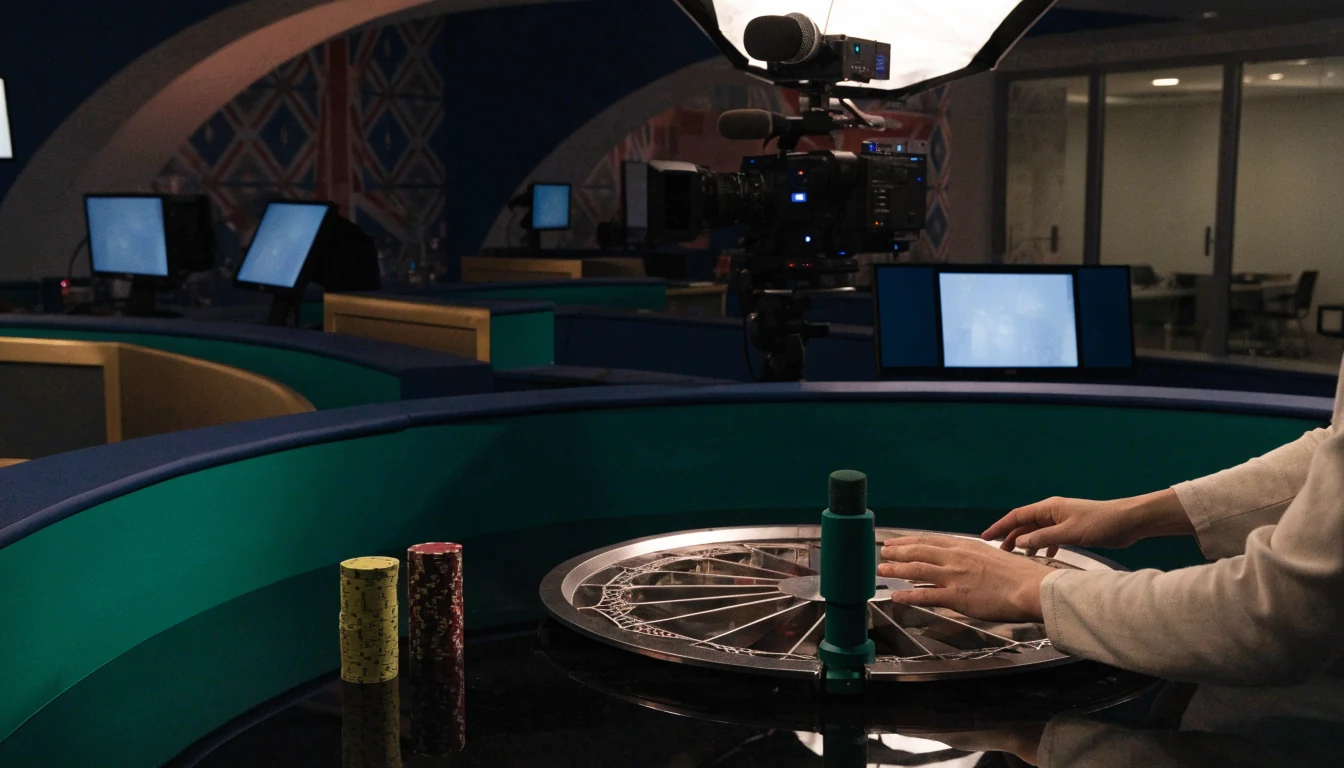
Live dealer roulette joins two separate parts of the experience: a physical game taking place in a studio and an on-screen interface through which remote players take part. A human dealer spins a real roulette wheel, while the game is streamed in real time. Players make their selections on the screen rather than reaching across the table. That combination is what makes the format live.
The distinction matters because a roulette game can look similar on screen while being generated in a different way. In computerised roulette, a Random Number Generator determines the result. In live dealer roulette, the visible result comes from the ball landing on a number on a physical wheel. The interface is still digital, but the wheel itself is not a graphic animation standing in for a physical game.
I find it useful to think of the stream and the betting controls as two views of the same round. The stream shows the dealer and wheel; the interface records the choices made by players. The screen is not where the physical spin happens. It is the point through which a remote player observes the table and submits a bet.
A round therefore involves a hand-off between the interface and the live table. Players use the on-screen controls to select their bets. The dealer then spins the wheel, and the ball settles on a number. The displayed result corresponds to that physical outcome. The precise presentation can vary, but the central arrangement remains the same: a dealer-led wheel in the studio, a live video feed, and digital controls for participation.
This is also why “live” should not be taken to mean that a player is physically at the casino table. The dealer is present with the wheel; the player is present through the interface. Those are different roles. The dealer operates the physical game, while the player uses the controls to enter choices remotely. A live stream connects the two without turning the screen into a physical table.

In a conventional computerised version, the user interacts with a digital game whose result is produced by an RNG. In live roulette, the software still matters as the route for viewing and placing bets, but the spin is carried out on a real wheel by a human dealer. That difference is the basic test of the format. An animated wheel alone does not establish that a game is live; the defining element is the streamed dealer-led play.
The sequence is straightforward at the level a player sees. The interface presents the table for making selections, and the video shows the live activity around the wheel. Once the betting stage has ended, the dealer spins. The ball comes to rest, and the result is shown through the game display. The screen links these steps, but it does not replace the dealer’s action.
That division can be easy to overlook because the betting area and the video appear together. A click or tap is a digital action; the spin is a physical one. The screen translates a player’s selection into a bet associated with the live round, while the stream lets the player follow what happens at the wheel. In other words, the interface handles participation and the studio supplies the live game.
For someone considering roulette at an online casino in the UK, the practical meaning of the label is therefore quite specific. It describes a game streamed from a studio, with a human dealer and a physical wheel, rather than a result generated entirely by software. The interface may make the experience feel like a single product, but behind it are two connected processes: the dealer conducts the round and the platform carries the player’s choices to it.
There is no need to imagine that the player controls the wheel or that the dealer enters every selection by hand. The established format is simpler: players place bets using the on-screen interface, and the dealer spins the physical wheel. Keeping those functions separate helps explain both the immediacy and the limits of the experience. The stream shows the game as it happens; it does not put a remote player in the studio.
A live roulette game consists of two connected processes: a human dealer conducting the round with a physical wheel in a studio, and a digital interface that carries the player’s choices to the table.
The word “live” is sometimes used as a broad selling label, but here it has a concrete meaning. A real person is dealing, a real wheel is being spun, and the activity is streamed in real time. The digital layer remains essential because it is how remote players view the table and place bets. Neither part alone gives the complete picture: without the physical dealer-led wheel, it is computerised roulette; without the interface, a remote player has no way to participate.
That is the format behind live roulette: a studio, a human dealer, a physical spin and a screen that carries the player’s choices. The moving image is not merely decoration around a random result. The wheel is the source of the outcome; the interface is the route into the round.
Roulette Tables, Blackjack, and the Dealer’s Role
Roulette has a simple outcome at its centre: the ball settles on a number, and a player wins when their selection matches it. The dealer oversees the round, while the table interface records the selections made before the result. That division matters. The dealer runs the game; the player’s result depends on whether the chosen number is the one where the ball lands.
In a live roulette casino, the table can make that relationship feel immediate: selections are entered on screen, then judged against the number produced by the wheel. But the presence of a dealer does not change the basic condition for a win. A close result is still a loss if the selected number is different. The game does not reward a near miss.

I have found it useful to separate the visible activity at the table from the rule that settles the bet. A dealer may be speaking, managing the round and responding to players, but the roulette result remains a comparison between the selection and the winning number. The atmosphere can make the round feel social; the settlement is still mechanical.
That distinction also helps when moving between roulette and blackjack. Both can be offered as live dealer games, but their decisions are not alike. Roulette asks whether a selected number matches the result. Blackjack is a contest between a player’s hand and the dealer’s, with the value of the cards shaping what happens next.
What happens in live blackjack
A live blackjack dealer deals physical cards from a standard deck. The game is streamed in real time, so players can see the dealer and interact with them. That interaction changes the feel of the table, not the objective: the player aims to beat the dealer with a hand worth 21 points, without going over.
The phrase “beat the dealer” can sound like a simple race to 21, but the limit is part of the rule. A hand that exceeds 21 does not become stronger; it goes over. The aim is therefore not merely to collect cards until the total reaches a target, but to finish in a position that beats the dealer while staying within the limit. The physical cards make the values visible as the hand develops.
Staking Systems
Staking patterns like Martingale do not remove the house edge or guarantee recovery; they can increase financial exposure while basic odds remain unchanged.
The dealer has a defined role in that process. They deal the cards and manage the live round, while the player’s hand is assessed against the dealer’s. Seeing a human dealer can make the game more engaging, but it does not turn the interaction into a way of changing the underlying rules. Conversation is not an advantage in the scoring.
I have seen “systems” presented as if a staking pattern could smooth out an unfavourable run. Martingale is a familiar example: the stake is adjusted after losses in the hope that a later win will recover them. That logic does not remove blackjack’s house edge. A staking system changes how much is placed on later hands; it does not change the cards or guarantee that a recovery hand arrives before losses accumulate.
This is the point that promotional language tends to blur. A system can organise decisions, but organisation is not an edge. If a sequence of bets grows after losses, the exposure can grow too, while the basic odds remain in place. Losses remain possible.
Roulette and blackjack therefore give the dealer different jobs in the player’s view. At roulette, the selected number is checked against where the ball lands. At blackjack, physical cards form hands whose totals determine whether the player can beat the dealer without exceeding 21. In neither game does the dealer’s presence make a losing selection or hand into a winning one.
The table is social. The rules are not.
What to Check on a Live Roulette Casino Site
The useful first check is not the colour scheme or the size of the table graphics. It is how the game produces its result. In live dealer roulette, a human dealer spins a physical wheel. Computerised roulette instead uses a Random Number Generator (RNG). Both may appear on the same casino site, and an animated wheel on screen does not by itself show that a physical wheel is being used.
I have seen product labels do more work than they should. A tile marked “roulette” may lead to a computerised game, while a live table is identified separately. The distinction matters when the aim is to play a streamed dealer-led game rather than a digital simulation. Before opening a table, the game name and description should make clear which format it offers.
Confirm what the table is showing
A live dealer table should present the dealer and the physical wheel as part of the game. The result comes from the ball landing on that wheel, rather than being generated by an RNG. That is the practical difference to look for. A polished interface, realistic sound effects or a wheel animation can be used in a computerised game too; appearance alone is not a reliable test.
When a table opens, the dealer and wheel should be visible in the live presentation. If the page describes the game as automated, virtual or RNG-based, it is not the same product, even if its layout resembles a casino table. If the wording is unclear, the product description is more useful than assumptions based on the graphics.
Verify Table Type
- Check if the game is described as live dealer or RNG-based
- Confirm the presence of a human dealer in the stream
- Verify that a physical wheel is being used
This check applies across roulette casino sites in the UK. A site can offer both formats, so its general roulette category does not establish what any particular table uses. The table-level description is the relevant detail.
Read the label, not the atmosphere
“Live” is a specific format, not a general claim that a game feels immersive. The defining point is the dealer spinning a real, physical wheel. A simulated dealer or a computer-generated wheel does not turn an RNG game into live dealer roulette.
I treat promotional language as a starting point, not as confirmation. Words such as “realistic” describe presentation; they do not explain how the outcome is produced. The product information should identify the game as live and show that a human dealer is operating a physical wheel. If it only promises a casino-style experience, that wording leaves the important distinction unresolved.
There is also a difference between seeing a live presentation and understanding the game type. A stream can make the table feel immediate, but the label and description still need to identify the format. Clear information should not require the player to infer the mechanism from a moving image.
Check before choosing a table
A practical review can be brief: open the individual roulette listing, read its description, and confirm that it refers to a live dealer and a physical wheel. Then check that the table view presents those elements. If the page instead identifies an RNG or describes a computerised game, it belongs to a different category.
That is more dependable than choosing from a “top” or “best” label without checking what sits behind it. Such labels do not tell whether a particular roulette game is live or computerised. The format does.
The same care applies when a site groups tables under one heading. Categories can contain different products, and a general “roulette” label is not enough to establish that every option is dealer-led. The useful evidence is specific to the table being opened: a human dealer, a physical wheel and an explicit live-game description.
No theatre required. Just the mechanism.
What “Best” Means When Comparing Live Roulette
When choosing a UK live roulette table with English-speaking dealers, it helps to consider the available practical details alongside the game experience. The verdicts below stick to the information provided for each operator.
Payout speed: 1-3 business days The stated payout speed is 1–3 business days. No further operator-specific details were provided.
Payout speed: 1-3 business days The stated payout speed is 1–3 business days. No further operator-specific details were provided.
Payout speed: 1-3 business days The stated payout speed is 1–3 business days. No further operator-specific details were provided.
Payout speed: 1-3 business days The stated payout speed is 1–3 business days. No further operator-specific details were provided.
Payout speed: 1-3 business days The stated payout speed is 1–3 business days. No further operator-specific details were provided.
Payout speed: 1-3 business days The stated payout speed is 1–3 business days. No further operator-specific details were provided.
Payout speed: 1-3 business days The stated payout speed is 1–3 business days. No further operator-specific details were provided.
Payout speed: 1-3 business days The stated payout speed is 1–3 business days. No further operator-specific details were provided.
Payout speed: 1-3 business days The stated payout speed is 1–3 business days. No further operator-specific details were provided.
Payout speed: 1-3 business days The stated payout speed is 1–3 business days. No further operator-specific details were provided.
“Best” is a label, not a measurable feature. In a live roulette comparison, it can suggest that one casino has better tables, more capable dealers or more favourable outcomes. Those claims need evidence; the word itself provides none. I would start with two questions that can be answered: whether the operator is legally licensed for the UK market, and whether the game is genuinely live.
For real-money play, the legal baseline matters more than a polished lobby. Online gambling in the UK is legal only through licensed and regulated sites. A live dealer casino serving the market must hold the relevant licence from the UK Gambling Commission. That is a threshold for lawful operation, not proof that a casino is “best”, and it should not be confused with a guarantee of a particular playing experience.
I treat licensing as a pass-or-fail check. Once that is established, the comparison can turn to what the product actually is. In live dealer roulette, a human dealer runs the game in a studio, with the gameplay streamed in real time. Bets are submitted through an on-screen interface. The live label therefore describes the source of the game: a dealer-led physical table being broadcast, rather than a roulette result generated by computer software.
- Verify the operator holds a UK Gambling Commission licence
- Confirm the game uses a real-time studio stream with a human dealer
- Assume a “best” label indicates a mathematical advantage
- Mistake a polished interface for a genuine live-dealer mechanism
That distinction stops a common comparison from becoming muddled. A slick interface may make a game easier to navigate, but it does not establish that a human dealer is running the wheel. Conversely, a live stream alone does not establish that an operator is legally authorised to offer real-money gambling in the UK. The two checks answer different questions: what kind of game is being shown, and whether the operator may lawfully provide it.
The phrase “best live roulette casino” can also hide a preference rather than a fact. One person may value a clear stream; another may care more about how plainly the betting interface presents the available choices. Without comparable, verifiable evidence, turning such preferences into a ranking would create false precision. I would describe what can be confirmed and leave subjective judgements labelled as such.
The same discipline applies to claims about results. A casino cannot make a roulette outcome more favourable merely by calling its tables “premium” or “top rated”. Those are promotional descriptions, not evidence of a better chance of winning. The live format changes how the game is delivered; it does not, by itself, establish an advantage for the player.
A sound comparison, then, is deliberately narrow. It checks the operator’s UKGC licensing status and whether the roulette game is presented as real-time studio gameplay with a human dealer and an on-screen betting interface. Beyond that, any claim of superiority needs a clear basis. Without one, a “best” list is presentation, not proof.

This is not gambling advice. The content is for entertainment purposes only; roulette involves risk, and a comparison cannot remove it. I would rather keep the standard plain than dress an unverified ranking up as a recommendation. Clear criteria first. No sales gloss.
European and American Roulette: The Wheel Changes the Odds
European and American roulette look similar at a glance: both use numbered pockets, and both include green zero pockets. The important difference is the number of those green pockets. European Roulette has a single zero, while American Roulette has both 0 and 00. That extra pocket changes the chance of a selected number coming up.
For a straight number selection, the stated odds of winning are 1 in 37 on the European wheel and 1 in 38 on the American wheel. The difference comes from the larger number of possible pockets on the American layout. A wager on one number has one winning pocket in either game, but the American version has one additional pocket that can win instead. Small on the table; relevant in the calculation.
I have seen roulette presented as if the two versions were mostly a matter of appearance or table preference. That leaves out the detail that affects the number-based odds. The American wheel’s double zero is not a decorative variation. It is an additional outcome, and a bet on a particular number does not cover it unless that number is the one selected.
Features a single green zero pocket, resulting in a 1 in 37 chance for a straight number selection.
Includes both 0 and 00 green pockets, resulting in a 1 in 38 chance for a straight number selection.
Reading the layout
The green pockets are the quickest way to identify which version is in front of you. One green pocket marked 0 indicates European Roulette. Two green pockets, marked 0 and 00, indicate American Roulette. The table layout reflects the same distinction, so the double zero should be visible there as well as on the wheel.
This matters when choosing a roulette casino game in the UK because the game name alone can be easy to skim past in a menu. A live table, digital game or other casino presentation may all use the same broad label, but the wheel variant still determines which set of pockets is in play. The relevant detail is not whether the table looks familiar; it is whether its layout has one zero or two.
When comparing roulette casino games, I treat the pocket count as a basic rule, not an optional extra buried beneath presentation. It is a clear, checkable difference between the two versions. If the interface or table information does not make the variant clear, the odds cannot be interpreted properly from the game’s appearance alone.
What the odds describe
The 1-in-37 and 1-in-38 figures describe the chance of a chosen number being the winning number on the respective wheel. They are not a promise about how often a particular player will win over a short run of spins. A number can appear more than once, or not appear for some time; neither pattern changes how many pockets the wheel has.

That distinction is useful because roulette displays can make results feel personal. The calculation remains tied to the layout. On European Roulette, the single zero sits alongside the numbered pockets. On American Roulette, the additional 00 creates another possible result. The stated odds account for that difference.
For anyone comparing a casino roulette game, the practical takeaway is direct: European Roulette offers the more favourable of these two stated chances for a selected number, because its wheel has fewer pockets. American Roulette has the extra double zero and the lower chance of hitting that selection. The choice is about the rules on the table, not a different way of reading recent results.
I would check the zero pockets before treating two roulette tables as equivalent. One extra pocket is enough to change the arithmetic.
Live Play, Minimum Stakes, and the Pace of a Table
Live dealer roulette takes longer to play than digital roulette. Each round follows the dealer’s actions and the table’s betting window, rather than moving directly from one result to the next. That gives the game a more measured rhythm, but it also means fewer decisions can be made in a given period. Anyone moving from a digital table may find the change noticeable.
The pace affects more than convenience. A live table’s round has a start, a period for bets, and a close before the result is settled. There is no way to make the wheel move faster by clicking sooner. I see that as a basic trade-off: the physical table is the point of live play, and the physical process sets the tempo. Slower by design.
Attention: Live roulette requires a stable internet connection to avoid interruptions during the betting window and to follow the real-time stream.
Connection quality is another practical condition. Live roulette is streamed in real time, so a stable internet connection matters throughout a session. An interruption can make it harder to follow the table or place a bet before betting closes. This is not the same as a digital game that can present a result without streaming a dealer and wheel. The live format depends on a continuing connection.
Minimum stakes also deserve attention before play begins. Live tables commonly set higher minimum bets than digital roulette, although the amount depends on the table. A specialist review has reported live roulette and baccarat tables starting at 20p; that is a reported example, not a dependable minimum across casinos or tables. The same review notes that blackjack tables can begin at higher limits. Conditions vary, so a displayed table limit is more useful than an assumed market-wide figure.
For a UK player deciding whether to play roulette in a live casino, the practical question is how the pace and stake fit a pre-set budget. A table with a low entry point can still involve a long session, while a faster digital game may allow more frequent decisions. Neither format makes a budget stretch further. I set the spend before play and keep it fixed; the table’s rhythm is not a reason to raise it.
Live play is therefore not simply a visual alternative to digital roulette. It asks for a steady connection, patience with the dealer-led pace and acceptance of the table’s minimum. Those are operating conditions, not signs that one format is better. This content is for entertainment only, not gambling advice.

Free Roulette: Practice Without a Cash Payout
Free roulette is useful for learning where the controls sit, not for rehearsing a real-money session in full. A practice screen can show how a betting interface responds when a selection is made or changed. That familiarity may reduce fumbling with the controls later. It does not turn a free game into a live dealer table.
The distinction matters because live dealer roulette uses a human dealer and a physical wheel streamed in real time, while bets are entered through an on-screen interface. A free version may be a separate practice environment rather than that same live table. The screen can resemble a casino game, but resemblance is not the same as real-time play with a dealer.
I have seen “free” treated as if it were a low-cost trial. It is not. No money is staked, and a practice result does not create a balance that can be withdrawn or converted into cash. A run of favourable outcomes in free roulette is entertainment, not evidence that a paid session will follow the same pattern.
The useful task is modest: become comfortable with the layout and understand how the interface registers selections. That can make the controls less distracting. It cannot teach a system to beat roulette, alter the casino edge or provide a dependable forecast of later results. Practice transfers familiarity with a screen, not an advantage over the game.
Free roulette is a practice tool for becoming comfortable with the interface and layout; it does not provide cash payouts or represent a real-money live dealer environment.
For anyone looking for free roulette in the UK, the key question is what “free” means on the particular page. It may describe play without cash, rather than access to a real-money live dealer game at no cost. The label alone does not promise a dealer, a physical wheel or a cash payout. Those are separate features and should not be inferred from a familiar-looking table.
The same caution applies to named themes or variants. A title on a free-play screen is not enough to establish how its rules work or whether those rules match a live-money version. The interface is only a practice aid; the rules attached to a game still need to be read on their own terms.
Free casino roulette has a narrow but legitimate use: getting used to the controls without risking money. It should not be confused with a real-money table, nor treated as a source of winnings. Practice is practice.
Bonuses and the Terms That Matter at Live Tables
A roulette casino bonus can look relevant because roulette appears in the site’s game menu. That does not mean the offer can be used on a live table, or that roulette play will count fully towards its conditions. I learned to separate the headline from the mechanics: the headline describes the promotion; the terms decide where it applies.
A specialist review of UK welcome offers reports that many are built around free spins on slots, which cannot be used at live tables. That is a source-specific observation, not a guarantee about every offer. A roulette casino welcome bonus therefore needs checking at the point that matters: whether live roulette is eligible at all. An offer may be available for other games while excluding the live version.

Even when live games are allowed, their contribution to wagering requirements can be limited. Some terms assign them only a small weighting; one cited example is 10%. In practice, that means eligible live roulette stakes may count for only a fraction of the required wagering. The difference between “included” and “counts fully” is important. Small print. Real effect.
I read bonus terms in three passes. First, the eligible-games list: it should make clear whether live roulette is included or excluded. Second, the game weighting: this sets how much eligible play contributes to the requirement. Third, any maximum-bet condition attached to bonus play. A promotion can be technically available at a live table and still be a poor fit if its weighting is low or its conditions restrict how it can be used.
The same check applies to a no-deposit offer. The label alone does not establish that it covers roulette, live tables, or cash withdrawals; those details depend on the offer’s terms. “No deposit” describes how the bonus is granted, not what games qualify or what must happen before any resulting balance can be withdrawn.
I would treat a roulette casino bonus UK offer as a separate product from the table itself. The practical value rests on eligibility, weighting and restrictions—not the size of the headline. Always review the wagering requirements, game weighting and maximum-bet limits before opting in. This is entertainment, not gambling advice.
Review Bonus Terms
Review the eligible-games list to see if live roulette is included or excluded.
Check the game weighting to determine how much live roulette play contributes to wagering requirements.
Identify any maximum-bet conditions attached to the bonus play.
Roulette Odds, House Edge, and the Limits of a Betting System
The phrase “best way to win” suggests that a choice of stake pattern can turn roulette into a dependable source of profit. It cannot. The house edge describes the game’s built-in mathematical advantage over time; it does not predict the result of an individual spin, and it does not mean that a particular session must end in a loss.
A straight-up bet, placed on one number, has a house edge of 2.9%. Other roulette bets have a 2.7% edge. The distinction matters because the payout attached to a bet is not the same thing as its underlying value. A larger payout for a less likely outcome does not remove the edge. Nor does a smaller payout on a broader bet make it a guaranteed way to win.
I have seen betting systems presented as if changing stake sizes changes the mathematics. It does not. A progression such as Martingale increases the amount at risk after losses, but each new bet remains subject to the game’s edge. A run of wins can be followed by losses, and a larger stake can make those losses more costly. The system rearranges exposure; it does not create an advantage.
French Roulette has a specific exception for even-money bets. If the ball lands on zero, the player loses only half the stake rather than the whole stake. That rule softens the impact of zero on those bets, but it does not make every spin favourable or remove the need to understand the table rules.
There is no method to win every time at roulette, whether the wheel is played online or in a casino. Past outcomes do not make a number “due”, and a staking plan cannot control where the ball lands. That is the part often omitted from claims of a “winning system”.
For me, the useful calculation is not a prediction but a boundary: know the house edge, understand the bet’s terms, and set a budget before play. Roulette remains gambling, not a reliable way to make money. Content is for entertainment purposes only, not gambling advice.
Lightning Roulette and What Can Be Verified
The name “Lightning Roulette” is not enough to establish how a game works. It does not, by itself, confirm whether a particular listing uses a physical wheel and human dealer, or whether it is a computerised game. Nor does the label establish special rules, bonus features or how any outcome is paid.
That distinction matters when comparing a Lightning Roulette casino listing with standard live dealer roulette. A live dealer game is streamed from a studio, with a human dealer operating a physical wheel while players place bets on screen. Computerised roulette instead uses a Random Number Generator. The label on a lobby tile should not be treated as proof of which format is being offered.
I would also avoid treating “Lightning Roulette slots” as a reliable description. Roulette and slots are different game categories, and a phrase combining them does not verify that a slot version exists. Likewise, the presence of the word “Lightning” does not show that a multiplier, random selection or any particular feature applies. Those details need to be stated in the game’s own rules, not inferred from its title.
For a UK casino, the legal baseline is clearer: operators offering real-money gambling to British customers must hold a UK Gambling Commission licence. That says something about the operator’s regulatory status, not the rules of a named game.
Before treating a listing as live roulette, the relevant evidence is concrete: a live stream, a human dealer and a physical wheel. If those are not apparent, the name alone cannot settle the question. No guesswork.
Is the house edge the same at all online live dealer casinos?
No. In roulette, the house edge depends on the bet and rules: straight-up bets have a 2.9% edge, other bets have a 2.7% edge, and French Roulette reduces losses on even-money bets when zero lands.
What types of roulette can you play with a live dealer?
Live dealer roulette includes European, American and French Roulette. American Roulette has both 0 and 00, while European Roulette has a single 0.
Why does the dealer always win in blackjack?
The dealer does not always win. Players can beat the dealer by finishing closer to 21 without going over, although blackjack still has a house edge.
Published by the Skyhills Casino team.