Live Dream Catcher Casino UK: How It Works
 Available in GB
The guide separates the live dealer broadcast from the betting interface and explains what casino searches and reviews can actually establish.
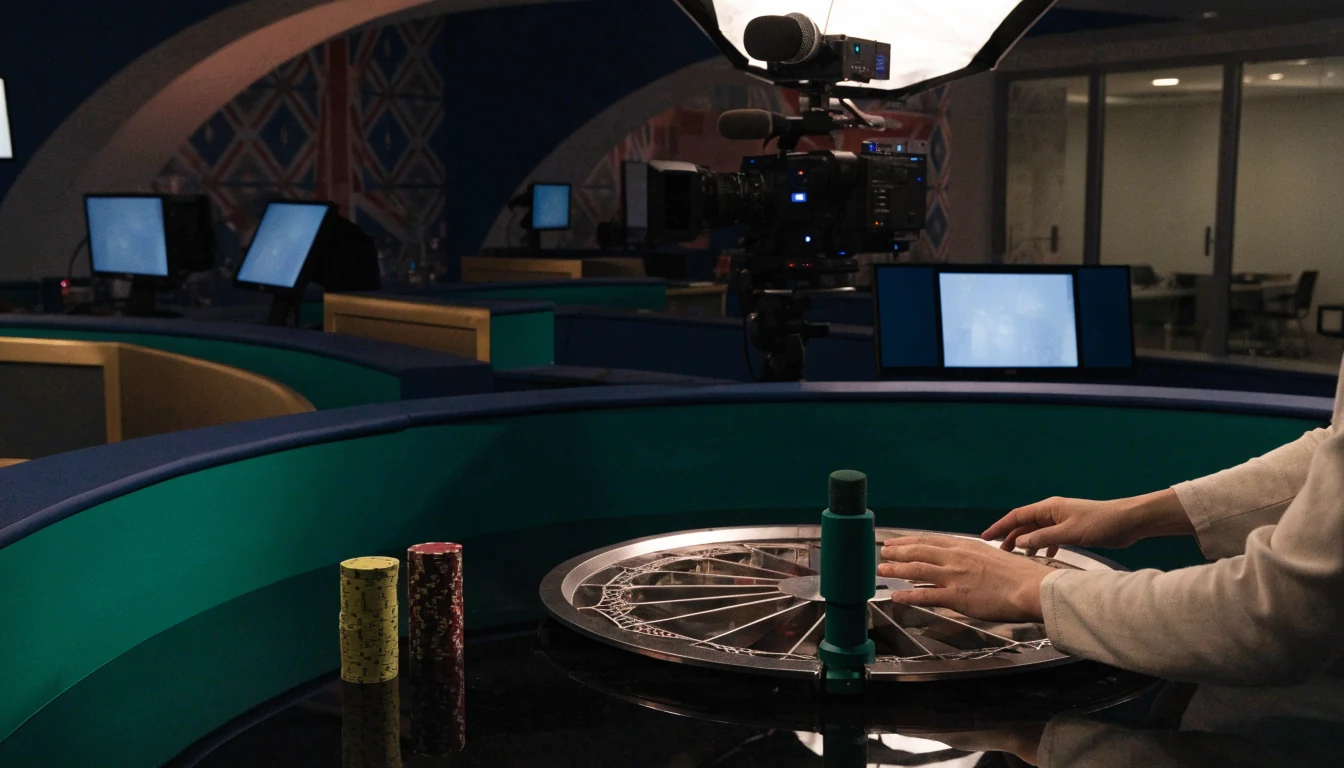
Table of Contents
- How a Live Dream Catcher Session Works Online
- What the Dream Catcher Casino Search Does—and Doesn’t—Tell Us
- Choosing a Casino Without Mistaking a Sales Claim for a Verdict
- Playing a Live Casino Game Through the Screen
- Wheel Rules to Check Before Betting
- What to Check on a Live Casino Site
- A Demo Is Not a Cash-Winning Session
- Reading a Dream Catcher Review for What It Can Actually Verify
- Starting a Live Session: Pace, Connection and Limits
- Finding a Casino Offering the Game Without Chasing a Bonus
How a Live Dream Catcher Session Works Online
A live Dream Catcher session combines a studio broadcast with an online betting interface. The game is presented in real time by a human dealer, whose actions are streamed from a studio to the casino’s website or app. Bets are submitted on screen rather than placed at a physical table. The result is a live-dealer experience viewed and operated through a digital service.
That distinction matters. The screen is not simply showing an animation generated by a computer after a player presses a button. The live element is the dealer and the ongoing studio game; the online element is the way the broadcast reaches the player and the way the player communicates betting choices to the casino. Both parts have to work together for a session to feel coherent.
The stream provides the visual account of what is happening in the studio. The interface provides the controls for taking part. A player may watch the dealer and the table while using the displayed options to submit a bet. The casino’s system links that input to the live game, so the online session depends on a real-time feed and an interface that is open for betting. It is a different arrangement from a digital game that presents computer-generated visuals and outcomes.
When choosing a UK casino for live Dream Catcher, payout information can be one practical point to check. The details below give a concise reference for each listed operator.
Payout speed: 1-3 business days Jetsetspins lists a payout speed of 1–3 business days.
Payout speed: 1-3 business days Revery Play lists a payout speed of 1–3 business days.
Payout speed: 1-3 business days BeOnBet lists a payout speed of 1–3 business days.
Payout speed: 1-3 business days Zombillion lists a payout speed of 1–3 business days.
Payout speed: 1-3 business days Britsino lists a payout speed of 1–3 business days.
Payout speed: 1-3 business days Amunbet lists a payout speed of 1–3 business days.
Payout speed: 1-3 business days SpinFormula lists a payout speed of 1–3 business days.
Payout speed: 1-3 business days WinBeast lists a payout speed of 1–3 business days.
Payout speed: 1-3 business days NightWin lists a payout speed of 1–3 business days.
Payout speed: 1-3 business days NightLuck lists a payout speed of 1–3 business days.
That does not make the experience identical to sitting in a casino. The camera and screen shape what can be seen, while the interface determines how participation works online. There is no physical table in front of the player and no direct contact with the studio. The dealer remains part of the live presentation, but the player’s actions are made remotely through the casino’s software.
When people look for a Dream Catcher online casino, they are often trying to find this combination: a live presentation of the game and a way to join it through a web-based or app-based service. The wording alone does not establish what a particular casino provides. What defines the live-dealer format is the real-time studio stream with a human dealer and betting through an on-screen interface. The actual session is delivered by the casino hosting it.
There is a practical difference between watching a broadcast and taking part in a live game. The stream is only one part of the service; the betting interface must also be available for the session. A video that shows a casino environment is not, by itself, evidence of a live table. In a genuine live-dealer format, the gameplay is streamed as it happens, and players use the site’s interface to place their bets in relation to that session.

The online setup also means the casino is more than a window onto a studio. It provides the route into the game and handles the digital interaction between the player and the live presentation. From the industry side, that separation is easy to overlook in promotional wording: “live” describes the streamed gameplay, not a physical presence at the table. The screen is the point of access.
For UK players, the legal condition is straightforward. A live dealer casino serving the UK market must hold a UK Gambling Commission licence. Live dealer games are legal in the UK when offered by an operator with the relevant licence. The fact that a session is streamed from a studio, or that the dealer appears in real time, does not replace that requirement. The format and the operator’s legal status are separate matters.
This is the basic framework for a live Dream Catcher session online: a human dealer runs the game in a studio, the casino streams that gameplay in real time, and bets are placed using an on-screen interface. It explains what the online experience consists of without making assumptions about a particular casino or about features attached to a specific table. The delivery is live; participation is digital.
That is the format.
Live Dream Catcher Format
A human dealer runs the game in a studio, the casino streams the gameplay in real time, and players place bets using an on-screen interface.
What the Dream Catcher Casino Search Does—and Doesn’t—Tell Us
A request for a live Dream Catcher casino in the UK in 2026 expresses an intention, but the wording alone does not confirm what a particular casino offers. It does not establish that a table is live, that a digital version exists, or that a named feature has been added for that year. Those are separate claims, and each needs to be checked against the actual game and its presentation.
That distinction matters because “live” describes how a game is delivered, not just how its name is written on a page. A live-dealer game is streamed from a studio in real time, with a human dealer running the game. A digital game, by contrast, is generated by software rather than shown as a live studio session. Both may appear under similar labels or in the same casino lobby. The label is a starting point, not a description of the underlying format.
I have seen how quickly a promotional name can become shorthand for more than it proves. A page may use a game title prominently while giving little detail about whether the experience is a live stream or a software version. “Live” can be the decisive part of the offer: it signals a real-time studio presentation, with the pace and connection demands that come with it. Without that distinction, a player can arrive expecting one kind of session and find another.

A live stream unfolds at the speed of the game being run. It cannot be compressed into the same rhythm as a digital version that proceeds through software. Live games move more slowly, and that slower pace changes the feel of a session: there is more waiting between decisions and outcomes. That may suit someone looking for a less rapid experience, but it is not automatically an advantage. The practical point is to know what kind of pace is involved before treating “live” as a quality label.
The connection is part of the format, too. A live session depends on a stable internet connection because the game is being delivered as a real-time stream. If the connection is unreliable, the experience may be interrupted or difficult to follow. A digital game does not rely on the same live video feed, so it is not interchangeable with a stream simply because both are played online. This is a basic operational difference, not a minor technical detail.
There is also a cost implication to the slower format. Live games have higher minimum bets than digital versions. That does not establish the minimum for any particular table, and it should not be read as a fixed figure for Dream Catcher. It does mean that the distinction between live and digital can affect more than presentation: the entry point may differ as well. A game title alone tells nothing reliable about the table’s actual minimum.
The year in the wording deserves similar care. A date attached to a game name might refer to when a page was updated, a current catalogue label, or a claim about a newer version. It does not, by itself, prove a new format or a change to the game. A genuine feature claim should be visible in the description of the specific offering, rather than inferred from a date in a heading or from a casino’s general promotional language.
- Check the specific listing for real-time studio stream descriptions
- Verify the stable internet connection required for live video
- Review the table’s actual minimum stake
- Treat the word “live” in a title as a guarantee of format
- Assume a live session has the same rhythm as a digital version
- Infer new 2026 features from a date in a heading
In practice, the useful question is not whether the title contains “live”, but whether the specific listing describes a real-time studio stream or a software-based game. The interface may look similar in a casino lobby, but the session behind it is different. One is paced by a live game; the other is run digitally. The difference affects pace, connection needs and the minimum stake, so treating the labels as interchangeable can produce the wrong expectation.
I would separate what the name suggests from what the offering actually establishes. A live Dream Catcher casino listing may be presented as a live option, but the title alone cannot verify the format, the table conditions, or a feature attributed to 2026. Nor does a digital version become a live game because it shares a name. The evidence is in the description of the particular experience, not in the wording used to attract attention.
That is the useful boundary: a name can point towards a game, but it cannot carry every detail of how the game works. Live means a real-time streamed session; digital means software-generated play. The former is slower, comes with higher minimum bets than digital versions, and needs a stable connection. The rest requires confirmation at the level of the actual offering. No inference from the title.

Choosing a Casino Without Mistaking a Sales Claim for a Verdict
“Best” is a sales label, not a quality standard. When I assess a casino offering a live Dream Catcher game, I separate what can be established from what is merely asserted. The useful checks are straightforward: whether the operator holds the licence required to serve the UK market, and whether the rules and paytable for the specific table are available and clear. Neither a polished page nor a confident claim settles those points.
Start with the licence
A live casino serving UK players needs a current operating licence from the UK Gambling Commission. The licence is not a decorative trust badge; it is the condition that places a real-money gambling operator within the UK regulatory system. An operator based elsewhere still needs the relevant UK licence if it sells into the British market.
I treat licensing as a threshold, not a bonus feature. If the operator’s UK status cannot be established, claims about its game selection or “premium” service do not make the offer suitable for a UK player. Conversely, a licence does not prove that a particular table has favourable rules, that its paytable suits a particular style of play, or that a casino is the best choice. It answers one important question: whether the operator is authorised to serve this market.
The distinction matters because casino pages often put several kinds of reassurance side by side. A logo, a statement about regulation and a promotional description may look like one combined endorsement. They are not. The licence concerns the operator’s permission to offer gambling; the actual terms of a game concern the table itself. Different checks. Different evidence.
Licensing Requirement
A live dealer casino serving the UK market must hold a UK Gambling Commission licence to operate legally.
Read the table terms, not the headline
A game’s name and a live label are not enough to judge the offer. The relevant table rules should explain how the game is played and what outcomes qualify for a return. The paytable should show how winning outcomes are settled. These are the documents that turn a broad product description into terms that can be assessed.
I look for rules tied to the particular table rather than a general explanation elsewhere on the site. If a casino hosts more than one version or configuration, the terms for one should not be assumed to apply to another. A page may use familiar language while leaving the material detail in a separate rules panel or paytable. That placement is not necessarily a problem; failing to make the applicable terms identifiable is.
The paytable deserves the same attention as the rules. It sets out what the listed outcomes pay, so a description such as “exciting” or “high potential” says nothing useful about settlement. Promotional wording creates an impression. The paytable defines the financial result. I give the latter more weight.
A clear set of terms also makes comparison possible without relying on a ranking. Two casinos can advertise the same named game, yet the decision still depends on the exact table information presented and whether it is understandable before play. A “best live Dream Catcher casino” claim has little meaning unless it points to something verifiable about the offer. The label alone does not.

Keep claims in their proper place
Words such as “exclusive”, “top” and “best” are designed to distinguish an offer, but they are not evidence of a better table. A casino might use them to describe its presentation, its selection or a promotion. Unless the claim is connected to a checkable condition, it should not be treated as a verdict on the game.
I also avoid letting a general casino reputation substitute for table-level information. A strong brand impression cannot explain the rules of a particular game. Nor does a UK licence replace those rules. Each claim has a narrow job: the licence establishes regulatory status; the table rules explain how play works; the paytable describes how outcomes are paid. Keeping those categories separate prevents one reassuring detail from standing in for another.
The practical test is whether the information can be read and matched to the table being offered. If the terms are vague, contradictory or difficult to connect to that table, the uncertainty remains; a marketing adjective cannot resolve it. Clear terms are more useful than broad promises. Plain mechanics matter.
Before any real-money session, the table rules and paytable should be reviewed, and a budget set and kept. This is a selection framework, not a prediction of results or gambling advice. The content is for entertainment purposes only.
Before Placing Bets
- Verify the operator’s UK Gambling Commission licence
- Review the specific table rules
- Check the paytable for winning outcomes
- Set and maintain a fixed session budget
Playing a Live Casino Game Through the Screen
A live casino game has two parts running together: a human dealer conducting the game and an on-screen interface where players submit their bets. The dealer handles the physical game; the interface carries each player’s choices to the table. That division is the practical detail that matters. A screen can make the session feel like a single activity, but the betting controls and the dealer’s actions are separate parts of the process.
The sequence begins with the table view and its betting controls. A player chooses an available wager through the interface, then confirms it there. The selection is not communicated by speaking to the dealer or placing anything on a physical table. It is entered digitally. The dealer continues the live game, while the interface records the submitted bet.
That distinction helps explain why the dealer’s presence does not mean the session works like a private conversation. The dealer runs the table for its participants; the interface is how each person takes part. Where a screen displays a bet or table state, that display is the player-facing record of the interaction. It does not change who is operating the game.
In reviewing live casino products, I have found it useful to separate what the camera shows from what the betting panel does. The video shows the dealer and the live action. The panel is the working surface: it is where a player makes a selection and submits it. Treating those as two functions avoids a common misunderstanding—that watching the game is itself enough to participate. It is not. A bet has to be entered through the controls.

The same distinction applies when considering a live Dream Catcher table. The name alone does not describe the exact controls or the rules in use. The general live format means that a human dealer conducts the game while players use the on-screen interface to place bets. The table’s own instructions determine what selections are available and how the interaction is handled. Those details belong to the specific table, not to assumptions drawn from the word “live”.
Once a bet is submitted, the dealer’s live action continues independently of the player’s screen input. The interface is not a remote control for the dealer, and a player’s selection does not direct how the human-run game unfolds. It records participation in the available betting options. That is the boundary between choice and outcome.
This also puts “interactive” in proportion. It describes a session in which a real dealer is visible and players can take part through the digital controls. It does not mean that each player controls the game or that a dealer can alter its result on request. The format combines a human-run table with a standardised way to place bets. Clear enough.
For anyone assessing whether a particular table is suitable, the useful checks are the table’s own rules and paytable before a wager is submitted. The general interface explains how participation happens; it cannot tell a player what a selection pays or what conditions apply. Those are separate questions, and the table information is where they should be answered.
Live Betting Process
The player chooses an available wager through the on-screen interface.
The selection is confirmed digitally and recorded by the casino’s system.
The dealer continues the live game, and the result is determined by the physical action in the studio.
This is an explanation of the format for entertainment purposes only, not gambling advice. The screen makes participation possible. It does not remove the distinction between placing a bet and the dealer running the game.
Wheel Rules to Check Before Betting
A wheel in a live casino can look like a simple prop, but its layout affects the chance attached to a roulette bet. That comparison is useful only when the game actually is roulette. Dream Catcher is not established as roulette by the words “wheel” or “live casino”, so roulette rules should not be transferred to it.
Roulette layouts: American and European
In American Roulette, the layout includes two green pockets: 0 and 00. European Roulette has one green pocket, marked 0. That extra pocket changes the number of possible outcomes, so the two layouts do not have identical odds.
The stated chance of winning in American Roulette is 1 in 38; for European Roulette, it is 1 in 37. These figures describe the difference between those roulette layouts. They are not odds for a Dream Catcher wheel, nor do they say anything about a separate game’s symbols, segments or payout structure.
That distinction matters when a casino page uses broad language such as “live wheel”. It may describe a physical wheel streamed from a studio, but the phrase alone does not identify the game’s rules. A roulette table can be checked against its own layout and rules; another wheel game needs its own table information. Similar appearance is not shared mathematics.

What the comparison can establish
For roulette, the pocket count is a concrete point to verify in the displayed layout or rules. If a table is described as American, the presence of both 0 and 00 is relevant; if it is described as European, the layout has a single zero pocket. The quoted odds differ accordingly. A name or promotional image is a weaker guide than the actual table information.
For a Dream Catcher live casino wheel, the same test cannot be assumed to apply. The roulette comparison does not establish that Dream Catcher has numbered pockets, a zero, a double zero, or roulette-style odds. Those details must come from the rules and paytable for that specific game, rather than being inferred from a wheel shown on screen.
This is where promotional shorthand can mislead without making an explicit false statement. “Wheel” describes a visible format, not necessarily the probability model beneath it. A roulette wheel and a wheel-based game may both be presented live, yet have different layouts and settlement rules. The distinction is basic. But it is often skipped.
The practical rule is to keep the comparison in its lane: American and European Roulette show how an added pocket changes stated odds within roulette. They do not provide a substitute for reading the rules of Dream Catcher, and they should not be presented as features of that game.
What to Check on a Live Casino Site
A live table is only part of the decision. The site providing access matters too: in the UK, a live-dealer casino must hold a licence from the UK Gambling Commission to offer gambling legally. A familiar name, polished design or prominent game tile is not a substitute for that condition.
Attention: A stable internet connection is necessary for live play; a weak connection can make the real-time stream difficult to follow.
I treat licensing as a check on the operator, not as a promise about every part of the service. The licence establishes that the business is operating within the UK regulatory system; it does not tell anyone whether a particular stream will suit their connection or whether the table’s terms are attractive. Those are separate questions, and marketing tends to blur them.
For a live Dream Catcher session, the practical access check is whether the stream remains stable on the device and connection being used. Live play depends on receiving video as events happen. A weak or interrupted connection can make the session difficult to follow, even when the site itself is legitimate. That is a technical condition, not a feature that can be inferred from a promotional banner.
I have seen “seamless” used as if it were a guarantee. It is sales language. Actual performance depends on the connection at the time, so a stable internet link is necessary; no site description can remove that requirement. Live tables also move more slowly than digital versions and have higher minimum bets. Those conditions affect whether the format fits a session, but they are not evidence of the site’s quality.
The simplest site-level screen is therefore narrow: confirm that the operator holds the relevant UK licence, then consider whether the connection can support a live stream. Avoid treating either check as proof of a winning edge or a particular game feature. They establish access conditions, nothing more.

Before opening a session, a budget should already be set and kept to. This is entertainment, not gambling advice. A licensed venue and a stable stream do not change the underlying uncertainty of gambling, and a smooth broadcast is not a reason to extend a session beyond its limit.
That distinction is easy to miss because the interface makes the venue feel like the game. It is not. Licence, connection, and personal limit are separate checks. No shortcut.
A Demo Is Not a Cash-Winning Session
A free-play mode, where one is offered, can show how a casino game is presented, but it is not a route to cash payouts. Any balance or results shown in a demo are for play within that mode; they do not become withdrawable winnings. That distinction matters because a screen can resemble a real-money session while the stakes and outcomes are not real.
I treat “free” as a description of the cost of trying a mode, not as a promise of value back. A demo may help someone understand the broad feel of an interface, but it cannot establish how a live table will work for them or whether a cash session is suitable. Nor does a general reference to a demo confirm that a particular Dream Catcher table has one. Availability depends on what the casino actually provides.
Demo Mode
Free-play modes are for testing the interface and are not a route to cash payouts; any results in a demo are not withdrawable winnings.
Live play has different conditions. It is streamed in real time, and its pace is slower than a digital version. Minimum bets are higher, too, so the absence of a demo should not be mistaken for a reason to move straight to cash play. A stable internet connection is necessary for following the stream; interruptions can make the experience harder to track. These are practical features of live play, not evidence that a free mode will reproduce it.
There is also a difference between testing access and testing risk. A free mode cannot show what it feels like to stake money, and it cannot turn practice results into a forecast of later outcomes. I have seen players read a familiar interface as reassurance. It is not. The key point is simple: no cash payout from free play.
Before any real-money session, the table’s rules and paytable should be reviewed, and a budget set in advance. Those checks apply whether or not a demo exists. Free play can be a low-pressure way to look at an interface where available; it is not a substitute for understanding the terms of a cash game, and it should never be described as a way to earn. This is entertainment, not gambling advice.
Reading a Dream Catcher Review for What It Can Actually Verify
A useful review of a Dream Catcher live casino table separates what can be inspected from what is merely a judgement. “Exciting” describes a reaction, not a rule. “Fast” or “easy to win” is not evidence of how the table works or what it pays.

The first test is whether the review identifies the table rules it is discussing. Rules can determine which bets are accepted and how outcomes are settled; a review that gives only a general description leaves those details unresolved. The paytable matters for the same reason. It should make the relationship between a winning outcome and its payout clear, rather than relying on broad claims about generous returns. If the review does not show or explain the relevant rules and paytable, its verdict cannot establish the financial terms of play.
I have found it useful to read praise as a prompt for verification. “Fair” needs a basis: the published rules and paytable, not a reviewer’s confidence. “Best” is a comparison, and means little without a stated criterion. A detailed account of what was checked is more valuable than a string of favourable adjectives.
A review can also report what the reviewer observed during a session, but observation is not proof of future performance. A particular run of outcomes cannot establish what will happen in another session. Nor does an attractive presentation settle whether the table terms suit a player’s expectations. Those are separate questions.
The practical distinction is simple: a review can help locate and interpret the table’s stated conditions; it cannot turn an opinion into a guarantee. I look for a clear account of the rules and paytable, with any assessment kept distinct from those checkable details. If the conclusion depends on claims the review does not substantiate, it is promotion dressed as analysis. Thin evidence.
Reviewing Table Offers
- Separate a reviewer’s subjective reactions from checkable rules
- Prioritize the published paytable over broad claims of “generous returns”
- Use reviews to locate official table conditions rather than as guarantees
- Verify rules and budgets directly before any real-money play
This applies whether a page calls itself a Dream Catcher casino review or a live casino review of the game. The label alone tells nothing about the depth of the checks. Before real-money play, the table rules and paytable should be reviewed directly, and a budget set and kept. Gambling is entertainment, not a way to make money; this is not gambling advice.
Starting a Live Session: Pace, Connection and Limits
A live Dream Catcher session has a different rhythm from a digital game. The live version runs at a slower pace, so there is more waiting between decisions and outcomes. That can make a session feel less immediate, but it also means the time spent playing may not match expectations formed by faster digital formats.
The minimum bet is higher than on digital versions. That changes the practical cost of taking part: a longer session can involve repeated stakes at a level the digital alternative does not require. I have seen players focus on the pace and overlook the stake threshold. The table limit matters before the first bet, not after a few rounds.
Connection quality is part of the playing conditions, not a minor technical detail. Live games need a stable internet connection to carry the stream and keep the session usable. A weak or interrupted connection can make it harder to follow what is happening. Checking that the connection is steady before starting is a sensible part of setting up; it cannot make the game predictable.
I treat the session budget as a fixed boundary, rather than an amount to revise in response to wins, losses or a slower-than-expected run. If the minimum stake does not fit that boundary, the table is not suitable for that session. No workaround changes the underlying cost.
These are practical conditions, not a method for improving results. Live casino play is entertainment, not gambling advice. A clear budget and a stable connection do not remove the risks; they simply make the conditions of play easier to judge before the session begins.

Finding a Casino Offering the Game Without Chasing a Bonus
A “best” label attached to a casino offering Dream Catcher says little about whether its bonus suits a live session. Offers are designed around their terms, not around every game on the site. In practice, a welcome package can look generous while doing very little for someone intending to play live.
A specialist review of UK welcome offers describes most as free spins for slots, which cannot be used at live tables. That distinction matters: a bonus that applies to slot play does not become usable on a live game simply because both appear in the same casino lobby.
The other friction is game weighting. Live games may count for only a small share of wagering requirements; a stated example is 10%. In practical terms, eligible live play would make slow progress towards meeting the requirement compared with play weighted more heavily. The offer’s headline value does not show that. Its terms do.
I have seen this confusion arise when the promotion is read first and the exclusions later. “Casino bonus” sounds broad; the qualifying-game list may be narrow. The wording can also separate live tables from digital games, so the game’s name alone is not enough to establish eligibility.
For a Dream Catcher session, the sensible comparison is between the table’s own conditions and the promotion’s rules: whether live games qualify, what weighting applies, and whether any restrictions affect the bonus. If the offer does not support the intended play, it is not a reason to choose that casino. A bonus is a separate product, not a verdict on the table.
Any decision to play should be based on the terms and a set budget, not on an advertised bonus value. This is entertainment, not gambling advice.
Prepared by the Skyhills Casino editorial staff.