
Dogecoin Casinos in the UK: How to Verify Payments
 Available in GB
A crypto payment label alone does not confirm Dogecoin support; availability depends on the coins and transactions the casino specifies.

Table of Contents
- Dogecoin deposits: what the available evidence does and does not establish
- How to check whether a casino’s cashier accepts Dogecoin
- Dogecoin at online casinos: availability is not confirmed by a crypto label
- Dogecoin and online slots: what UK rules change
- Payment compatibility: cards, wallets and the cashier’s fine print
- If Dogecoin is unavailable, compare ordinary payment routes carefully
- Using Dogecoin for deposits: keep account and payment details aligned
- Dogecoin withdrawals and the return-to-source rule
- Deposit amounts, conversion and the real cost of a transaction
- Dogecoin does not tell you whether a casino is on GamStop
Dogecoin deposits: what the available evidence does and does not establish
A reference to cryptocurrency is not the same as a confirmed Dogecoin deposit option. That distinction matters because payment pages and casino descriptions often group methods into broad categories. A label such as “crypto” may indicate that a site discusses digital currencies, but it does not, by itself, identify which coins can be used or whether Dogecoin is among them.
A specialist review reports that the websites it examined mention Visa, Mastercard, bank transfer, e-wallets and several cryptocurrencies. That describes the range of payment categories appearing in those materials; it does not establish that every listed category is available at every site, or that any particular cryptocurrency is accepted for deposits. Nor does a general reference to digital currencies establish that a Dogecoin transaction can be made by a UK customer.
I have seen how easily a broad payment claim can be read as a practical promise. “Crypto accepted” sounds decisive, but leaves the important detail unresolved: which asset, for which account, and for what transaction? Without that distinction, a reader can mistake a category heading for a working payment route. The wording is broad. The decision is specific.
If you’re looking for a casino that accepts Dogecoin in the UK in 2026, check that the payment method is available to you before signing up. The details below provide one practical point of reference: each operator’s stated payout speed.
Payout speed: 1-3 business days Jetsetspins lists a payout speed of 1–3 business days. This gives you a stated timeframe to consider when checking whether it suits your payment needs.
Payout speed: 1-3 business days Revery Play lists a payout speed of 1–3 business days. Check the available payment options separately to confirm whether Dogecoin is supported.
Payout speed: 1-3 business days BeOnBet lists a payout speed of 1–3 business days. That is the available detail to consider when assessing its payouts.
Payout speed: 1-3 business days Zombillion lists a payout speed of 1–3 business days. Confirm its current payment options if Dogecoin support is important to you.
Payout speed: 1-3 business days Britsino lists a payout speed of 1–3 business days. This stated timeframe may help you assess its payout arrangements.
Payout speed: 1-3 business days Amunbet lists a payout speed of 1–3 business days. Check directly whether Dogecoin is among its available payment methods.
Payout speed: 1-3 business days SpinFormula lists a payout speed of 1–3 business days. This is the available information about its payouts.
Payout speed: 1-3 business days WinBeast lists a payout speed of 1–3 business days. Verify its current payment options separately if you plan to use Dogecoin.
Payout speed: 1-3 business days NightWin lists a payout speed of 1–3 business days. Its stated payout speed is one detail to consider when reviewing the operator.
Payout speed: 1-3 business days NightLuck lists a payout speed of 1–3 business days. Check its available payment methods directly to confirm whether Dogecoin is supported.
This is why a dependable list of UK-facing casinos that take Dogecoin cannot be built from a general mention of cryptocurrencies alone. Naming a casino as a Dogecoin option would imply more than a crypto reference supports. It would suggest that Dogecoin is accepted for deposits, that the route applies to the relevant customer, and that the claim reflects the operator’s current position. Those are separate propositions, not interchangeable descriptions.
The same care applies to casino accounts, deposits and promotions. A payment method’s presence does not establish that it can be used to open or fund every account, and it says nothing by itself about whether a bonus is available to someone depositing that way. Promotional terms can distinguish between payment routes; a coin name in general casino material does not settle that question. A deposit claim and a bonus claim need separate support.
Slots are another separate issue. A casino may offer online slots without those games being linked to a particular payment method. Likewise, a Dogecoin reference—if it appears in general material—would not prove that Dogecoin can fund play on a specific slot or that a special slot promotion applies. Game availability, payment acceptance and promotion eligibility describe different parts of the service. Treating them as one claim turns an uncertain detail into an apparent guarantee.
The UK setting adds a further distinction: payment wording does not establish whether a site is authorised to serve customers in Great Britain. Remote gambling businesses offering real-money gambling to people in England, Scotland and Wales need the relevant UK Gambling Commission licence. The Gambling Act 2005 sets the framework in those three nations; Northern Ireland is outside that Act’s scope. A cryptocurrency label is not a substitute for a licence, and it does not tell a customer whether a casino is within the UK regulatory system.

Nor does the payment method determine a casino’s relationship with GamStop. A coin, card or bank transfer is a way of moving funds; it does not, on its own, describe the operator’s self-exclusion arrangements or regulatory status. The same is true of the reverse assumption: a mention of Dogecoin does not prove that a site is outside the UK system. Payment and safer-gambling controls must be understood separately.
The phrase “Dogecoin casino” can therefore mean several different things in casual use: a site that mentions cryptocurrency, one that names Dogecoin, or one whose current cashier actually offers Dogecoin to a particular customer. Only the last meaning supports a firm claim about making a deposit. If the distinction is blurred, a list can look useful while leaving its central point unproven.
I would treat broad labels as orientation, not confirmation. They can indicate that a casino discusses multiple payment types, but they cannot carry the weight of a specific Dogecoin claim. The same restraint applies to lists, account descriptions, slot pages and bonus pages: a mention in one context should not be carried across to another without direct support.
That is the boundary between a cryptocurrency reference and an established Dogecoin deposit route. For UK-facing casinos, the former may describe a general payment category; it does not identify an operator that accepts Dogecoin. No operator names belong in a Dogecoin list unless the specific acceptance claim can be substantiated. A label is not a transaction.
A cryptocurrency label is not a substitute for a licence and does not confirm whether a casino is authorised to serve customers in Great Britain.
How to check whether a casino’s cashier accepts Dogecoin
A payment page can mention cryptocurrency without showing Dogecoin as a usable method. When I check a specific casino, I treat the cashier—not a promotional banner or a general payment-method summary—as the place where availability has to be established. The useful detail is whether Dogecoin appears as a selectable option for the account, not whether the word “crypto” appears somewhere on the site.
Start with the casino’s payment or cashier area and look for the deposit methods displayed there. If access requires an account, the registration process may be necessary before the cashier can show the options relevant to that account. UK remote gambling operators must verify a customer’s age before allowing a deposit, and new customers must be prompted to set a financial limit before their first deposit. Those are account processes, not evidence that a particular coin is accepted.
The label needs to be specific. “Cryptocurrency” alone does not confirm Dogecoin, and a Bitcoin reference does not establish that Dogecoin is supported. A cashier that names Dogecoin directly gives a clearer indication, but the next check is whether it is an active choice rather than a mention in explanatory text. A greyed-out option, an unavailable notice or a method that cannot be selected does not demonstrate that a deposit can be made with it.

I also separate what a site says in general from what its cashier currently offers to a UK account. A specialist review may list Visa and Mastercard among a site’s payment methods, but that does not settle whether either card is currently available to a UK customer or eligible for that customer’s card product. The cashier is the place to check those details. The same discipline matters when checking a less familiar method: a review or a page describing payment options is a lead, not confirmation of what is selectable in the live account.
A careful check follows the path as far as the cashier allows without submitting a transaction. The key questions are practical: is Dogecoin named, can it be selected, and does the page proceed to a Dogecoin-specific deposit instruction? If the option is not visible, or the cashier gives only a general cryptocurrency category, the status remains unclear. That is a reason to ask the operator through its support channel for a direct answer, not to assume that another coin or a past description covers it.
Keep the answer narrowly framed. “Dogecoin is supported” should mean that the operator confirms Dogecoin as a deposit method for the relevant UK-facing service, rather than that the casino accepts some form of cryptocurrency. A support reply that repeats a broad crypto statement has not resolved the point. The distinction is small in wording, but important in practice.
The cashier can also show whether a method is offered for the account at that moment. Payment menus can change, and a published list can lag behind what is available. I do not treat a method shown in an old review, a search result or a general information page as proof of current access. Nor does seeing Dogecoin listed on a page by itself establish that the selection is enabled for a particular account.
Checking Dogecoin Support
Navigate to the payment or cashier area, which may require account registration and age verification.
Look for Dogecoin specifically; a general “cryptocurrency” or “Bitcoin” reference does not confirm Dogecoin support.
Ensure the option is a selectable choice rather than a greyed-out option or mentioned only in explanatory text.
Check if the selection proceeds to a Dogecoin-specific deposit instruction page.
Before relying on the result, confirm that the casino is operating legally for the British market. Remote gambling licensees selling into Great Britain must hold the relevant UK Gambling Commission licence; the licence can be checked on the Commission’s public register. That check concerns the operator’s regulatory status, not its Dogecoin support. Both questions matter, but they answer different things.
For a clean record, note the exact wording used in the cashier and any reply from support. “Crypto accepted” is not a useful confirmation if the question was specifically about Dogecoin. If the cashier names the coin and presents a working selection, that is stronger evidence of availability than a broad claim elsewhere on the site. If it does not, the honest result is that support has not been confirmed. No guesswork.
Dogecoin at online casinos: availability is not confirmed by a crypto label
A casino’s reference to cryptocurrency does not, by itself, establish that Dogecoin can be used there. “Crypto accepted” is a broad description, not a payment specification. It can refer to one or more digital currencies without saying which ones, or whether the same currencies are available to every customer.
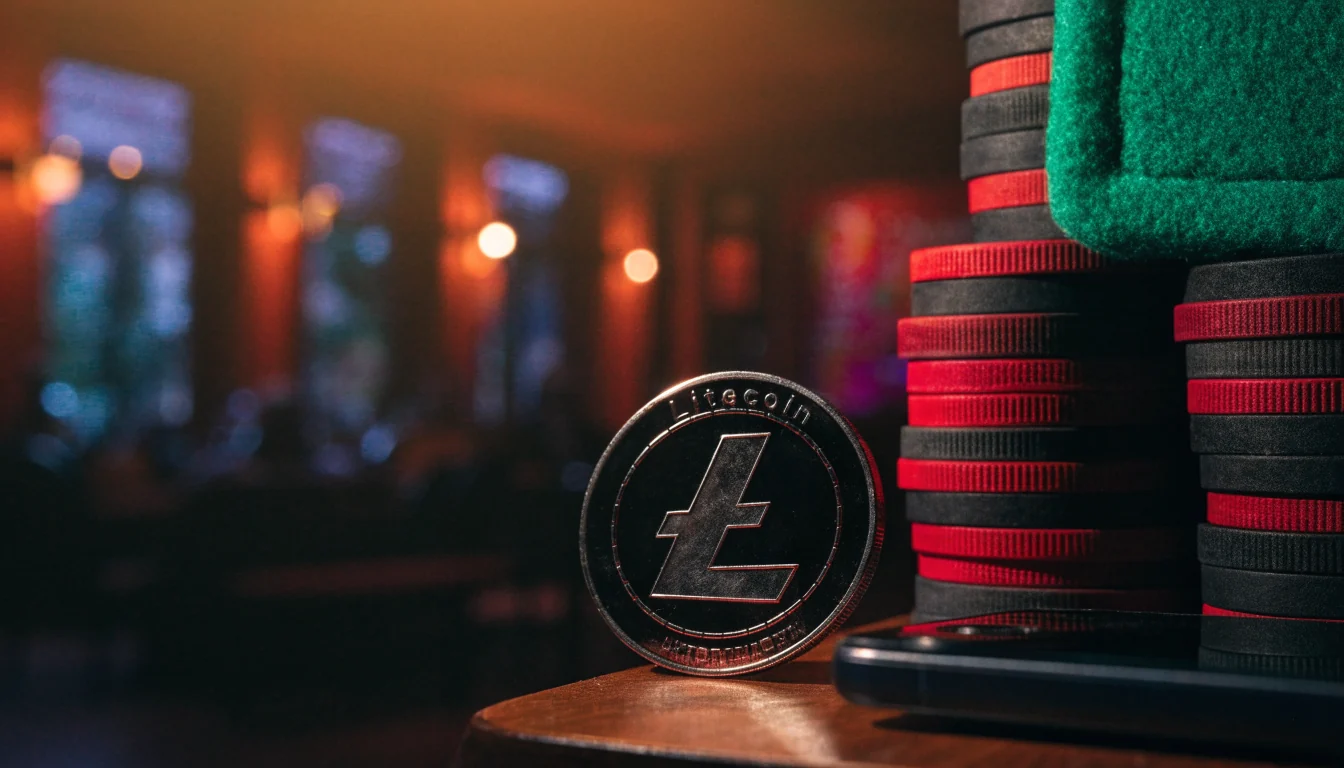
A specialist review of casino websites describes payment options including Visa, Mastercard, bank transfers, e-wallets and several cryptocurrencies. That gives a picture of varied payment categories; it does not identify Dogecoin support at a particular casino. The distinction matters. Bitcoin, for instance, is a separate cryptocurrency from Dogecoin, and a reference to one cannot stand in for the other. Nor does a general crypto label tell a player whether Dogecoin is available for deposits, withdrawals, or both.
I have seen payment pages written at different levels of precision. A headline may group methods under a broad label, while the actual options are narrower. That is not necessarily a contradiction: the label can describe a category, while the transaction options define what the site accepts. It is still not confirmation of a Dogecoin route.
This makes claims about the best Dogecoin casinos difficult to assess unless they identify the specific currency and the function it serves. A site might mention cryptocurrency without naming Dogecoin; a review might repeat that broad wording; and subsequent descriptions can make it sound more definite than it is. The claim grows in transit. A named coin and a clearly stated payment use are the relevant details, not the presence of a crypto badge.

The same care applies to payout claims. A casino that mentions crypto does not thereby confirm that winnings can be sent as Dogecoin. Deposits and withdrawals are separate parts of the payment arrangement, and a general category label cannot establish both. Treating them as interchangeable can leave an important part of the claim unresolved.
For UK players, the payment claim also sits apart from the operator’s regulatory status. Remote gambling licensees serving the British market must hold the relevant UK Gambling Commission licence. A cryptocurrency reference does not establish that status, just as a licence does not prove support for a particular coin. These are separate facts, and one should not be used as a shortcut for the other.
I would therefore read “crypto” as a starting category, not as evidence that Dogecoin is accepted. A specific, current statement naming Dogecoin is needed before the claim can be treated as meaningful. Without that precision, it is not possible to distinguish an actual Dogecoin option from a broad description of other cryptocurrencies. No confirmed coin.

Dogecoin and online slots: what UK rules change
Dogecoin is a payment question; the rules governing an online slot are a separate matter. A casino’s cryptocurrency options do not change how its slot games must work for customers in Britain. Nor does a Dogecoin label establish that a particular game, casino or mobile site is available to UK players.
The distinction matters because payment descriptions can make a site sound unusual, while the gameplay requirements remain ordinary regulatory obligations. Remote gambling licensees serving customers in England, Scotland and Wales must hold a UK Gambling Commission licence. The Gambling Act 2005 governs gambling in those nations, but not Northern Ireland. A payment method does not replace the operator’s licensing responsibilities.
No autoplay on online slots
Online slot autoplay is banned in Britain. A game cannot run a sequence of spins automatically while the player watches or does something else. Each spin must be initiated individually.
That changes the practical rhythm of play. A feature described as “hands-free” or “effortless” would not make autoplay permissible on a British online slot. The controls should leave the decision to start each spin with the player. This is a gameplay safeguard, not a restriction on which cryptocurrency a cashier might list.
I have seen payment branding draw attention away from the actual rules of the product. That is the wrong signal. The cashier and the game operate under different requirements.
A minimum spin duration
Online slot spins in Britain must last at least 2.5 seconds. The duration requirement applies to the spin itself, rather than to how quickly a deposit is credited or how a payment is converted. A fast deposit does not permit a game to resolve spins more quickly than the rules allow.

This also means that claims about rapid play need to be read in context. They cannot override the minimum spin duration. If the site offers slots to British customers, its online slot design must comply whether the account is funded through a conventional method or a cryptocurrency, where that payment is available.
The gameplay rule stays put.
These requirements concern online slots, not every casino game. The Gambling Act defines a casino by reference to arrangements that give people an opportunity to participate in one or more casino games, but the autoplay ban and spin-duration requirement described here are specifically about online slots. A Dogecoin payment claim should not be treated as evidence about game rules, and slot compliance should not be treated as evidence about payment support.
For someone comparing sites on the basis of Dogecoin, the useful separation is simple: payment availability belongs to the cashier; slot autoplay and spin timing belong to the regulated game experience. Neither answers the other. The presence of a cryptocurrency logo does not relax British slot controls, and compliant slot controls do not confirm that Dogecoin can be deposited.
Payment compatibility: cards, wallets and the cashier’s fine print
A payment logo is not a promise that every version of that payment method will work. In the cashier, “Visa” or “Mastercard” may describe a network, while the actual decision depends on the card product and whether it is available to that customer. UK casinos commonly accept debit cards on these networks, but that does not mean every card carrying the logo is eligible.
Credit Card Ban
Credit-card payments for gambling are prohibited at UK-licensed casinos since 14 April 2020.
A specialist review of casino payment options may list Visa and Mastercard, yet that listing cannot establish current UK availability or eligibility for each card product. The cashier is where those details become operational. A method can appear in general payment information but be absent from an account’s available choices. Different things. The label is broad; the transaction rules are specific.
That distinction matters when a search is for Dogecoin payments alongside cards. A casino mentioning cryptocurrency does not thereby establish that Dogecoin is accepted, and a card logo does not show that a card can fund a crypto-related transaction. Those are separate payment routes, with separate eligibility conditions. “Crypto-friendly” is not a substitute for a named method.
The card distinction is also a legal one. Debit-card payments for gambling are permitted, subject to the casino and issuer accepting the transaction. Credit-card payments for gambling are prohibited at UK-licensed casinos. The regulator introduced that ban on 14 April 2020, and it remains in force. A credit card does not become acceptable because it carries a familiar network logo or is used through a payment intermediary.
Wallets have their own boundary. A wallet cannot be used for gambling payments where it allows credit-card funds to be used for that purpose. The relevant question is not simply whether the casino lists a wallet, but whether the funding route complies with the restriction. A wallet balance and a credit-funded wallet transaction are not interchangeable from a compliance perspective.

In operational terms, payment labels are shorthand, not a complete promise of access. A card may be debit rather than credit, the cashier may support only particular products, and the casino’s available methods may differ for an individual account. A payment method being named somewhere on a site does not erase those distinctions.
I have seen the confusion start with a logo and end with a declined deposit. The logo was accurate in a narrow sense; the assumption built around it was not. That is why card-network names, card type and any wallet funding route need to be treated as separate details. Dogecoin acceptance is a separate question again, not something that can be inferred from the presence of cards or a generic cryptocurrency reference.
If Dogecoin is unavailable, compare ordinary payment routes carefully
When a Dogecoin option is not shown, the practical comparison is between familiar routes and what each one actually permits. A payment method can be useful for adding funds yet unsuitable for cashing out or claiming a promotion. The name on a payment logo tells only part of the story.
Bank transfers and open banking
Open banking and bank transfers are described in some specialist reviews as supporting instant deposits and fast withdrawals at many sites. That is a useful possibility, not a service guarantee: the available route and timing depend on the casino and the bank service involved.
The distinction matters at the cashier. A transfer may be convenient for moving money from a bank account, but the deposit and withdrawal options should be checked separately. A method displayed for deposits is not automatically available for payouts. In my experience, treating the cashier as a two-way route rather than a list of deposit buttons avoids a common misunderstanding.
- Check deposit and withdrawal options separately
- Verify if a payment method is eligible for a specific promotion
- Use a method that supports both funding and cashing out
- Assume a deposit method is automatically available for payouts
- Treat “fast” transaction speeds as a guarantee of bonus eligibility
- Use a deposit-only voucher for the entire payment route
E-wallets
PayPal is valued for speed and convenience in some specialist reviews, but those same reviews note that it may not qualify for a bonus. Skrill and Neteller are available at some sites; specialist reviews also report that these wallets are often excluded from promotions. That makes the promotion terms part of the payment decision, not an afterthought.
“Fast” describes the transaction experience, not the full value of an offer. A deposit made through a wallet may be processed smoothly while still falling outside a bonus’s eligible methods. The terms attached to the specific promotion decide that point. No universal winner.
Prepaid vouchers
Paysafecard is a prepaid voucher for deposits only. That limitation is decisive if the intended payment route also needs to handle withdrawals: a deposit-only method cannot serve as the complete route for both directions.
A voucher may suit someone who wants to pay without using a bank transfer or e-wallet at the point of deposit, but its role ends there. The casino’s other payout methods and any requirements attached to them still matter. A separate method may be needed for withdrawals.
What makes an alternative suitable
There is no single “best” Dogecoin alternative for every account. The useful comparison is functional: whether a method accepts deposits, whether it supports withdrawals, and whether it is eligible under the relevant promotion terms. Availability can differ between casinos, and a method’s general reputation does not confirm that it is offered at a particular cashier.
I have seen payment choice treated as a branding decision: a recognisable wallet sounds reassuring, or a bank route sounds universally practical. The working details matter more. A route that fits the intended deposit but cannot support the planned withdrawal, or that disqualifies a promotion, may be the wrong fit. Check the method’s stated role and the offer conditions before treating it as a substitute. No shortcut.

Using Dogecoin for deposits: keep account and payment details aligned
A deposit can be technically successful and still leave an account review with questions to resolve. From the operator’s side, the basic issue is whether the casino account and the payment route appear to belong to the same customer. When those details align, there is less room for routine ownership checks to interrupt a transaction.
That principle matters when considering Dogecoin as well as conventional payment methods. A casino’s acceptance of cryptocurrency, if offered, would not remove the need to understand who controls the account and how the deposit is being made. A Dogecoin address is not, by itself, the same kind of named payment account as a bank account. The records available to the casino can therefore differ from those attached to a payment method that carries the customer’s name.
The practical point is not to assume that a crypto transfer is anonymous to the operator or exempt from account checks. Nor does a casino accepting Dogecoin automatically mean that every wallet arrangement will be suitable. The relevant terms are the operator’s rules for deposits and account ownership, not the general reputation of a coin or wallet.
In ordinary payment flows, using an account and payment route held in the same customer’s name reduces the chance that basic ownership details create avoidable friction. This is a housekeeping point, not a guarantee that a transaction will be approved without review. The casino may still need to establish that the account details are accurate and that the payment is consistent with its rules.
Using a payment route held in the same customer’s name as the casino account reduces the chance of avoidable friction during ownership checks.
Where a named payment account is available, keeping to one route for deposits and later transactions can also make the history easier to follow. The cleanest arrangement is often one named account used consistently, rather than a series of routes associated with different people or account details. More routes mean more records to reconcile. Simple enough.
For anyone comparing casinos that accept Dogecoin in the UK, this distinction is easy to miss: a payment option and a customer’s ability to use it are separate matters. A site may describe crypto payments broadly, while the account-level terms determine which transaction arrangements are allowed. A search for Dogecoin deposits should not be treated as confirmation that a particular operator accepts Dogecoin, or that a third-party wallet will pass its checks.
The useful standard is consistency. Account information should be accurate, and the payment route should belong to the same customer wherever the method supports that link. If the details do not line up, a basic ownership question can become a delay or a request for clarification. That is avoidable friction, not a special feature of Dogecoin.
Dogecoin withdrawals and the return-to-source rule
A casino accepting Dogecoin for a deposit would not, by that fact alone, confirm that it pays withdrawals in Dogecoin. Deposit and payout methods can differ, and the cashier’s withdrawal instructions and terms determine which routes are available for a particular account. I would treat a claim of a “direct” Dogecoin withdrawal as unconfirmed until the operator’s own payment information explains the payout route.
For UK customers, the usual starting point is the return-to-source principle. Anti-money laundering controls commonly require winnings or returned funds to go back to the original payment source. That can make the route used for a deposit relevant when a withdrawal is requested. If the cashier cannot return funds through that route, it may specify another method and require further checks before releasing the balance.

The practical distinction is between the casino approving a withdrawal and the money reaching its destination. A specialist review notes that processing time can include the operator’s internal approval, and that a first withdrawal may take longer while verification is completed. In my experience, the advertised speed of a payment method says little about this stage: an account that still needs checks can remain pending before the payment provider or wallet is involved. No instant payout promise removes that approval step.
KYC is part of the process, not an optional extra. The operator may need to confirm identity and establish that the account and payment route are consistent before authorising a payout. Withdrawal speed therefore depends both on the casino’s internal handling and on whether the account is fully verified. The queue matters.
With Dogecoin, the key question is not simply whether a site mentions the currency. It is whether its terms state that withdrawals can be made in Dogecoin, how the return-to-source rule applies, and what happens if that route is unavailable. Without a clear answer, a Dogecoin deposit should not be treated as evidence of a Dogecoin withdrawal option.
The UK licensing position is separate from payout method. Remote gambling licensees serving Great Britain must hold the relevant UK Gambling Commission licence; a crypto payment label does not establish that status or alter withdrawal controls. A casino operating without that licence is outside the UKGC system. Payment claims and regulatory status need separate checks.
Deposit amounts, conversion and the real cost of a transaction
A deposit amount is not just the figure entered in the cashier. The minimum depends on the payment method, while conversion and charges can reduce the value that reaches the gambling balance. A specialist casino review gives a £10–£20 range for minimum deposits across the methods it covers; that is not a confirmed Dogecoin minimum, and it should not be treated as a universal threshold. A £5 deposit is possible only if the relevant cashier permits it.

The account currency matters as well. A specialist review of casino payment pages reports support for GBP, but the currency available to an individual account still needs confirmation before a first transaction. If the account and payment are denominated differently, conversion may affect the credited amount. With Dogecoin, the displayed value can also depend on the exchange rate used when the transaction is processed. The figure sent and the amount credited are not necessarily identical.
I have seen “no fees” used as shorthand for the casino charging nothing. That wording can leave out costs elsewhere in the payment chain. A specialist payment-method review identifies possible charges from the casino, payment provider, card issuer or bank, exchange-rate spread, and network. Which ones apply depends on the actual transaction, so a flat fee is only part of the calculation. A conversion spread can be less visible than a stated charge, but still change the final value.
For a Dogecoin deposit, the useful comparison is therefore between the amount sent, the exchange rate applied, any network or provider charge, and the balance credited. The cashier’s minimum is a separate constraint: a method may have its own threshold, and the account may also be subject to transaction or account limits. Those limits should be read as stated for the selected method, not inferred from a general crypto label.
A bonus does not make a deposit cheaper by itself. Its terms may define which payment methods qualify and what deposit conditions apply; the advertised bonus amount cannot establish either point. Separate figures. No guesswork.
Dogecoin does not tell you whether a casino is on GamStop
A casino’s payment options and its GamStop status are separate questions. Seeing Dogecoin mentioned does not establish that a site is connected to GamStop, outside it, or unaffected by it. The same applies in reverse: a claim about GamStop does not confirm that Dogecoin can be used there.

That distinction matters because promotional wording can make two unrelated features sound like one package. “No GamStop” describes a claim about self-exclusion arrangements; it is not a payment term. “Dogecoin casino” describes a claimed payment option, not a safer-gambling status. Neither phrase proves the other.
I have seen how labels compress complicated checks into a few words. They are easy to repeat and easy to misunderstand. A payment badge cannot answer questions about account controls, and a statement about account controls cannot verify a cashier option. Separate claims need separate confirmation. No shortcut.
For the UK market, the relevant baseline is that remote gambling operators serving Great Britain must hold the appropriate UK Gambling Commission licence. UKGC rules also require remote operators to ask new customers to set a financial limit before their first deposit and to make account-level limit controls accessible. That requirement concerns account safeguards; it does not turn a Dogecoin claim into evidence about GamStop.
It is also worth keeping the wording precise. “Not registered with GamStop” and “not covered by GamStop” are often used loosely in casino promotions, but they are not proof of a site’s regulatory position or of what protections apply to an account. Likewise, the phrase “Dogecoin slots” may imply a relationship between a coin and particular games that the payment label alone cannot establish.
The useful assessment is therefore not whether a casino sounds like a Dogecoin site or a non-GamStop site. It is whether each claim can be verified independently, and whether the operator’s status and account safeguards are clear. A cryptocurrency option is not a safer-gambling control. A GamStop claim is not a payment confirmation. Neither should be treated as a substitute for the other.
Why must withdrawals return to the deposit method?
Returning funds to the original payment source is a common anti-fraud and anti-money-laundering control. An alternative route may require additional verification.
What is the fastest withdrawal method for UK casinos?
PayPal, open banking services and debit cards linked to fast payout systems are generally among the quickest options. The casino’s approval process and your verification status also affect how quickly you receive the funds.
Why can a fast payout casino still delay my withdrawal?
A casino may need time to approve the withdrawal, and a first payout can take longer while verification is completed. An account that is not fully verified can also slow the process.
Is Skrill available?
Yes, Skrill is available at some UK-friendly casino sites and remains a common deposit method. It may be excluded from promotions.
Can I deposit in GBP?
Yes, GBP is supported, but check that your account is set to GBP before depositing to avoid currency conversion.
What is the current minimum deposit?
The minimum deposit usually starts at £10–£20, depending on the payment method.
Which payment methods are accepted in Great Britain?
Options include Visa and Mastercard debit cards, PayPal, bank transfer and open banking, plus e-wallets such as Skrill and Neteller. Paysafecard is for deposits only; Apple Pay is accepted at some UKGC-licensed casinos, and Jeton is available at a handful of sites. Check the cashier for current availability.
Which method has the lowest fees?
There is no single method that is always cheapest. Compare casino and provider charges, bank or issuer fees, currency-conversion spreads and any network fees for the amount you plan to transfer.
Created by the ”Skyhills Casino” editorial team.