
Casinos That Accept Echeck in the UK
 Available in GB
Casino payment pages can differ from the options shown in a cashier, and availability may depend on the account and location.

Table of Contents
- Checking Whether an Online Casino Supports Echeck
- What “Accepts Echeck” Needs to Mean at the Cashier
- Echeck Casino Sites and Deposit Compatibility
- Echeck Deposits: Instant Credit Is Not Guaranteed
- Echeck Casinos in the Context of UK Payment Rules
- Comparing Echeck with Other Payment Routes
- Payment Options on Casino Apps
- Deposit Limits and Financial Controls
- Payment Costs Beyond the Deposit Amount
- Echeck Withdrawals and Returning Funds to Their Source
Checking Whether an Online Casino Supports Echeck
A payment method mentioned on a casino information page is a lead, not proof that it can be selected in the cashier. I treat those as separate checks. A page may describe a method that has since changed, may apply to a different country, or may not reflect the options available to a particular account. For echeck, that distinction matters: a general claim does not establish that a UK customer can find or use the method.
I start with the casino’s own payment information, then compare it with the cashier after signing in. A specialist review can help identify what to look for, but it is secondary to the operator’s current payment screen. If the review mentions echeck and the cashier does not, the review alone is not enough to establish availability. The reverse also needs care: an item visible in a general payment list may not be offered to every customer.
Start with the cashier, not the headline
The cashier is the practical place to inspect because it shows the options attached to the account session. I open the deposit area and look through the payment methods actually displayed there. If echeck is not listed, I do not infer that a similarly described bank service is the same thing. Nor do I treat a logo in a footer or a broad “payment options” page as evidence that echeck is supported.
When looking for a UK casino that accepts echecks, check the available payment methods and withdrawal terms before choosing. The details below provide a limited reference point on payout speed.
Payout speed: 1-3 business days Jetsetspins has a listed payout speed of 1–3 business days.
Payout speed: 1-3 business days Revery Play has a listed payout speed of 1–3 business days.
Payout speed: 1-3 business days BeOnBet has a listed payout speed of 1–3 business days.
Payout speed: 1-3 business days Zombillion has a listed payout speed of 1–3 business days.
Payout speed: 1-3 business days Britsino has a listed payout speed of 1–3 business days.
Payout speed: 1-3 business days Amunbet has a listed payout speed of 1–3 business days.
Payout speed: 1-3 business days SpinFormula has a listed payout speed of 1–3 business days.
Payout speed: 1-3 business days WinBeast has a listed payout speed of 1–3 business days.
Payout speed: 1-3 business days NightWin has a listed payout speed of 1–3 business days.
Payout speed: 1-3 business days NightLuck has a listed payout speed of 1–3 business days.
The screen can also differ depending on whether the account is signed in. A public page may show a broad catalogue, while the signed-in cashier presents a narrower set. That difference is not necessarily a contradiction: the public page may be descriptive, while the cashier is reflecting the account’s current setting. I keep the distinction clear.
If an option is absent, the sensible next step is to check the operator’s help pages or ask customer support to confirm whether it is offered to UK accounts. The question should name the method and the account’s country, rather than ask vaguely whether the casino “takes bank payments”. That avoids treating unlike payment routes as interchangeable.
Read payment pages as descriptions, not live confirmations
Payment pages can still be useful. They may explain how a method is described by the operator and whether a page is intended for a particular market. But a supplied page can be out of date or written for a wider audience. Its wording does not, by itself, establish current access in the UK or availability on an individual account.
I apply the same caution to familiar methods. A specialist review may list Visa and Mastercard, but that does not settle whether a particular card product can be used by a UK customer today. The cashier remains the relevant check, and the card’s eligibility may also depend on the issuer and product. A brand name on a page is not a universal acceptance promise.

Currency deserves an early check as well. A specialist review may state that GBP is supported, but the account currency should be confirmed before the first transaction. If the account is set to another currency, conversion may enter the payment path even where a page describes the casino as supporting pounds. I would rather establish the account setting first than assume a general statement applies to the live account.
Keep evidence specific
When checking a method, I note where the claim appears and what it actually says. “Available payment methods” on an operator’s page is different from an option displayed in the signed-in cashier; neither should be silently upgraded into a promise that every account can use it. The distinction is especially important for a method being investigated by name, because broad labels such as bank transfer or online banking do not prove that the cashier offers echeck.
A clean check follows a simple order:
- Review the operator’s payment information for the UK market.
- Sign in and inspect the cashier’s displayed methods.
- Compare the exact method name rather than assuming similar labels mean the same route.
- Confirm the account currency before making a first transaction.
- Ask support to clarify any mismatch between the payment page and the cashier.
That is a verification process, not a recommendation of a particular casino. A “best” label in a third-party article cannot replace checking the live cashier. If no current cashier option or direct operator confirmation supports the claim, there is no sound basis for describing that casino as an echeck option for a UK account.
I have seen payment information treated as though it were a permanent feature of an account. It is not. Pages are written for broad audiences; cashiers reflect a more specific moment. The distinction saves a reader from mistaking a marketing list for a usable choice, without turning an unverified mention into a claim that an echeck route is available.
What “Accepts Echeck” Needs to Mean at the Cashier
A casino’s general statement that it “accepts echeck” is not the same as a usable payment option for a particular transaction. I treat acceptance as a set of practical conditions: the method must be offered in the cashier, available for the intended action, and compatible with the account and payment route being used. A logo or a sentence on a promotional page answers none of those points on its own.
A logo or a sentence on a promotional page does not prove that a payment method is actually usable for a specific account or transaction.
The distinction matters because payment pages often compress several different things into one word: a brand may be recognised, a route may exist for some customers, or a method may be supported only for one part of the cashier. Those are not interchangeable. A method displayed alongside deposit options does not, by that fact alone, establish that it can be used for every deposit or that it applies to every account. Nor does a general payment claim establish eligibility for a specific customer.
Read the transaction details, not just the label
When echeck appears as a cashier choice, the useful information is the instruction attached to that choice. The relevant question is not merely whether the name is present, but what the cashier asks the customer to do next and which account or payment details it expects. A displayed label without a workable route is an incomplete answer.
I look for a clear description of the payment source, the information required to authorise it, and any conditions presented before confirmation. If the method directs the customer to a separate payment service, the name on that service and the casino account should make sense together. If the cashier instead asks for bank details, it should be clear which account those details refer to and who is expected to own it. Ambiguity at this point is a reason to pause, not to guess.
The final confirmation screen also matters. It should identify the selected method and the transaction being authorised. A method appearing earlier in the cashier may not remain selectable once the account details or transaction information are entered. That is a practical difference between a payment route being mentioned and the route being available for the transaction in front of the customer.
Match the customer to the payment route
From the operational side, mismatched ownership details create avoidable work. A casino account belonging to one person and a payment account belonging to another can prompt questions that a straightforward transaction would not. Keeping the account information and payment route under the same customer’s name reduces the chance that basic ownership checks become a source of friction.
Using one named payment account consistently for both deposits and withdrawals reduces the chance of ownership checks becoming a source of friction.
The cleanest arrangement is often one named payment account used consistently for deposits and withdrawals. Consistency gives the operator a coherent record of where funds came from and which customer controls that route. It is not a promise that every transaction will be accepted: an operator can still apply its own checks, and the cashier’s terms remain decisive. But it avoids adding an obvious ownership discrepancy to the review.
Names are not the only detail that can matter. The account selected at the payment stage should be the one the customer intends to use, rather than a saved or shared route chosen by mistake. A household account or payment service with several users may be convenient in ordinary banking, but the casino may need to establish who owns and controls the funds. The fewer unexplained links between people and accounts, the cleaner the payment record.
Treat “available” as specific, not universal
A cashier can present a method in a way that looks broad while its use remains account-specific. The option might be visible before the customer’s details are entered, then prove unavailable for that account or transaction. Conversely, a method may be described on an information page but not appear in the customer’s live cashier. Neither situation should be resolved by assuming the marketing wording overrides what the transaction screen permits.
I separate three questions in my own assessment: is the method named, can the current account select it, and does the cashier accept the details for the transaction? Only the last step demonstrates that the route is functioning at that point. Even then, an on-screen selection is not the same as a completed payment; authorisation and processing still have to take place.

This is why a claim about casinos that accept echeck in the UK should be read carefully. It can describe a general payment statement, not a confirmed route for every UK customer. The relevant evidence is the live cashier and its terms for the account concerned. If the instructions do not make ownership, payment source, or transaction purpose clear, the claim remains too broad to rely on.
A little precision prevents a lot of back-and-forth. One customer, one named account, one consistent route.
Echeck Casino Sites and Deposit Compatibility
A search for echeck casino sites in the UK can make the payment landscape look more settled than it is. Echeck is a label for an electronic cheque-style payment route; it should not be treated as another name for a debit card, bank transfer or e-wallet. The practical point is that casino cashiers can offer different funding methods, and a list of familiar UK options does not establish that echeck is among them.
In my experience, payment pages are easiest to understand when each option is considered as its own route. A card deposit draws on a card account; a bank transfer or open banking payment connects to a bank account; an e-wallet uses a separate wallet balance or linked funding arrangement. Those distinctions affect what a cashier displays and what payment details a customer needs. Similar-looking labels do not make the underlying methods interchangeable.
Common UK options including Visa and Mastercard, though eligibility depends on the card product and issuer.
Includes open banking and direct transfers, providing a distinct route from echeck despite both using bank accounts.
Services like PayPal, Skrill, and Neteller, which may be subject to specific promotional exclusions.
Options like Paysafecard, used exclusively for deposits and not for receiving funds.
Familiar deposit routes in the UK
Debit cards are a common starting point at UK casinos, with Visa and Mastercard among the card brands used. Their presence is not a guarantee that every card product or transaction will work in every cashier. The payment method, the account and the card issuer all matter. For deposit compatibility, the useful question is whether the specific route can be selected for the account, not whether the brand is familiar.
Open banking and bank transfers are another part of the UK payment mix. A specialist casino review has described these routes as capable of providing instant deposits and fast withdrawals at many sites. That is a description of what may be available, not a fixed feature of every cashier: the actual route depends on the casino and the customer’s banking arrangements. Bank-based options are also distinct from echeck, even where both involve a bank account.
E-wallets form a separate category. Skrill and Neteller appear at some sites, while a specialist casino review notes that promotions may exclude payments made through them. That detail belongs to the offer terms, not to the basic question of whether an account can fund a deposit. PayPal is another familiar name, but its availability and any offer conditions should be treated as site-specific rather than assumed across the market.

Paysafecard works differently again: it is a prepaid voucher used for deposits only. It may suit a deposit where a voucher is accepted, but it is not equivalent to a bank-connected method or a route for receiving casino funds. That distinction is useful when comparing cashier options, since a deposit method can be compatible with adding funds without serving every other payment function.
Compatibility is about the route, not the name
Payment compatibility can be affected by more than the method’s headline name. A cashier might show a broad category, while the available choices underneath it depend on account settings, location, currency or the payment provider’s own process. A route that works for one customer therefore cannot be presumed to work identically for another.
Currency is an easy detail to overlook. Casino account pages may support pounds sterling, but the account currency still needs to be established before the first transaction. If the payment account and casino balance use different currencies, conversion can enter the transaction. The method itself may be available while the currency arrangement remains inconvenient.
Ownership details matter too. A deposit route held in the same customer’s name as the casino account is less likely to create avoidable questions about who funded the transaction. That is not a promise that a payment will be accepted; it is a straightforward way to avoid a mismatch that can complicate basic checks.
For someone looking for an echeck deposit casino, the broader payment menu is useful mainly as context. Debit cards, bank-linked routes, e-wallets and prepaid vouchers are separate alternatives, not evidence that a particular casino accepts echeck. Nor does a long list of payment brands mean that every route is active for every account. Payment menus are operational, not decorative.
The sound comparison is therefore between the options actually relevant to the intended deposit: whether the route is offered, whether its currency fits the account and whether its terms suit the transaction. A familiar alternative may be more compatible in practice than a payment label found in a general description. No shortcut.
Echeck Deposits: Instant Credit Is Not Guaranteed
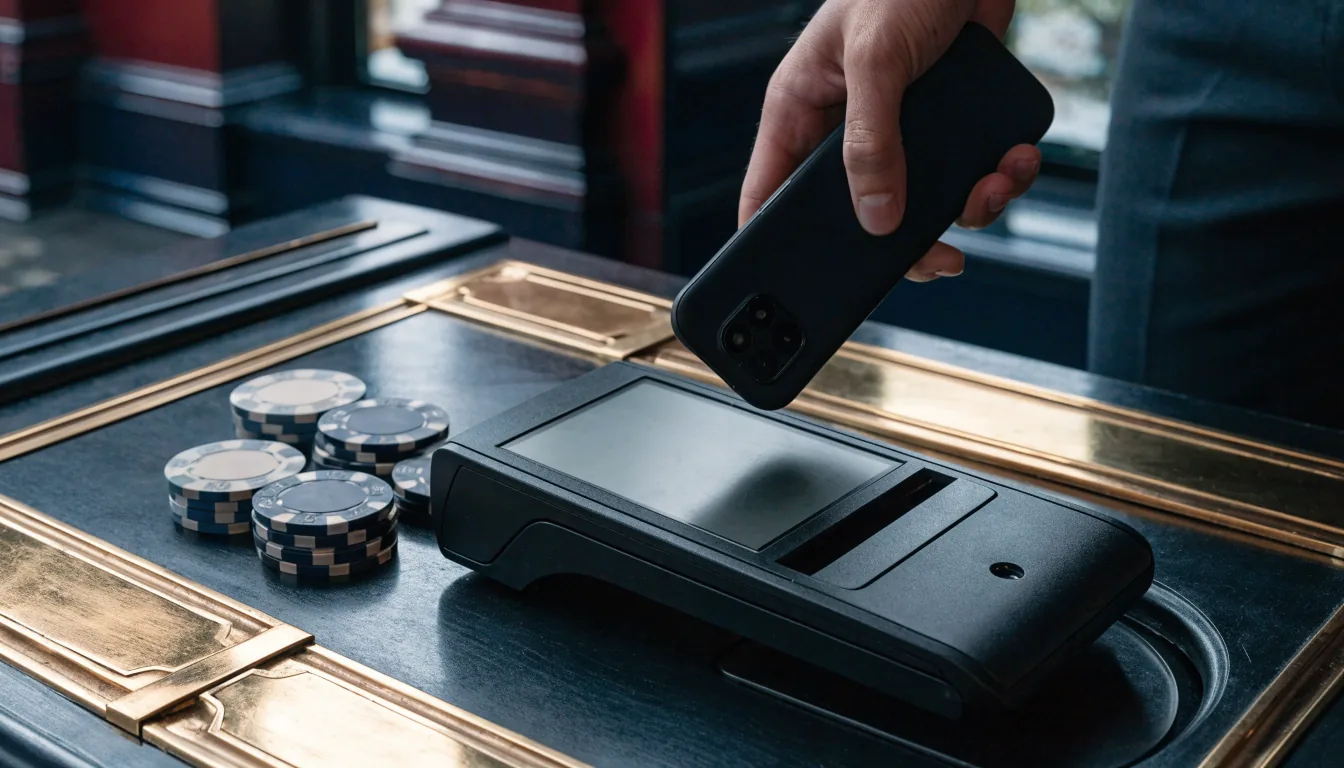
A deposit described as “instant” can refer to one stage of a payment, not the whole transaction. The casino may show the money in a balance quickly after receiving an approval, while the payment itself still has to pass through a provider or bank. Those are different events. A cashier label alone does not establish when funds will be usable, or whether a transaction will be approved.
That distinction matters when assessing echeck deposits. A speed claim attached to another payment method cannot be carried across to echeck, and a general statement that a casino processes deposits quickly does not establish an echeck timetable. The method’s name is not a processing promise. In the absence of a clear, current estimate for the specific route, the sensible reading is that the credit time has not been confirmed.
Approval, processing and usable balance
From the operator’s side, a payment can move through several statuses: submitted, authorised or received, then credited to the gambling account. The wording differs between cashiers, but the practical point is consistent: a transaction that has been initiated is not necessarily a transaction that has cleared, and a displayed pending status is not the same as funds being available to play with.
A delay can also sit outside the casino’s own system. The payment provider may need to process the instruction before the operator receives confirmation. If the casino has not received a successful response, it may not credit the balance, even if the transaction appears to have started on the payment side. Conversely, a casino may credit an account after an approval without that proving the entire payment route has settled in the background.
This is why “instant” needs a defined endpoint. Does it mean the cashier accepts the instruction immediately, the balance updates after approval, or the payment completes without further processing? Those descriptions are not interchangeable. A payment method can feel immediate at the point of deposit while its later stages take longer.

A specialist review describes card deposits as capable of appearing instantly while a payout can take several business days. That is a useful illustration of how deposit and withdrawal timings can diverge, not evidence about echeck deposits. Nor does a fast card credit establish that a different payment route will behave in the same way. Different rails, checks and account conditions produce different outcomes.
What an echeck speed claim can establish
A claim that a site accepts echeck says something about a payment route being presented; it does not, by itself, settle the timing of a particular deposit. Even a statement that processing is fast needs context: whether the estimate begins when the instruction is submitted or once it is approved, whether it refers to casino credit or provider settlement, and what happens when a transaction is held for review.
The useful detail is the one tied to the intended transaction. A cashier may show a processing estimate, while payment terms may explain when the casino treats a deposit as complete. If the two descriptions differ, the distinction should be taken seriously rather than reduced to the more attractive wording. “Fast” is advertising language until the stage and conditions are clear.

Account checks can also affect the path from instruction to usable balance. An operator may need to resolve a payment or account issue before treating a deposit as complete. That does not establish that an echeck transaction will be delayed; it means a general speed description cannot promise the outcome of every individual payment. No fixed echeck credit time should be assumed from the method name alone.
Minimums are a separate cashier detail
Deposit speed and minimum amount are separate questions. A low minimum does not make a payment faster, and an instant credit does not imply that the method has a particular minimum. The cashier sets the amount permitted for the selected route, so figures shown for one payment option should not be applied to another.
A specialist review puts common casino minimum deposits in the £10–£20 range, with the amount depending on the payment method. That is a reported general range, not a guaranteed echeck minimum or a promise that every casino will use those figures. The live cashier’s displayed minimum is the practical amount for that account and route; it can differ from a figure in a general review.

In practice, the two checks should remain distinct: what amount the cashier will accept, and when an approved deposit becomes usable. One does not answer the other. Until the specific route gives a clear processing estimate, “instant echeck deposit” should be treated as a claim requiring a precise definition, not as a dependable timetable.
Echeck Casinos in the Context of UK Payment Rules
A payment label does not sit outside the rules that govern casino funding. For remote gambling licensees serving the British market, the relevant question is not simply whether a cashier displays a method called “echeck”; the payment route must also comply with restrictions on credit-card payments for gambling.
The regulator’s ban on credit-card gambling took effect on 14 April 2020 and has not been relaxed. A credit card therefore cannot be used to fund a gambling account at a UK-licensed casino. Routing a credit-card payment through a money service business does not make it acceptable. The route matters, not just the name shown at the point of payment.
That distinction is useful when a method’s description is brief. “Echeck” on a page is not, by itself, evidence that a transaction is permitted or available to a particular customer. Nor does the label tell the whole story about how the payment is funded. In my experience, payment checks become simpler when the cashier’s description, the actual funding source and the account holder’s details all point in the same direction. Labels can be thin. The route is what counts.
The same principle applies to digital wallets. A wallet cannot be used for gambling payments if it allows credit-card funds to be used for gambling. The fact that a casino accepts a wallet does not override that restriction, and a wallet balance should not be treated as automatically eligible merely because it appears available for payment. Remote gambling licensees must apply the restriction to the payment route, including the way funds reached the wallet.
Credit Card Ban
Using a credit card to fund a gambling account at a UK-licensed casino is prohibited, including routing payments through money service businesses or restricted wallets.
This is a UK payment constraint, not a claim that echeck is offered by any particular casino. A cashier entry, a general payment page and a completed transaction are different things. Payment methods can also be subject to account-level checks, so a name on a marketing page is not a substitute for the rules applied when a deposit is attempted.
For anyone assessing an echeck casino in the UK, the practical point is narrow but important: the method’s name does not create an exception to the credit-card ban. Credit-card gambling remains prohibited, including through restricted wallet funding or an intermediary route. No workaround.
Comparing Echeck with Other Payment Routes
“Best” can mean the route with the lowest total cost, the clearest charges or the fewest conversion steps. Those are different tests. A casino’s payment-method list cannot settle them, and the label “echeck” alone does not show what a particular transaction will cost. I would compare the route presented in the cashier with the alternatives actually available to the account, rather than rank casinos by a payment claim.
The total can be affected by charges from several sides: the casino, payment provider, card issuer or bank, and, where relevant, a payment network. Currency conversion adds another variable. A specialist payment review notes that a conversion spread may outweigh a visible flat charge; the point is that the displayed fee is not necessarily the full cost. The exchange rate applied to the transaction matters too.
A fair comparison uses the same deposit amount and currency for each route. First, check whether the casino shows a charge before confirming. Then consider whether the provider or bank may add its own fee, and whether conversion will occur at the casino, provider or bank. If the account and transaction are in GBP, confirm that the payment route will not convert the funds into another currency. A small visible fee is not automatically cheaper if the exchange rate is less favourable.

The payment mechanics also differ. A bank transfer, card or e-wallet can involve different intermediaries, and network charges may apply to some routes. That does not make one category inherently cheaper: the relevant comparison is the amount that leaves the account against the amount credited, using the actual terms shown for that transaction. A route with no casino fee can still carry a provider or conversion cost.
I have seen “free” used as if it described the whole payment chain. It may describe only one party’s charge. The useful figure is the combined cost for the intended transaction, not a headline label. If a charge or exchange rate is unclear before confirmation, the route is not yet comparable on price.
There is no universal lowest-fee option, and an echeck route cannot be called the best on cost without its applicable charges and conversion terms. Compare like with like. Then decide.
Payment Options on Casino Apps
A payment logo on a casino’s website does not establish that the same method appears in its app. I treat the app cashier as a separate route: its options can depend on the operator’s setup, the device and the account. An echeck casino app in the UK therefore cannot be confirmed from a general payment-method page alone. The method would need to appear in the app’s own cashier, with the relevant transaction route available for that account.
The check is practical, not cosmetic. I open the cashier within the app, select the deposit route and review the methods actually offered there. If a method is absent, a logo elsewhere on the site does not make it selectable. If it appears, its presence still does not prove that every account or payment product is eligible. The cashier is the useful evidence for that particular route; a promotional page is not a substitute.
Apple Pay is a separate example of why this distinction matters. Some UKGC-licensed casinos accept it for deposits, but that does not mean it is available at every licensed casino, or in every app. Nor does it establish anything about echeck support. Availability belongs to the specific operator and payment path, not to a broad category of casinos.

A specialist review may list Visa and Mastercard among a site’s payment methods. I treat that as a pointer, not a live confirmation: current UK availability and eligibility of the particular card product still need to be checked in the cashier. An app may show a card route that is not suitable for a particular product, or omit a method described on a general page. Small distinction. Important outcome.
I also separate a method’s name from the action it permits. A deposit option in the app does not, by itself, establish that the same route can be used for another transaction. The cashier should make the permitted action clear before anything is submitted. If the app’s payment screen and the site’s information differ, the app display is more relevant to the transaction being attempted, but uncertainty should be resolved with the operator rather than guessed away.
That is the limit of what an app can establish: what it offers on that screen, for that account, at that point. No logo is a standing promise.

Deposit Limits and Financial Controls
A payment route is not assessed only by whether a deposit button appears. The account controls around it matter too. UKGC rules require remote gambling licensees to ask new customers to set a financial limit before they make their first deposit, and to provide accessible controls for managing limits at account level. The prompt is part of the funding process, not an optional feature hidden in a help page.
I have seen limit settings treated as a compliance step and then overlooked when comparing payment options. That misses their practical purpose: a deposit limit sets a boundary on funding, while a payment method may also have its own transaction constraints. One does not replace the other.
A specialist review reports that maximum deposits can differ by payment method and account status, including limits applied per transaction, per day or per month. Those figures should not be treated as fixed across casinos or accounts. The relevant amount is the one displayed for the selected method in the cashier, alongside any account-level limit already set. A route that appears suitable in a general comparison may not allow the intended deposit on a particular account.

This is one reason a list of leading e-check casinos cannot, by itself, establish that a payment route fits. A ranking says little about the limits shown at the point of deposit or the account controls available after registration. The cashier and account settings are the operative details.
I also separate a casino’s maximum from a customer’s chosen financial limit. The first restricts what a transaction or account can accept; the second is a control set for managing gambling spend. Check both before treating a method as usable. Small distinction. Real consequence.
Payment Costs Beyond the Deposit Amount
A deposit’s cost is not always the amount entered at the cashier. A specialist payment review identifies several possible charges around a transaction: a casino fee, a payment-provider fee, an issuer or bank charge, an exchange-rate spread, or a network fee. Which party applies a charge depends on the route and the transaction. A method name alone does not settle the total.
I have found it useful to separate visible fees from costs built into the conversion. A stated service charge is easy to spot; an exchange rate can be less obvious. If the casino account and payment route use different currencies, the amount credited may reflect a rate that includes a spread. That difference can outweigh a flat fee, so comparing only the cashier’s stated charge gives an incomplete picture.
The same applies to echeck casino payments in the UK. A payment option’s presence does not establish that it is free, nor that every account or transaction receives identical terms. The relevant figures are the ones shown for the actual payment, together with any charges set by the bank or provider. Conditions can sit outside the casino’s cashier.

There is no universal cheapest route. The comparison has to use the same deposit amount and account currency, then account for casino charges, provider or bank fees, conversion spread and any network cost. A route with no visible casino fee may still cost more after conversion; a flat charge may be the larger expense on another route.
I treat the final amount debited and the amount credited as separate figures. The difference is the practical cost of funding, not the headline fee. Check both before confirming. Small print matters.
Echeck Withdrawals and Returning Funds to Their Source
A casino’s cashier may show a deposit route without making the same route available for withdrawals. That distinction matters when considering an echeck casino withdrawal in the UK: a deposit option alone does not confirm that echeck payouts are supported, or that a particular account can use them.
UK anti-money laundering rules usually require a payout to go back to the original payment source. This closed-loop approach helps operators check where funds came from and where they are being returned. If that route cannot accept a payout, the casino may ask for an alternative. A different account or payment route can bring additional checks, because the operator needs to establish that the destination belongs to the customer and is appropriate for the transaction.
I have seen payment delays described as though they were one continuous process. They are not. First, the casino reviews the withdrawal request and may complete KYC, particularly when an account has not yet been verified. Only after approval does the payment provider handle delivery. A specialist review notes that first withdrawals can take longer while verification is completed; that is a processing consideration, not a fixed timetable for every account.
The distinction is practical: a casino’s approval does not mean funds have already arrived, and a provider’s delivery time does not include the casino’s internal review. The stages are separate.
Before relying on echeck for a payout, the cashier’s withdrawal options and the operator’s terms need to confirm that route for the account. If they do not, no echeck withdrawal should be assumed. A listed deposit method is not proof of a matching payout method.
Different route. More checks.
Are fast casino withdrawals guaranteed?
No. Withdrawal speed depends on the casino’s approval process and whether your account is fully verified.
What is the fastest withdrawal method for UK casinos?
PayPal, open banking services and debit cards linked to fast payout systems are generally among the quickest options.
Which method has the lowest fees?
There is no universally cheapest method. Compare casino and provider charges, currency-conversion spreads and any network fees for the payment you plan to make.
Is Skrill available?
Yes, Skrill is offered at some UK-friendly casino sites, though it may be excluded from promotions.
Do UK casino withdrawals require verification?
Verification may be needed, particularly before a first withdrawal, and can add time while the casino completes its checks.
Why must withdrawals return to the deposit method?
Returning funds to the original payment source is a common anti-fraud and anti-money-laundering control. Using another route may require additional verification.
Why can a fast payout casino still delay my withdrawal?
The casino must approve the withdrawal, and checks may take longer if your account is not fully verified. Bank cut-off times, weekends and currency conversion can also affect delivery.
Prepared by the Skyhills Casino editorial staff.