
UK Casinos That Accept PayPal: Payment Options Explained
 Available in GB
Payment methods can differ between deposits and withdrawals, and availability may change as operators revise their options.

Table of Contents
- Why a PayPal search can lead to a different payment method
- Deposits are not the same as a complete payment route
- What UK licensing does—and does not—confirm
- Pay-by-mobile options and how Boku is charged
- Slots, bonus eligibility and the conditions behind the offer
- Why payment availability changes from year to year
- Other ways to fund a casino account
- Withdrawal limits and the separate method casinos require
- Making a Boku deposit: the cashier and SMS steps
- GamStop status cannot be inferred from a payment method
Why a PayPal search can lead to a different payment method
A request for UK casinos that take PayPal is specific: it asks whether a particular payment service appears in a casino’s deposit options. Boku is a different service. A casino accepting Boku is not thereby a PayPal casino, and a Boku deposit option cannot be used as evidence that PayPal is available.
That distinction matters because payment pages often group methods under broad labels such as “mobile payments” or “alternative deposits”. Those labels describe a category, not a shared provider. PayPal and Boku remain separate methods, with separate arrangements between the service, the operator and the customer. A result about one should not be read as confirmation about the other.
In the UK casino market, a small group of UK Gambling Commission-licensed operators continues to offer Boku deposits. The group is narrower than it was: a specialist review describes operators moving away from Boku since 2023. Some have shifted to other Pay by Phone services, including Fonix or Siru Mobile; others have removed phone-based deposits altogether. These changes explain why older pages can describe a cashier that no longer matches what an operator offers now.
When looking for a UK casino that accepts PayPal, check the available payment options and withdrawal details before signing up. The details below provide a brief reference for each listed operator.
Payout speed: 1-3 business days Jetsetspins has a stated payout speed of 1–3 business days. This is the only specific detail provided here.
Payout speed: 1-3 business days Revery Play lists a payout speed of 1–3 business days. No further operator details are available in the information provided.
Payout speed: 1-3 business days BeOnBet’s stated payout speed is 1–3 business days. The available information does not specify its payment methods.
Payout speed: 1-3 business days Zombillion has a stated payout speed of 1–3 business days. No other specific attributes were provided.
Payout speed: 1-3 business days Britsino lists payouts as taking 1–3 business days. This is the only confirmed detail available for this reference.
Payout speed: 1-3 business days Amunbet’s stated payout speed is 1–3 business days. The information provided does not confirm whether PayPal is available.
Payout speed: 1-3 business days SpinFormula has a stated payout speed of 1–3 business days. No additional details were supplied.
Payout speed: 1-3 business days WinBeast lists a payout speed of 1–3 business days. Its payment methods are not specified in the available information.
Payout speed: 1-3 business days NightWin’s stated payout speed is 1–3 business days. This is the only specific information provided about the operator.
Payout speed: 1-3 business days NightLuck has a stated payout speed of 1–3 business days. The details provided do not establish whether it accepts PayPal.
The distinction can get blurred when a page is headed around PayPal but discusses casino deposits more broadly. A mention of phone billing, an e-wallet or another payment route may still be useful background, but it does not answer whether PayPal itself is accepted. The same applies to pages about casino accounts, slot play or promotions: a casino can offer those things without supporting the particular payment method named in its headline.
I have seen this confusion arise from the way payment information is presented. The headline promises a method; the text underneath switches to a nearby topic, often because payment options change or because a different route is easier to document. The reader is left to infer equivalence that is not there. It is not there.
Boku’s continued presence at some licensed casinos is a separate, narrower point. It shows that Pay by Phone has not vanished entirely from UK casino cashiers, even as its footprint has contracted. It does not establish a list of PayPal casinos, nor does it show that an operator offering Boku also offers PayPal. Each method needs to be checked as its own cashier option.
There is also a timing problem. A payment-method page can remain online after an operator has changed its cashier. Since Boku’s availability has been declining, an old reference to it may describe a previous setup rather than a current one. The reverse can happen too: a casino may add or remove a method without changing the broader description of its services. Payment availability is an operator-level detail, not a permanent feature implied by a brand name.


For a UK player looking specifically for PayPal, the useful distinction is therefore between an answer about PayPal and information about another deposit method. Boku can be discussed accurately as a method still found at a limited number of UK-licensed casinos, with its availability reduced since 2023. But it should not be presented as a substitute name for PayPal, or as proof that a casino accepts PayPal.
That separation also helps keep claims about other casino features in their proper place. A page may discuss slots, account registration or welcome offers, yet none of those details confirms a PayPal cashier option. Payment acceptance is a distinct condition. A casino’s general availability to UK customers does not, by itself, answer which services it accepts for deposits.
The practical reading is simple: Boku information answers a Boku question. It can explain why some UK casino pages mention Pay by Phone, and why those references have become less common. It cannot settle whether PayPal is available at a particular operator. Treating the two as interchangeable would turn a related payment discussion into a misleading answer.
Deposits are not the same as a complete payment route
A deposit method answers one narrow question: how money gets into a casino account. It does not, by itself, explain how winnings can leave it. That distinction is easy to miss when a cashier presents several payment logos together, as though each one covered the whole journey.
A deposit method only explains how money enters a casino account; it does not guarantee that winnings can be withdrawn using the same service.
Boku illustrates the gap. It can be used to deposit, but it cannot receive casino withdrawals. A successful Boku payment therefore funds the account without establishing a route for cashing out. The payment has done what it was designed to do; it has not created a complete deposit-and-withdrawal arrangement.
I have seen this confusion arise from the way payment options are displayed. A method appears beside the deposit field, a payment goes through, and the account balance updates. From the player’s point of view, the practical task seems finished. The cashier, however, treats deposits and withdrawals as separate functions. An option available for one may not be available for the other.
That is why anyone depositing with Boku must register another withdrawal method, such as a debit card, e-wallet or bank transfer. This is not a minor administrative detail to leave until a payout is requested. It is part of setting up a usable payment route in the first place. If no alternative method is registered, the Boku transaction has still funded the account, but it has not supplied the means to withdraw casino funds.
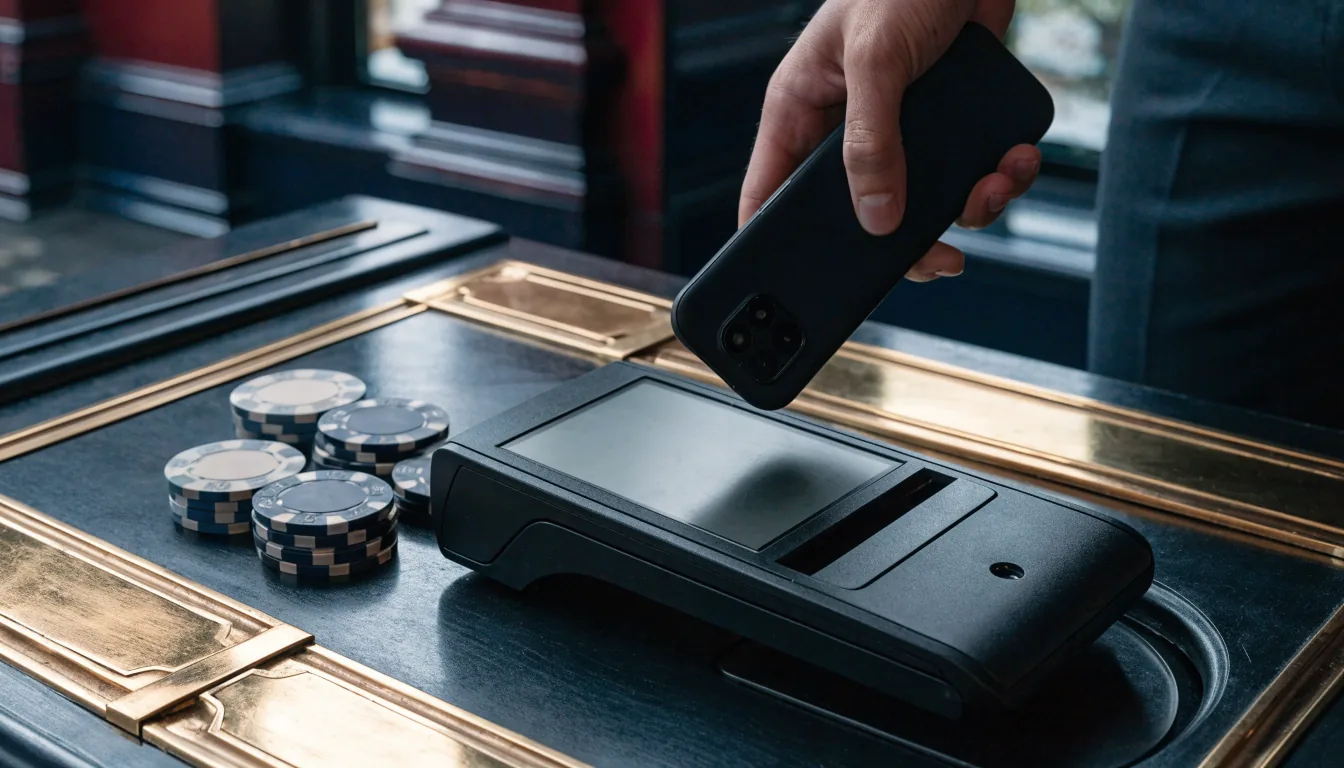
The distinction matters when comparing casinos associated with PayPal as well. A payment name in a deposit context should not be read as proof that the same method handles withdrawals. Nor should a casino’s support for one deposit option be taken as evidence that its cashier provides every stage of a cash-out route through that option. Deposit acceptance and withdrawal capability are different claims.
The wording on a payment page can make this less obvious than it should be. “Pay in” describes a direction of travel, not a two-way service. An account may accept a deposit through one channel while requiring the customer to add another before a withdrawal can be processed. The important question is not simply whether a familiar payment method appears, but what job the cashier assigns to it.
There is also a difference between having a payment method on file and having a method that can actually be used for a withdrawal. The method needs to be registered with the casino account, and it must be one the operator supports for cashing out. A Boku deposit cannot substitute for that setup because Boku is deposit-only. The fact that funds reached the account through a mobile payment does not turn the phone bill or prepaid balance into a withdrawal destination.
I treat payment routes as a sequence, not a logo count. First comes the funding channel; separately comes the withdrawal channel. If those functions are collapsed into one assumption, the shortfall appears at the wrong moment: after a balance has been built and a withdrawal is being arranged. Better to understand the split before making the deposit.
This does not mean a deposit method is unusable because it cannot also handle withdrawals. It means its role needs to be understood accurately. Boku can serve as the way into the account, while a registered debit card, e-wallet or bank transfer serves as the route out. Each has a distinct purpose in the cashier.
- Use Boku to fund your account
- Register a separate withdrawal method like a debit card or e-wallet
- Assume a deposit method handles the whole payment route
- Wait until a payout is requested to set up a withdrawal method
For people comparing casino sites, the useful distinction is therefore broader than whether a site accepts a particular deposit. A payment route is complete only when the account has a supported way to fund it and a separate, registered way to withdraw from it. Boku covers the first function, not the second. PayPal acceptance, where it is offered, should be assessed in the same practical terms rather than assumed to cover both directions.
The operational point is plain: a deposit confirms that money entered the account. It does not confirm that the same channel can return money from it. With Boku, the answer on withdrawals is clear; another method must be registered. A deposit is only half the route.
What UK licensing does—and does not—confirm
A UK Gambling Commission licence answers a regulatory question, not a cashier question. It identifies an operator authorised to provide gambling services within the Commission’s remit. It does not, by itself, establish that PayPal is available for deposits or withdrawals at that casino.
The Commission oversees gambling in the United Kingdom, including online casino activity. For remote gambling offered to consumers in Great Britain, its authority applies even when the operator’s key equipment is located elsewhere. Within Great Britain, it is the sole regulator for commercial gambling. Those points explain why an operator’s location is not a substitute for checking its regulatory status.
There are two kinds of licence in the Commission’s system. Businesses providing gambling services need an operating licence; individuals carrying out certain roles in the industry may need a personal licence. The distinction matters: a personal licence is not evidence that a casino itself is authorised to serve customers, and an operating licence says nothing specific about the payment methods displayed in its cashier.


I separate those checks in practice. First comes the operator’s legal permission to serve the relevant market. Then comes the live payment information for the account and transaction in question. A licence is not a badge that validates every feature advertised on a website. Nor does it tell whether PayPal is offered, whether it can be used for a deposit, or whether it is available as a withdrawal route.
That is why a list labelled as UK-licensed casinos cannot automatically be treated as a list of casinos accepting PayPal. The two descriptions concern different things. One is regulatory authorisation; the other is a payment arrangement that can depend on the operator’s current cashier setup. A casino’s payment page or cashier is the place to establish which methods it actually offers. A general statement about licensing cannot fill that gap.
Before depositing, the operator’s licence should be checked against the UK Gambling Commission’s public register. The register confirms regulatory status; it is not a payment-method directory. Keeping those purposes separate avoids a familiar mistake: treating a legitimate licence as proof that a particular branded payment option must be supported. It does not.
The wording on a site can blur this boundary. “Regulated” describes oversight, while a payment logo or cashier entry concerns a particular transaction route. Neither should be read as a promise about the other. I have seen how easily a broad trust signal can be mistaken for a feature confirmation. Different checks. Different answers.
A UK Gambling Commission licence confirms regulatory authorisation but does not establish which specific payment methods, such as PayPal, are available in a casino’s cashier.
So, whether PayPal can be used at a particular online casino is not settled by the presence of a UKGC licence. Licensing establishes who regulates the operator and whether it holds the relevant business authorisation. Payment availability has to be confirmed separately, using the casino’s own current cashier information. That is a narrower answer, but the accurate one.
Pay-by-mobile options and how Boku is charged
Boku works through the mobile account rather than a bank card. When it is used for a casino deposit, the amount is billed through the player’s mobile network operator. The charge can appear on a monthly phone bill or come out of existing pay-as-you-go (PAYG) credit. That is the practical meaning of a Pay by Phone deposit: the phone account is the funding route.
The distinction matters when a cashier displays several payment logos together. PayPal, a debit card and Boku may all appear under a casino’s payment options, but they do not describe the same kind of transaction. PayPal uses a PayPal account; Boku routes a deposit through mobile billing or PAYG credit. A phone number is therefore central to Boku, while the charge itself is handled through the mobile account.
From the operator’s side, the payment label is only part of the arrangement. A casino can offer a mobile-billed option only where the payment service and the network can process it. Network support does not, by itself, establish that every casino accepts that method. Nor does the presence of a mobile payment logo confirm that PayPal is available in the same cashier.

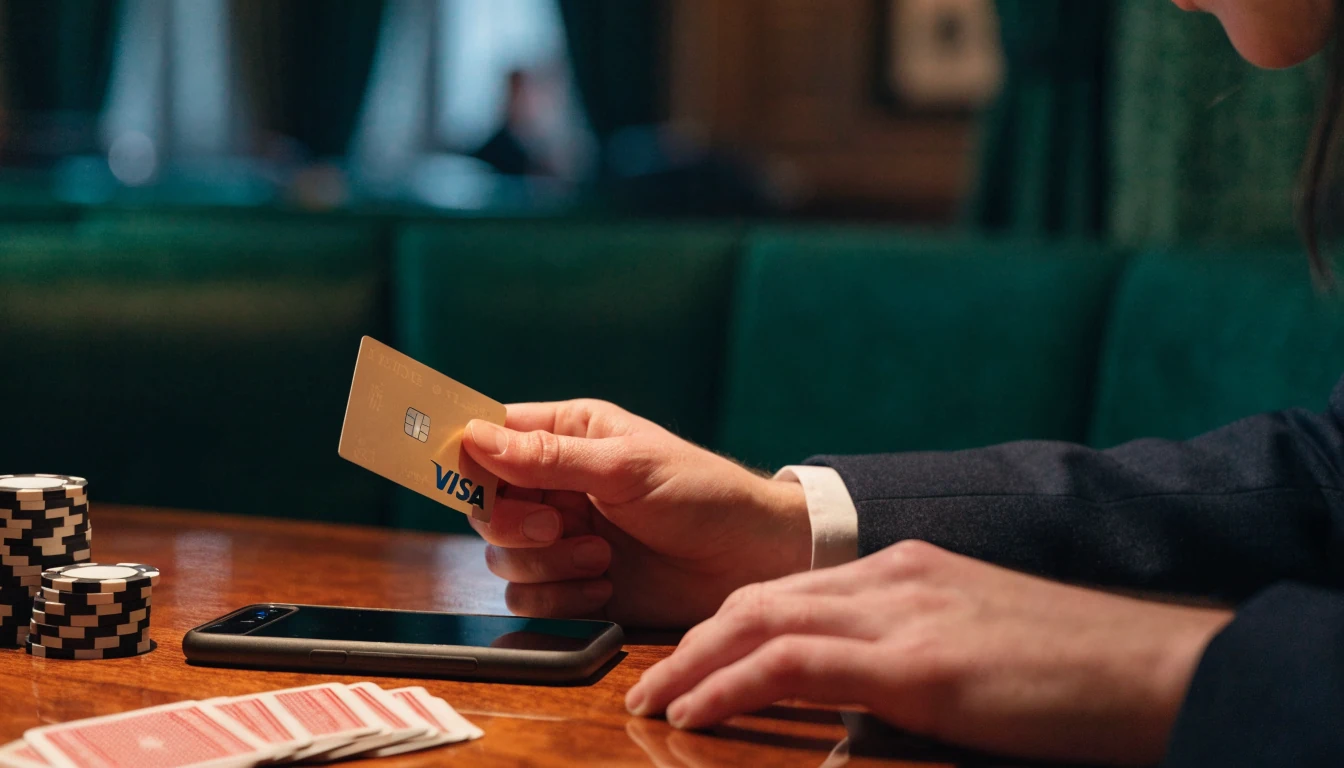
Pay by Phone and Fonix are supported by EE, O2, Vodafone and Three. Those network names describe support for the services; they are not a guarantee that every combination of network, casino and payment provider will work. The cashier’s available options remain specific to the operator and the account being used. A network connection and an accepted payment route are related, but they are not interchangeable facts.
PAYG and monthly-billed customers encounter the charge differently. For a PAYG user, a Boku deposit is deducted from the available mobile credit. For a customer on a monthly plan, it is billed through the mobile account. In both cases, the casino deposit is connected to the phone service rather than being taken directly from a bank balance. That can make the method relevant to someone who does not want to use a card, but it also means the mobile account is part of the payment decision.
This is where “mobile payment” can sound broader than it is. The phrase may refer to a payment option supported by a network, but it does not identify the exact method, or confirm that a named casino accepts it. Boku is one specific route; Fonix is another service in the wider Pay by Phone landscape. They should not be treated as synonyms, and neither should be assumed to mean PayPal.
I separate the payment mechanism from the cashier’s marketing labels. The useful detail is where the deposit is charged: a Boku transaction goes to the mobile bill or PAYG balance. Network support explains how that route can be carried; the casino’s cashier determines whether it is offered for that account. The names can sit side by side. The charges do not.
Routes deposits through mobile billing or PAYG credit using a phone number.
A specific Pay by Phone service supported by networks like EE, O2, Vodafone and Three.
Another mobile-based payment route used by specific operators as an alternative to Boku.
Slots, bonus eligibility and the conditions behind the offer
A payment method does not identify which slot games a casino offers, and it is not enough to support a reliable list of games linked to a particular deposit route. The useful distinction is between the casino’s game catalogue and the terms attached to a deposit. A PayPal label, or a Pay by Phone option, does not tell a player whether a particular slot qualifies for a promotion.
Bonus eligibility for Pay by Phone deposits varies between operators. A specialist review identified MrQ, Duelz, Mr Vegas and Videoslots as accepting this kind of deposit for bonus eligibility. That is a time-sensitive finding, not a rule shared by every casino or a promise that every promotion at those sites will qualify. The specific offer terms remain decisive.
This is where the word “eligible” can mislead. It may mean that the deposit method is permitted for a particular promotion; it does not mean that every deposit triggers the offer or that every game contributes equally towards its requirements. A casino can set separate conditions for the payment method, the promotion and the games played. The fine print matters.
A specialist review described a welcome offer with a 100% deposit match up to £100 and a 35x wagering requirement. Those figures illustrate one reported offer, not a dependable market standard: promotions change, and a bonus’s headline value says little about how much qualifying play is needed. The same review reported bonus funds expiring within 30 days and bonus spins within 72 hours. Those deadlines should be treated as terms attached to the reviewed promotion, not as universal expiry periods.


I have seen the payment condition do the quiet work in an offer: the banner attracts attention, while the terms decide which deposits count. Pay-by-phone deposits may be excluded from welcome bonuses, so a cashier accepting a method does not settle the bonus question. The offer’s payment exclusions and eligibility wording need to be read together.
There are also limits on slot play itself. Online slot autoplay is banned in Britain, and each spin must last at least two and a half seconds. These rules apply to play, not to the payment method or the bonus label. A promotion cannot make a prohibited feature permissible.
No game names or game-specific bonus terms can be inferred from the payment details alone. For a useful comparison, the relevant checks are whether the deposit method qualifies, which games count towards any wagering requirement, and when the bonus or spins expire. The cashier answers one question. The offer terms answer another.
Why payment availability changes from year to year
A payment option in a casino cashier is an operator decision, not a permanent feature of the market. That matters when looking at casinos for 2026: a method listed in an older review may have disappeared, and a replacement may be a different Pay by Phone service rather than PayPal. A change in mobile-payment options does not show that PayPal has been added.
The UK Gambling Commission did not issue a rule naming Boku for a ban. Individual operators have instead removed it amid compliance risk. From the operator’s side of the counter, that distinction is important: a method can become commercially unattractive or harder to manage without being prohibited across the industry. The cashier then reflects each business’s assessment, not a single UKGC instruction applying to every casino.
Payment options can change; an old reference to a method may describe a previous setup rather than the current live cashier.
A specialist review describes operators moving away from Boku since 2023, with some adopting Fonix or Siru Mobile and others dropping Pay by Phone altogether. That is a reported pattern, not a promise that every named service remains available at every casino today. Payment menus can change, and an account’s location, operator decisions or subsequent updates may affect what appears. Old listings are a weak basis for judging a live cashier.
The replacement names also do not mean the services are interchangeable. A specialist review identifies Fonix at MrQ and Duelz, and Siru Mobile at Mr Vegas and Videoslots. Those examples illustrate how an operator may retain a phone-based deposit route while changing the provider. They do not establish that those casinos accept Boku, or that any of these methods is PayPal.
This is why a list of casinos said to take PayPal needs to be checked against the actual payment page rather than inferred from a general label such as “mobile payments”. The label can conceal which provider handles the transaction. It can also conceal that the casino has removed the option since the listing was written. A method’s name matters.
The commercial calculation is not visible from the outside. What is visible is the outcome: some operators retain a mobile-billed route under a different provider, while others no longer show one. Calling that a UKGC ban would misstate the reason; calling a replacement PayPal would misstate the payment method.
For anyone comparing casinos that accept PayPal in the UK, the year in the page title is not evidence that the cashier is current. The operator’s own payment options are the practical check, and the available method should be identified by its actual name. A shifting menu, not a universal rule.
Other ways to fund a casino account
When PayPal is not shown in a casino cashier, the practical alternatives depend on what that operator accepts. Pay by Phone options include Fonix and Siru Mobile, but they are separate services, not different names for PayPal. A specialist review reported Fonix at MrQ and Duelz, and Siru Mobile at Mr Vegas and Videoslots. Payment menus can change, so those examples should be treated as a snapshot rather than a permanent list.
These routes may appeal to someone who wants a mobile-based way to fund an account. They do not create a general-purpose wallet: the payment is made through a mobile service, and it can only be used where the casino’s cashier offers that option. The name of a method alone is not enough to establish that it will work with a particular account or network.
There is also an indirect route involving Boku and Neteller. A specialist review describes funding a Neteller balance through Boku, then using Neteller to deposit at a casino that accepts Neteller. That makes Neteller the method presented to the casino; Boku is used earlier in the chain. It is not the same as paying the casino directly with Boku, and it does not mean that every casino accepting Neteller will support the preceding Boku transaction.
Indirect funding via Neteller
It is possible to fund a Neteller balance through Boku and then use Neteller to deposit at a casino. This requires both Boku to be available for Neteller funding and the casino to accept Neteller.
The distinction matters operationally. Each step has its own acceptance rules: Boku must be available for funding Neteller, and the casino must accept Neteller for deposits. The route therefore depends on both services being available to the account, rather than on a single payment option appearing in the casino cashier. It is an alternative path, not a way to make PayPal function where it is absent.
I have seen payment labels treated as if they were interchangeable because they all solve the same immediate problem: moving money into an account. They are not interchangeable. Pay by Phone, Fonix, Siru Mobile and Neteller each describe a different point in the payment process, with different acceptance at the operator end. Check the available cashier methods before relying on a route, and read the casino’s bonus terms separately: pay-by-phone deposits may be excluded from welcome offers.
For a casino payment, the useful comparison is not which method sounds most like PayPal, but which one the operator actually supports and whether the route fits the intended use. A mobile service can be a direct deposit option; Neteller funded through Boku is a two-stage route. Neither is evidence that the casino accepts PayPal.
Withdrawal limits and the separate method casinos require
A deposit method and a withdrawal route are not automatically the same thing. Boku is for deposits only: casino winnings cannot be sent back to a phone bill or PAYG balance through it. That distinction matters when assessing a payment setup. A method appearing in the cashier may show how money can enter an account, but it does not establish how a balance can leave.

When depositing with Boku, a separate withdrawal method must be registered. The available route may be a debit card, an e-wallet or a bank transfer. In practice, that means treating the withdrawal method as part of the account setup, rather than assuming the deposit choice will handle both directions. The cashier’s deposit options are only half the picture.
This is where searches for casinos with PayPal withdrawals can become muddled. A casino’s acceptance of a particular deposit method does not, by itself, confirm that the same method is available for withdrawals. Nor does a PayPal-related search establish that a casino accepts PayPal at all. Those are separate cashier conditions. The relevant detail is whether the operator supports the chosen withdrawal route for that account—not what another payment option does on the deposit screen.
I have seen payment pages make the two stages look like one smooth route. The wording can be neat; the mechanics are separate. For Boku, the boundary is clear: deposit only.
“Fast withdrawal” is also not a feature that follows from the deposit method. Boku cannot receive winnings, so it cannot determine how quickly another registered method processes a cash-out. The same applies to claims about instant or direct PayPal withdrawals: they depend on the operator’s actual withdrawal options and terms, not on a Boku deposit.
A casino account therefore needs a usable exit route as well as a way to fund it. Before depositing, the withdrawal method should be registered and the cashier’s conditions checked. That is a practical requirement, not a promise about timing or a particular provider. A PayPal debit card, an e-wallet and a bank transfer are distinct routes; none should be assumed available solely because Boku is offered for deposits.
Boku Deposit Steps
Choose Boku from the available options in the casino cashier.
Provide the deposit amount and the mobile phone number to be billed.
Enter the verification code sent by SMS to complete the transaction.
Making a Boku deposit: the cashier and SMS steps
A Boku deposit starts in the casino cashier, but the steps are different from paying with PayPal. The payment method has to appear among the cashier options before the transaction can begin; choosing Boku does not turn it into a PayPal payment.
The process is direct. Select Boku, enter the deposit amount and provide the mobile phone number to be billed. The payment is then confirmed with a verification code sent by SMS. The code links the confirmation to the phone number entered, so the details need to match the phone being used for the transaction.
A specialist review describes Boku deposits in amounts divisible by ten, such as £10, £20 or £30. That is a detail reported in that type of review, not a rule to assume applies in every cashier. The available amount choices on the payment screen are the practical guide for that transaction.
This distinction matters when looking for casinos that accept PayPal in the UK. A cashier may offer Boku, but that alone says nothing about whether PayPal is available there. Nor does the deposit procedure establish a PayPal minimum, a PayPal card option, or eligibility for a casino bonus. Those are separate cashier and offer terms, not consequences of completing a Boku payment.
From the operator’s side, the cashier choice determines which payment flow is opened. With Boku, the phone number and SMS confirmation are central to that flow. A PayPal payment would be a separate option, if shown, with its own process. Similar purpose, different route.
The short version: select the method shown, enter the requested details, then confirm by text. No shortcut between them.
GamStop status cannot be inferred from a payment method
A cashier and a self-exclusion status answer different questions. The payment options show how an account may be funded; they do not establish whether a casino is connected to GamStop, covered by it or outside it. The same distinction applies when a page describes a casino as a PayPal site. A payment label is not evidence of GamStop status.
I have seen the two ideas folded together in promotional wording, as though “PayPal” and “not on GamStop” were a single kind of feature. They are not. One concerns a payment route; the other is a claim about the operator’s relationship with a self-exclusion scheme. Neither follows from the other.
That matters when wording such as “unaffected by GamStop” appears beside a cashier logo. The placement can make the claims look linked, but it does not show that using PayPal changes a casino’s status or that the operator is absent from the scheme. Nor does a payment method establish whether a particular casino is registered with GamStop. Those are separate matters, and they should not be presented as interchangeable.

The same care applies to claims about “PayPal slots” supposedly being outside GamStop. A slot is a game, while PayPal is a payment method; neither label, on its own, establishes a casino’s scheme status. Naming a payment option beside a game or an offer does not answer that question.
“Not connected” is a strong description, not a payment feature. It should be treated as a separate claim requiring its own clear basis, rather than inferred from a cashier, a bonus, or the way a site describes its games. Fees and offer terms are also separate questions: a payment label alone does not settle them.
In practical terms, the responsible reading is narrow. A PayPal reference says something about payment only if the casino actually offers that method. It does not establish whether the casino is on or outside GamStop, and it does not show that a payment method can alter that status. Separate claims need separate evidence.
What are the deposit limits at pay-by-mobile casinos?
Boku deposits are typically limited to about £10 per transaction and £30 per day at network level. The standard UK limit is £30 per transaction, although some casinos or network operators may allow £40 or £50; PAYG deposits are also capped by your remaining phone balance.
What is the standard Boku deposit limit in the UK?
The standard limit is £30 per transaction, though some casinos or network operators may allow up to £40 or £50.
How does Boku work?
Boku charges a casino deposit to your monthly mobile bill or deducts it from your PAYG credit. It is for deposits only, so you need another registered method to withdraw casino funds.
Why are UK casinos dropping Boku?
Some operators have dropped Boku because of compliance risk. There was no UK Gambling Commission rule banning Boku by name; operators have instead moved to services such as Fonix or Siru Mobile, or removed phone-based deposits.
Are Boku casinos still available in the UK in 2026?
Yes, a small number of UK-licensed casinos still accept Boku deposits, although the list has been shrinking since 2023. Availability varies by operator, so check the casino’s cashier for Boku before depositing.
How do you deposit with Boku at online casinos?
Choose Boku in the casino cashier, enter an eligible deposit amount and your phone number, then confirm the payment using the SMS verification code. Deposits are available in amounts divisible by ten, such as £10, £20 or £30.
Written by the editors at Skyhills Casino.